Some of the best digital nomad destinations include Bangkok, Thailand, known for its vibrant culture, delicious street food, and affordability. It's a bustling metropolis that offers a unique blend of excitement and convenience for remote workers.
Bangkok is popular among digital nomads due to its affordable cost of living, diverse food options, and vibrant atmosphere. The city is home to the world's biggest bazaar, providing endless shopping and cultural experiences. However, it's important to note that the air quality can be a concern and the city is not very walkable.
The pros of living in Bangkok include delicious street food, affordability, and access to a vibrant cultural scene. On the downside, the city is not very walkable, and air quality can be an issue, which may affect your overall experience.
Bangkok offers a very affordable cost of living compared to many Western cities. You can find budget-friendly accommodation, inexpensive street food, and various entertainment options that cater to different budgets, making it an attractive destination for digital nomads.
This list showcases popular digital nomad destinations that offer a blend of vibrant culture, affordable living, and reliable internet connectivity. These locations are ideal for remote workers seeking an inspiring environment while balancing work and travel.
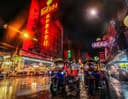
Bangkok is the capital of Thailand and its biggest city. It sits along the Chao Phraya River in central Thailand, spreading out over a large area with nearly 9 million people living in the city itself and over 17 million in the surrounding region. It’s a place that mixes old traditions with modern life. On one side, you’ve got ancient temples like Wat Pho and Wat Arun, and on the other, you’ve got massive shopping malls and skyscrapers. The city has been around for a long time, starting as a small trading post in the 15th century. It became the capital in 1782 when King Rama I moved it to the eastern bank of the river. Over the years, Bangkok has seen a lot—colonial pressures, modernization, political protests, and economic growth. It really took off in the 1980s and 1990s when foreign companies started setting up shop there. Bangkok is known for being busy and full of life. The streets are packed with cars, motorbikes, and tuk-tuks, which often leads to heavy traffic. Despite efforts to improve public transportation with skytrains and subways, traffic jams are still a common headache. The air can get polluted, but things have improved since the 1990s. Tourism plays a huge role in the city. People from around the world come to see places like the Grand Palace or enjoy the street food. Markets like Chatuchak and floating markets offer everything from clothes to local snacks. Khao San Road is popular with backpackers, full of budget hostels, bars, and street vendors. The city has a vibrant culture. Festivals like Songkran (Thai New Year) turn the streets into massive water fights, and during Loi Krathong, people float little boats with candles on the water. Bangkok also has a wild nightlife scene, ranging from lively bars to well-known red-light districts. There are two sides to Bangkok—modern malls, luxury hotels, and fine dining on one side, and narrow alleyways with street food stalls and local markets on the other. It’s a city that can feel overwhelming with the heat, traffic, and crowds, but it’s also full of energy, surprises, and contrasts.

Warsaw is the capital of Poland, sitting on the Vistula River in the east-central part of the country. With nearly 1.9 million people in the city and over 3 million in the wider metropolitan area, it’s Poland’s biggest city. It’s a place where old and new collide—modern skyscrapers stand next to rebuilt historic districts, and its skyline is a mix of glass towers and ornate churches. The Old Town, destroyed in World War II and painstakingly rebuilt, is now a UNESCO World Heritage Site. Walking through its cobblestone streets, you’ll find the Royal Castle and the colorful Market Square. Not far off is the Royal Route, a stretch of old palaces, churches, and the Presidential Palace, leading down to the grand Wilanów Palace and its gardens. Despite the scars of war—most of the city was flattened during WWII—Warsaw bounced back fast. The post-war communist era left a mark with grey apartment blocks and the towering Palace of Culture and Science, a gift from the Soviet Union that’s still one of the tallest buildings in Poland. Now, Warsaw’s business district is full of sleek glass skyscrapers, including the Varso Tower, the tallest in the EU. Green spaces are everywhere. Łazienki Park, home to peacocks and the Chopin monument, is a popular spot for Sunday strolls. The Vistula Riverbanks are packed with bars and cycling paths in summer. Even with its urban sprawl, about a quarter of the city is covered by parks and forests. Warsaw’s history is complicated. It was once a cultural melting pot, with a large Jewish community before the Holocaust. The city remembers that past with places like the POLIN Museum and the remnants of the Warsaw Ghetto. It also honors its wartime resistance, especially the 1944 Warsaw Uprising, with monuments and the powerful Uprising Museum. The city’s cultural life is rich. It hosts jazz festivals, classical concerts (especially anything Chopin-related), and has a buzzing nightlife. Food-wise, you’ll find everything from traditional Polish pierogi and hearty soups to modern vegan spots and Michelin-starred restaurants. There’s even a strong café culture, with old-school spots alongside trendy coffee bars. Weather in Warsaw is typical for Central Europe—cold, snowy winters and warm, sometimes stormy, summers. Spring and autumn can be mild and pleasant, though the weather can change quickly. In short, Warsaw is a city of contrasts. It’s got a tragic past but a vibrant present, blending historic charm with modern energy. Whether you’re wandering through its parks, exploring museums, or sipping coffee along the river, there’s plenty to take in.

Bangkok is the capital of Thailand and its biggest city. It sits along the Chao Phraya River in central Thailand, spreading out over a large area with nearly 9 million people living in the city itself and over 17 million in the surrounding region. It’s a place that mixes old traditions with modern life. On one side, you’ve got ancient temples like Wat Pho and Wat Arun, and on the other, you’ve got massive shopping malls and skyscrapers. The city has been around for a long time, starting as a small trading post in the 15th century. It became the capital in 1782 when King Rama I moved it to the eastern bank of the river. Over the years, Bangkok has seen a lot—colonial pressures, modernization, political protests, and economic growth. It really took off in the 1980s and 1990s when foreign companies started setting up shop there. Bangkok is known for being busy and full of life. The streets are packed with cars, motorbikes, and tuk-tuks, which often leads to heavy traffic. Despite efforts to improve public transportation with skytrains and subways, traffic jams are still a common headache. The air can get polluted, but things have improved since the 1990s. Tourism plays a huge role in the city. People from around the world come to see places like the Grand Palace or enjoy the street food. Markets like Chatuchak and floating markets offer everything from clothes to local snacks. Khao San Road is popular with backpackers, full of budget hostels, bars, and street vendors. The city has a vibrant culture. Festivals like Songkran (Thai New Year) turn the streets into massive water fights, and during Loi Krathong, people float little boats with candles on the water. Bangkok also has a wild nightlife scene, ranging from lively bars to well-known red-light districts. There are two sides to Bangkok—modern malls, luxury hotels, and fine dining on one side, and narrow alleyways with street food stalls and local markets on the other. It’s a city that can feel overwhelming with the heat, traffic, and crowds, but it’s also full of energy, surprises, and contrasts.

Lisbon sits on the western edge of Europe, right where the Tagus River meets the Atlantic Ocean. The city is built on a series of hills, which gives it sweeping views of red-tiled rooftops, cobbled streets, and the water beyond. Walking around, you’ll notice how the narrow lanes twist and turn, especially in neighborhoods like Alfama, where clotheslines stretch between buildings and the smell of grilled sardines lingers in the air. It’s a place where old and new blend together. You’ll find trams from the early 20th century rattling through streets, while modern glass buildings rise up in other parts of town. Down by the river, the Belém Tower and Jerónimos Monastery, both from the Age of Discovery, remind you that Portuguese explorers once set out from this very spot. Lisbon gets plenty of sunshine—nearly 3,000 hours a year. Summers are warm and dry, while winters stay cool and damp, but not too cold. Along the riverbanks, locals sit at cafés, sipping coffee or wine, while ferry boats glide across the water. Economically, Lisbon is Portugal’s hub, with banking, tech companies, and tourism bringing in most of the money. There’s a steady flow of visitors, drawn by the mild weather, historic sites, and laid-back vibe. Despite the city’s modernization, many residents struggle with rising living costs, especially with the influx of tourists and expats driving up housing prices. Culturally, the city is rich. Fado music echoes from small bars, and street art colors many walls. Markets buzz with fresh produce and seafood. People here celebrate Saint Anthony’s festival in June with street parties, music, and grilled sardines everywhere you look. Getting around is easy enough. There’s an extensive metro system, old-school trams, buses, and even ferries to cross the river. And if you fancy a bit of green space, parks like Eduardo VII Park or Monsanto Forest Park offer a break from the city streets. In short, Lisbon is a city that wears its history proudly but doesn’t mind embracing the modern world. It’s got a relaxed pace, friendly locals, and a charm that’s hard to shake.

Why isn't it a state?!

Warsaw is the capital of Poland, sitting on the Vistula River in the east-central part of the country. With nearly 1.9 million people in the city and over 3 million in the wider metropolitan area, it’s Poland’s biggest city. It’s a place where old and new collide—modern skyscrapers stand next to rebuilt historic districts, and its skyline is a mix of glass towers and ornate churches. The Old Town, destroyed in World War II and painstakingly rebuilt, is now a UNESCO World Heritage Site. Walking through its cobblestone streets, you’ll find the Royal Castle and the colorful Market Square. Not far off is the Royal Route, a stretch of old palaces, churches, and the Presidential Palace, leading down to the grand Wilanów Palace and its gardens. Despite the scars of war—most of the city was flattened during WWII—Warsaw bounced back fast. The post-war communist era left a mark with grey apartment blocks and the towering Palace of Culture and Science, a gift from the Soviet Union that’s still one of the tallest buildings in Poland. Now, Warsaw’s business district is full of sleek glass skyscrapers, including the Varso Tower, the tallest in the EU. Green spaces are everywhere. Łazienki Park, home to peacocks and the Chopin monument, is a popular spot for Sunday strolls. The Vistula Riverbanks are packed with bars and cycling paths in summer. Even with its urban sprawl, about a quarter of the city is covered by parks and forests. Warsaw’s history is complicated. It was once a cultural melting pot, with a large Jewish community before the Holocaust. The city remembers that past with places like the POLIN Museum and the remnants of the Warsaw Ghetto. It also honors its wartime resistance, especially the 1944 Warsaw Uprising, with monuments and the powerful Uprising Museum. The city’s cultural life is rich. It hosts jazz festivals, classical concerts (especially anything Chopin-related), and has a buzzing nightlife. Food-wise, you’ll find everything from traditional Polish pierogi and hearty soups to modern vegan spots and Michelin-starred restaurants. There’s even a strong café culture, with old-school spots alongside trendy coffee bars. Weather in Warsaw is typical for Central Europe—cold, snowy winters and warm, sometimes stormy, summers. Spring and autumn can be mild and pleasant, though the weather can change quickly. In short, Warsaw is a city of contrasts. It’s got a tragic past but a vibrant present, blending historic charm with modern energy. Whether you’re wandering through its parks, exploring museums, or sipping coffee along the river, there’s plenty to take in.

Ireland is a small country with a big presence. Its capital, Dublin, is a lively city known for its mix of history, culture, and modern energy. Walk through the streets and you’ll find Georgian buildings, contemporary architecture, and plenty of places to hear live music or have a chat over a coffee—or a pint. The country has changed a lot over the past few decades. Once more rural and conservative, modern Ireland is progressive and increasingly diverse. It's known for its strong economy, driven in part by tech and finance companies that have set up shop in Dublin. But away from the business districts, life moves at a slower pace, especially in smaller towns and the countryside. Culture runs deep. Ireland has long punched above its weight in literature, music, and the arts. Writers like James Joyce and W.B. Yeats are still celebrated, but contemporary authors, filmmakers, and musicians continue to make their mark. Traditional Irish music hasn’t faded—it just sits comfortably alongside modern genres, often blending with them in interesting ways. Dance, especially the kind popularized by Riverdance, remains part of the cultural fabric without feeling forced or overly nostalgic. Food in Ireland has shifted from its meat-and-potatoes reputation. While hearty stews and fresh-baked bread are still common, there’s been a focus on fresh, local ingredients and creative cooking. In coastal areas, you’ll find top-quality seafood, and farmers' markets are popular across the country. Sport plays a big part in daily life. Gaelic games like football and hurling are uniquely Irish and deeply connected to local pride, but people follow soccer, rugby, and golf with just as much enthusiasm. While Ireland’s landscape is famous—green fields, dramatic coastlines, and rugged hills—it’s not just postcard scenery. Many people live in suburban areas, and the country has seen growing urban development. Still, nature is never far away. Ireland’s recent history includes both economic highs and lows, as well as major social changes. The country has legalized same-sex marriage, eased restrictions on abortion, and shifted away from the strong influence of the Catholic Church. Yet, traditional values like community and hospitality haven’t disappeared—they’ve just adapted to a changing world. At its core, Ireland is a place that blends the old with the new. It’s a country where centuries-old traditions coexist with modern ideas, where the past is present but doesn’t overshadow the future.

The Golden State. Home to Hollywood and the Silicon Valley. Produces 80% of the world's almonds. What a great state. Although these days its major cities of Los Angeles and San Francisco are full of drug addicts who poop in the streets. That's too bad :(

the best state around. very beautiful. Okay maybe Portland is weird.

Warsaw is the capital of Poland, sitting on the Vistula River in the east-central part of the country. With nearly 1.9 million people in the city and over 3 million in the wider metropolitan area, it’s Poland’s biggest city. It’s a place where old and new collide—modern skyscrapers stand next to rebuilt historic districts, and its skyline is a mix of glass towers and ornate churches. The Old Town, destroyed in World War II and painstakingly rebuilt, is now a UNESCO World Heritage Site. Walking through its cobblestone streets, you’ll find the Royal Castle and the colorful Market Square. Not far off is the Royal Route, a stretch of old palaces, churches, and the Presidential Palace, leading down to the grand Wilanów Palace and its gardens. Despite the scars of war—most of the city was flattened during WWII—Warsaw bounced back fast. The post-war communist era left a mark with grey apartment blocks and the towering Palace of Culture and Science, a gift from the Soviet Union that’s still one of the tallest buildings in Poland. Now, Warsaw’s business district is full of sleek glass skyscrapers, including the Varso Tower, the tallest in the EU. Green spaces are everywhere. Łazienki Park, home to peacocks and the Chopin monument, is a popular spot for Sunday strolls. The Vistula Riverbanks are packed with bars and cycling paths in summer. Even with its urban sprawl, about a quarter of the city is covered by parks and forests. Warsaw’s history is complicated. It was once a cultural melting pot, with a large Jewish community before the Holocaust. The city remembers that past with places like the POLIN Museum and the remnants of the Warsaw Ghetto. It also honors its wartime resistance, especially the 1944 Warsaw Uprising, with monuments and the powerful Uprising Museum. The city’s cultural life is rich. It hosts jazz festivals, classical concerts (especially anything Chopin-related), and has a buzzing nightlife. Food-wise, you’ll find everything from traditional Polish pierogi and hearty soups to modern vegan spots and Michelin-starred restaurants. There’s even a strong café culture, with old-school spots alongside trendy coffee bars. Weather in Warsaw is typical for Central Europe—cold, snowy winters and warm, sometimes stormy, summers. Spring and autumn can be mild and pleasant, though the weather can change quickly. In short, Warsaw is a city of contrasts. It’s got a tragic past but a vibrant present, blending historic charm with modern energy. Whether you’re wandering through its parks, exploring museums, or sipping coffee along the river, there’s plenty to take in.

Bangkok is the capital of Thailand and its biggest city. It sits along the Chao Phraya River in central Thailand, spreading out over a large area with nearly 9 million people living in the city itself and over 17 million in the surrounding region. It’s a place that mixes old traditions with modern life. On one side, you’ve got ancient temples like Wat Pho and Wat Arun, and on the other, you’ve got massive shopping malls and skyscrapers. The city has been around for a long time, starting as a small trading post in the 15th century. It became the capital in 1782 when King Rama I moved it to the eastern bank of the river. Over the years, Bangkok has seen a lot—colonial pressures, modernization, political protests, and economic growth. It really took off in the 1980s and 1990s when foreign companies started setting up shop there. Bangkok is known for being busy and full of life. The streets are packed with cars, motorbikes, and tuk-tuks, which often leads to heavy traffic. Despite efforts to improve public transportation with skytrains and subways, traffic jams are still a common headache. The air can get polluted, but things have improved since the 1990s. Tourism plays a huge role in the city. People from around the world come to see places like the Grand Palace or enjoy the street food. Markets like Chatuchak and floating markets offer everything from clothes to local snacks. Khao San Road is popular with backpackers, full of budget hostels, bars, and street vendors. The city has a vibrant culture. Festivals like Songkran (Thai New Year) turn the streets into massive water fights, and during Loi Krathong, people float little boats with candles on the water. Bangkok also has a wild nightlife scene, ranging from lively bars to well-known red-light districts. There are two sides to Bangkok—modern malls, luxury hotels, and fine dining on one side, and narrow alleyways with street food stalls and local markets on the other. It’s a city that can feel overwhelming with the heat, traffic, and crowds, but it’s also full of energy, surprises, and contrasts.

Katowice is not the first Polish city that comes to mind when people think about travel, but that’s exactly why it’s worth a visit. It’s a city that doesn’t try to impress with postcard-perfect charm. Instead, it tells a story—of industry, transformation, and resilience. Once a coal-mining powerhouse, Katowice was built on the backs of steelworkers and miners. It used to be all about factories, smokestacks, and the hum of heavy machinery. But things changed. Over the past few decades, Katowice has reinvented itself into a modern, creative city that embraces its past without being weighed down by it. The city’s industrial roots are still visible, especially in neighborhoods like Nikiszowiec and Giszowiec—once workers’ settlements, now some of the most atmospheric areas to explore, with red-brick buildings, cobblestone streets, and cafés that mix old-school charm with new energy. Katowice’s skyline tells the story of this transformation. The Spodek—a flying saucer-shaped arena from the communist era—stands next to the sleek, glass-covered buildings of the Cultural Zone, home to the National Radio Symphony Orchestra, the new Silesian Museum, and the International Congress Centre. These spaces, built on the grounds of a former coal mine, now host concerts, exhibitions, and business summits. For music lovers, Katowice is a hidden gem. It’s a UNESCO City of Music, home to everything from underground jazz clubs to world-class electronic festivals like OFF Festival and Tauron Nowa Muzyka. And then there’s the unexpected greenery. Despite its industrial image, Katowice is one of Poland’s greenest cities, with parks, forests, and lakes just a short walk from the city center. Places like Dolina Trzech Stawów (the Valley of Three Ponds) or the vast Silesian Park offer space to breathe. Katowice isn’t about tourist clichés. It’s about real life, real history, and a city that has learned to move forward while honoring where it came from. If you like cities with a raw, authentic vibe—where industrial grit meets creative energy—Katowice might just surprise you.

TechTitans.Cloud is an all-in-one digital ecosystem designed to elevate modern learning and career development. The platform supports both B2B and B2C online education, offering structured courses, skill-building programs, and customizable learning paths for individuals, schools, and organizations. Users gain access to personalized dashboards that track progress, performance, and achievements in real time. TechTitans.Cloud also features the immersive educational game “Land of the Titans,” where players learn through exploration, challenges, and narrative-driven missions. Alongside education, the platform provides recruitment tools, enabling job posting, smart talent matching, and streamlined job search services—all in one unified environment that connects learning with real career outcomes.

ReflectMind is an AI-powered platform that enables anyone to create stunning presentations, stories, and visual content in minutes—no design skills required. Designed for educators, founders, marketers, sales teams, consultants, and content creators, it transforms simple ideas into professional-grade materials with lightning speed. With features like real-time collaboration, interactive elements, centralized brand consistency, and multi-format exporting, ReflectMind streamlines the entire creation workflow. Whether you’re building pitch decks, social media carousels, or engaging lesson materials, ReflectMind makes visual communication effortless, customizable, and 10x faster.

Uneed is a platform where people can both discover new products and promote their own. It works a bit like Product Hunt, giving creators a way to get their products noticed. Every day at midnight PST, between 10 and 20 new products launch on the homepage. On launch day, products get prime visibility, but users can keep voting for them anytime afterward. Products are ranked daily, weekly, monthly, and yearly. The top three products in each ranking get badges—gold, silver, or bronze—displayed on their product pages. Popular products also get featured in Uneed’s weekly newsletter, which reaches over 9,100 subscribers. If you want to launch a product, you make an account and fill out the details. There are two ways to get your product live: wait in a free queue (and get assigned a random launch date) or pay $30 to skip the line and pick your date. Success comes from a strong launch day, keeping your page up-to-date, and encouraging people to vote. Adding special deals can also earn you a badge and keep interest alive. The community side of Uneed is built around upvoting products. The more you vote, the more power you gain. For example, a 5-day voting streak doubles your vote’s power, and a 100-day streak triples it while unlocking an avatar border. At 150 days, you get a free line skip; at 500 days, you get discounts on advertising; and at 1,000 days, your votes count as five. The platform covers categories like development, design, marketing, business, and personal life products. It’s just one person running Uneed, and you’re encouraged to vote for your own product. If you have questions, they’re easy to reach via email. In short, Uneed is a straightforward way to launch a product, gather feedback, and build an audience—without needing a massive following upfront.

BetaList is a large and well-known startup directory but it's also very selective. They review each submission before they decide whether to allow it on the platform. Your startup should be pre-launch or recently launched without substantial press coverage, needs a custom designed, decent-looking landing describing the product and a way for people to sign up.

10words will publish your startup on their website, Twitter / X, and their newsletter. The catch? You have to explain it in 10 words or less. It's free to submit your startup.

Appsy Tools is your go-to directory for discovering powerful AI and productivity tools across every category imaginable. From AI assistants and e-commerce optimizers to video editors and image generators, Appsy Tools helps users find exactly what they need to streamline work, boost creativity, and save time. With a clean interface, regularly updated listings, and categorized filters, users can explore tools for design, marketing, writing, analytics, and more. Whether you're a developer, entrepreneur, content creator, or student, Appsy Tools connects you with reliable, innovative solutions that enhance daily tasks and long-term goals. Featured and newest tools are highlighted, while sponsored picks offer even more visibility to standout products. Submit your own tool and join a growing network of creators and tech enthusiasts. Let Appsy Tools be your starting point for smarter, faster, and better digital productivity.