Some of the best places for digital nomads include Warsaw, Poland; Bangkok, Thailand; and Lisbon, Portugal. These cities offer a mix of affordability, accessibility, and amenities that cater to the needs of remote workers.
Yes, Warsaw, Poland is a great place for digital nomads. The city is friendly towards foreigners, affordable, and most people speak English. It's also considered safe. However, the winter months can be challenging due to poor air quality and a lack of sunlight.
Pros of living in Warsaw include affordability, safety, the fact that most people speak English, and a fun atmosphere. The main con is the lack of sunlight during the winter months, which can also affect air quality.
Bangkok, Thailand is a popular choice for digital nomads. The city is exciting and affordable, with delicious street food and easy access by plane. However, it is not very walkable and air quality could be better.
Pros of living in Bangkok include delicious street food, affordability, and access to the world's biggest bazaar. The main con is that it is not a walkable city.
Lisbon, Portugal is a good destination for digital nomads, especially for those who enjoy good weather and surfing. However, some people find the food bland, and there are reports that locals may not be very welcoming to digital nomads.

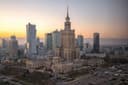
Warsaw is the capital of Poland, sitting on the Vistula River in the east-central part of the country. With nearly 1.9 million people in the city and over 3 million in the wider metropolitan area, it’s Poland’s biggest city. It’s a place where old and new collide—modern skyscrapers stand next to rebuilt historic districts, and its skyline is a mix of glass towers and ornate churches. The Old Town, destroyed in World War II and painstakingly rebuilt, is now a UNESCO World Heritage Site. Walking through its cobblestone streets, you’ll find the Royal Castle and the colorful Market Square. Not far off is the Royal Route, a stretch of old palaces, churches, and the Presidential Palace, leading down to the grand Wilanów Palace and its gardens. Despite the scars of war—most of the city was flattened during WWII—Warsaw bounced back fast. The post-war communist era left a mark with grey apartment blocks and the towering Palace of Culture and Science, a gift from the Soviet Union that’s still one of the tallest buildings in Poland. Now, Warsaw’s business district is full of sleek glass skyscrapers, including the Varso Tower, the tallest in the EU. Green spaces are everywhere. Łazienki Park, home to peacocks and the Chopin monument, is a popular spot for Sunday strolls. The Vistula Riverbanks are packed with bars and cycling paths in summer. Even with its urban sprawl, about a quarter of the city is covered by parks and forests. Warsaw’s history is complicated. It was once a cultural melting pot, with a large Jewish community before the Holocaust. The city remembers that past with places like the POLIN Museum and the remnants of the Warsaw Ghetto. It also honors its wartime resistance, especially the 1944 Warsaw Uprising, with monuments and the powerful Uprising Museum. The city’s cultural life is rich. It hosts jazz festivals, classical concerts (especially anything Chopin-related), and has a buzzing nightlife. Food-wise, you’ll find everything from traditional Polish pierogi and hearty soups to modern vegan spots and Michelin-starred restaurants. There’s even a strong café culture, with old-school spots alongside trendy coffee bars. Weather in Warsaw is typical for Central Europe—cold, snowy winters and warm, sometimes stormy, summers. Spring and autumn can be mild and pleasant, though the weather can change quickly. In short, Warsaw is a city of contrasts. It’s got a tragic past but a vibrant present, blending historic charm with modern energy. Whether you’re wandering through its parks, exploring museums, or sipping coffee along the river, there’s plenty to take in.

Bangkok is the capital of Thailand and its biggest city. It sits along the Chao Phraya River in central Thailand, spreading out over a large area with nearly 9 million people living in the city itself and over 17 million in the surrounding region. It’s a place that mixes old traditions with modern life. On one side, you’ve got ancient temples like Wat Pho and Wat Arun, and on the other, you’ve got massive shopping malls and skyscrapers. The city has been around for a long time, starting as a small trading post in the 15th century. It became the capital in 1782 when King Rama I moved it to the eastern bank of the river. Over the years, Bangkok has seen a lot—colonial pressures, modernization, political protests, and economic growth. It really took off in the 1980s and 1990s when foreign companies started setting up shop there. Bangkok is known for being busy and full of life. The streets are packed with cars, motorbikes, and tuk-tuks, which often leads to heavy traffic. Despite efforts to improve public transportation with skytrains and subways, traffic jams are still a common headache. The air can get polluted, but things have improved since the 1990s. Tourism plays a huge role in the city. People from around the world come to see places like the Grand Palace or enjoy the street food. Markets like Chatuchak and floating markets offer everything from clothes to local snacks. Khao San Road is popular with backpackers, full of budget hostels, bars, and street vendors. The city has a vibrant culture. Festivals like Songkran (Thai New Year) turn the streets into massive water fights, and during Loi Krathong, people float little boats with candles on the water. Bangkok also has a wild nightlife scene, ranging from lively bars to well-known red-light districts. There are two sides to Bangkok—modern malls, luxury hotels, and fine dining on one side, and narrow alleyways with street food stalls and local markets on the other. It’s a city that can feel overwhelming with the heat, traffic, and crowds, but it’s also full of energy, surprises, and contrasts.

Lisbon sits on the western edge of Europe, right where the Tagus River meets the Atlantic Ocean. The city is built on a series of hills, which gives it sweeping views of red-tiled rooftops, cobbled streets, and the water beyond. Walking around, you’ll notice how the narrow lanes twist and turn, especially in neighborhoods like Alfama, where clotheslines stretch between buildings and the smell of grilled sardines lingers in the air. It’s a place where old and new blend together. You’ll find trams from the early 20th century rattling through streets, while modern glass buildings rise up in other parts of town. Down by the river, the Belém Tower and Jerónimos Monastery, both from the Age of Discovery, remind you that Portuguese explorers once set out from this very spot. Lisbon gets plenty of sunshine—nearly 3,000 hours a year. Summers are warm and dry, while winters stay cool and damp, but not too cold. Along the riverbanks, locals sit at cafés, sipping coffee or wine, while ferry boats glide across the water. Economically, Lisbon is Portugal’s hub, with banking, tech companies, and tourism bringing in most of the money. There’s a steady flow of visitors, drawn by the mild weather, historic sites, and laid-back vibe. Despite the city’s modernization, many residents struggle with rising living costs, especially with the influx of tourists and expats driving up housing prices. Culturally, the city is rich. Fado music echoes from small bars, and street art colors many walls. Markets buzz with fresh produce and seafood. People here celebrate Saint Anthony’s festival in June with street parties, music, and grilled sardines everywhere you look. Getting around is easy enough. There’s an extensive metro system, old-school trams, buses, and even ferries to cross the river. And if you fancy a bit of green space, parks like Eduardo VII Park or Monsanto Forest Park offer a break from the city streets. In short, Lisbon is a city that wears its history proudly but doesn’t mind embracing the modern world. It’s got a relaxed pace, friendly locals, and a charm that’s hard to shake.

Bangkok is the capital of Thailand and its biggest city. It sits along the Chao Phraya River in central Thailand, spreading out over a large area with nearly 9 million people living in the city itself and over 17 million in the surrounding region. It’s a place that mixes old traditions with modern life. On one side, you’ve got ancient temples like Wat Pho and Wat Arun, and on the other, you’ve got massive shopping malls and skyscrapers. The city has been around for a long time, starting as a small trading post in the 15th century. It became the capital in 1782 when King Rama I moved it to the eastern bank of the river. Over the years, Bangkok has seen a lot—colonial pressures, modernization, political protests, and economic growth. It really took off in the 1980s and 1990s when foreign companies started setting up shop there. Bangkok is known for being busy and full of life. The streets are packed with cars, motorbikes, and tuk-tuks, which often leads to heavy traffic. Despite efforts to improve public transportation with skytrains and subways, traffic jams are still a common headache. The air can get polluted, but things have improved since the 1990s. Tourism plays a huge role in the city. People from around the world come to see places like the Grand Palace or enjoy the street food. Markets like Chatuchak and floating markets offer everything from clothes to local snacks. Khao San Road is popular with backpackers, full of budget hostels, bars, and street vendors. The city has a vibrant culture. Festivals like Songkran (Thai New Year) turn the streets into massive water fights, and during Loi Krathong, people float little boats with candles on the water. Bangkok also has a wild nightlife scene, ranging from lively bars to well-known red-light districts. There are two sides to Bangkok—modern malls, luxury hotels, and fine dining on one side, and narrow alleyways with street food stalls and local markets on the other. It’s a city that can feel overwhelming with the heat, traffic, and crowds, but it’s also full of energy, surprises, and contrasts.

Why isn't it a state?!

Warsaw is the capital of Poland, sitting on the Vistula River in the east-central part of the country. With nearly 1.9 million people in the city and over 3 million in the wider metropolitan area, it’s Poland’s biggest city. It’s a place where old and new collide—modern skyscrapers stand next to rebuilt historic districts, and its skyline is a mix of glass towers and ornate churches. The Old Town, destroyed in World War II and painstakingly rebuilt, is now a UNESCO World Heritage Site. Walking through its cobblestone streets, you’ll find the Royal Castle and the colorful Market Square. Not far off is the Royal Route, a stretch of old palaces, churches, and the Presidential Palace, leading down to the grand Wilanów Palace and its gardens. Despite the scars of war—most of the city was flattened during WWII—Warsaw bounced back fast. The post-war communist era left a mark with grey apartment blocks and the towering Palace of Culture and Science, a gift from the Soviet Union that’s still one of the tallest buildings in Poland. Now, Warsaw’s business district is full of sleek glass skyscrapers, including the Varso Tower, the tallest in the EU. Green spaces are everywhere. Łazienki Park, home to peacocks and the Chopin monument, is a popular spot for Sunday strolls. The Vistula Riverbanks are packed with bars and cycling paths in summer. Even with its urban sprawl, about a quarter of the city is covered by parks and forests. Warsaw’s history is complicated. It was once a cultural melting pot, with a large Jewish community before the Holocaust. The city remembers that past with places like the POLIN Museum and the remnants of the Warsaw Ghetto. It also honors its wartime resistance, especially the 1944 Warsaw Uprising, with monuments and the powerful Uprising Museum. The city’s cultural life is rich. It hosts jazz festivals, classical concerts (especially anything Chopin-related), and has a buzzing nightlife. Food-wise, you’ll find everything from traditional Polish pierogi and hearty soups to modern vegan spots and Michelin-starred restaurants. There’s even a strong café culture, with old-school spots alongside trendy coffee bars. Weather in Warsaw is typical for Central Europe—cold, snowy winters and warm, sometimes stormy, summers. Spring and autumn can be mild and pleasant, though the weather can change quickly. In short, Warsaw is a city of contrasts. It’s got a tragic past but a vibrant present, blending historic charm with modern energy. Whether you’re wandering through its parks, exploring museums, or sipping coffee along the river, there’s plenty to take in.

Ireland is a small country with a big presence. Its capital, Dublin, is a lively city known for its mix of history, culture, and modern energy. Walk through the streets and you’ll find Georgian buildings, contemporary architecture, and plenty of places to hear live music or have a chat over a coffee—or a pint. The country has changed a lot over the past few decades. Once more rural and conservative, modern Ireland is progressive and increasingly diverse. It's known for its strong economy, driven in part by tech and finance companies that have set up shop in Dublin. But away from the business districts, life moves at a slower pace, especially in smaller towns and the countryside. Culture runs deep. Ireland has long punched above its weight in literature, music, and the arts. Writers like James Joyce and W.B. Yeats are still celebrated, but contemporary authors, filmmakers, and musicians continue to make their mark. Traditional Irish music hasn’t faded—it just sits comfortably alongside modern genres, often blending with them in interesting ways. Dance, especially the kind popularized by Riverdance, remains part of the cultural fabric without feeling forced or overly nostalgic. Food in Ireland has shifted from its meat-and-potatoes reputation. While hearty stews and fresh-baked bread are still common, there’s been a focus on fresh, local ingredients and creative cooking. In coastal areas, you’ll find top-quality seafood, and farmers' markets are popular across the country. Sport plays a big part in daily life. Gaelic games like football and hurling are uniquely Irish and deeply connected to local pride, but people follow soccer, rugby, and golf with just as much enthusiasm. While Ireland’s landscape is famous—green fields, dramatic coastlines, and rugged hills—it’s not just postcard scenery. Many people live in suburban areas, and the country has seen growing urban development. Still, nature is never far away. Ireland’s recent history includes both economic highs and lows, as well as major social changes. The country has legalized same-sex marriage, eased restrictions on abortion, and shifted away from the strong influence of the Catholic Church. Yet, traditional values like community and hospitality haven’t disappeared—they’ve just adapted to a changing world. At its core, Ireland is a place that blends the old with the new. It’s a country where centuries-old traditions coexist with modern ideas, where the past is present but doesn’t overshadow the future.

The Golden State. Home to Hollywood and the Silicon Valley. Produces 80% of the world's almonds. What a great state. Although these days its major cities of Los Angeles and San Francisco are full of drug addicts who poop in the streets. That's too bad :(

the best state around. very beautiful. Okay maybe Portland is weird.

TechTitans.Cloud is an all-in-one digital ecosystem designed to elevate modern learning and career development. The platform supports both B2B and B2C online education, offering structured courses, skill-building programs, and customizable learning paths for individuals, schools, and organizations. Users gain access to personalized dashboards that track progress, performance, and achievements in real time. TechTitans.Cloud also features the immersive educational game “Land of the Titans,” where players learn through exploration, challenges, and narrative-driven missions. Alongside education, the platform provides recruitment tools, enabling job posting, smart talent matching, and streamlined job search services—all in one unified environment that connects learning with real career outcomes.

Threads Content Publishing & Scheduling SaaS. The simplest platform to schedule your Threads content and have an overview of your posts performance. Create content plans to grow your audience and reach monetization status.

Build and monetize your audience on Threads

The most powerful and affordable TikTok micro-influencer database

Schedles is an all-in-one social media management platform designed specifically for content creators looking to amplify their online presence. Packed with cutting-edge features such as advanced post scheduling, AI-driven content generation, and seamless cross-platform publishing to Threads, Instagram, TikTok, and LinkedIn, Schedles simplifies your workflow, freeing you up to focus on what you do best—creating captivating content. Our user-friendly interface allows you to effortlessly plan and manage your content calendar, ensuring that you never miss an opportunity to engage your audience. With our AI-powered tools, you can quickly generate innovative ideas and optimize your posts for maximum visibility and interaction, helping you achieve significant growth across all your social media channels. Whether you're a solo creator or part of a collaborative team, Schedles is engineered to enhance your productivity and fine-tune your social media strategy, empowering you to connect with your audience more effectively. Begin your journey toward a more organized, impactful, and successful online presence with Schedles today!

Effortlessly create Xiaohongshu notes with our powerful suite of AI tools including the AI rewrite generator, AI text generator, and AI title generator!

Resume.Ink is designed to streamline your job application process by automatically tailoring your resume to match specific job postings. Just upload your resume along with job details, and the platform customizes it to align with the job description, boosting your chances of getting interviews. Resume.Ink offers free resume tailoring, charging only for the final download.

Breathworx is an on-demand breathwork service designed for stress relief, decision clarity, and a happier mood, with guaranteed results in a single session—even for those who “can’t meditate.” Folks who’ve tried it say they: Feel less “in their head” generally Feel an overwhelming sense of gratitude and clarity Feel more confident, calm, & authentic in social situations Get clearer answers in big decision making Relieve stress, anxiety, heartbreak, loss, and depression Have more reliable stress coping mechanisms Release the “emotional gunk” that builds in them Feel more grounded and in touch with their bodies Are less reactive in difficult situations The classes primarily use guided meditations and Circular Breathwork, a simple technique involving 2 breaths in (belly, then chest) and 1 breath out, all through the mouth. Also known as 2-part breathwork, holotropic breathwork, or triangle breathing, this method yields transformative results in a short amount of time. Breathworx offers both full-length 40-60 minute sessions and shorter 10-20 minute versions, accessible on any browser or device, anytime. Whether you use this "cheat code" once a week, once a month, or daily during particularly hard times, it's all up to you. Many people find that even a single class is worth more than years of therapy, where one session can cost more than a yearly Breathworx membership. In fact, if you take just one full class a year, you’ll likely value the benefits beyond the yearly subscription price. Most in-person classes have about 30 minutes of breathing wrapped in some meditation or gratitude practice, making for about 45 minutes total. Breathworx offers similar formats, as well as shorter versions, ensuring there's a session that fits your schedule and needs. Whether you're looking to relieve stress, gain clarity, or simply add a powerful tool to your wellness toolkit, Breathworx is designed to be as transformational, enjoyable, and meaningful as possible.

Earth.fm is a kind of a digital retreat where you can immerse yourself in the sounds of nature. It’s designed to help people unwind, reconnect with the Earth, meditate, and focus. Key Features: - Nature Soundscapes: A curated collection of soothing nature recordings from around the globe. - Interactive Soundmap: Explore sounds from different regions using a world map. - Mobile App: Enjoy nature's sounds wherever you are. - Quiet Places: Discover and learn about tranquil locations worldwide. - Support for Recordings: Encourages new contributions through grants. Benefits: Earth.fm offers a natural way to reduce stress, enhance focus, and nurture a connection with the environment. Whether you’re looking to meditate, work, or relax, the platform’s serene soundscapes provide an easy escape from the busyness of daily life. Use Cases: Perfect for anyone needing a moment of calm, Earth.fm is ideal for background sounds during work or study, meditation sessions, or simply unwinding after a long day. It’s also a great resource for nature lovers who want to explore the sounds of different ecosystems around the world.

Paywall Reader is a tool that helps you read articles blocked by paywalls. It doesn’t hack into sites or break paywalls directly. Instead, it sends you to archived or cached versions of the page. These versions are saved copies from places like Archive.Today, the Internet Archive, or even Google Translate. It works best with soft paywalls—those pop-ups that block the screen but still have the full text underneath. To use it, you just paste the article’s URL, pick an option from the three services, and it tries to find a version without the paywall. If one doesn’t work, you can try another. Not every paywall can be bypassed, especially if a site blocks archiving, but most major news sources work fine. It’s considered legal because it doesn’t tamper with the website itself—it just finds copies that are already available online. People use it to access news without needing tons of subscriptions or for things like schoolwork and research. The site isn’t connected to any of the archive services or news outlets, and it leaves the responsibility of use to you.

BondSmartly.com is a platform designed to streamline bond investment decisions by offering access to yield curves of over 500,000 bonds. It provides users with comprehensive search filters, allowing them to discover using a powerful bonds screener based on various parameters such as ISIN, issuer, coupon rate, and maturity date. Investors can utilize the yield curve data to analyze different bonds and make informed choices. Additionally, the platform features tools like a YTM (Yield to Maturity) calculator and bond screener, making it an all-in-one resource for bond market insights and analytics. With these features, BondSmartly helps investors optimize their portfolios with precision and ease.

LaunchDirectories.com is a platform that helps startup founders and indie makers submit their products to a wide range of launch directories. It provides an organized list of directories with key details like website links and submission requirements. The platform also offers a done-for-you service, where their team submits your product to multiple directories on your behalf, saving time and simplifying the process. This makes it easier for startups to get noticed and listed on relevant platforms without handling each submission manually.

Uneed is a platform where people can both discover new products and promote their own. It works a bit like Product Hunt, giving creators a way to get their products noticed. Every day at midnight PST, between 10 and 20 new products launch on the homepage. On launch day, products get prime visibility, but users can keep voting for them anytime afterward. Products are ranked daily, weekly, monthly, and yearly. The top three products in each ranking get badges—gold, silver, or bronze—displayed on their product pages. Popular products also get featured in Uneed’s weekly newsletter, which reaches over 9,100 subscribers. If you want to launch a product, you make an account and fill out the details. There are two ways to get your product live: wait in a free queue (and get assigned a random launch date) or pay $30 to skip the line and pick your date. Success comes from a strong launch day, keeping your page up-to-date, and encouraging people to vote. Adding special deals can also earn you a badge and keep interest alive. The community side of Uneed is built around upvoting products. The more you vote, the more power you gain. For example, a 5-day voting streak doubles your vote’s power, and a 100-day streak triples it while unlocking an avatar border. At 150 days, you get a free line skip; at 500 days, you get discounts on advertising; and at 1,000 days, your votes count as five. The platform covers categories like development, design, marketing, business, and personal life products. It’s just one person running Uneed, and you’re encouraged to vote for your own product. If you have questions, they’re easy to reach via email. In short, Uneed is a straightforward way to launch a product, gather feedback, and build an audience—without needing a massive following upfront.

BetaList is a large and well-known startup directory but it's also very selective. They review each submission before they decide whether to allow it on the platform. Your startup should be pre-launch or recently launched without substantial press coverage, needs a custom designed, decent-looking landing describing the product and a way for people to sign up.

Toolfio.com is a curated directory of tools and resources for founders, makers, and developers. It helps users discover high-quality software, platforms, and services across categories like AI, analytics, productivity, and marketing. Toolfio.com also allows startups to get their products featured, increasing exposure, driving traffic, and earning valuable SEO-friendly backlinks.

r/ProductHunters is a subreddit for discussing products listed on Product Hunt. It's a good place to write a post to accompany your PH launch. r/ProductHunters has 7.5K member and is among the top 8% of subreddits by size.