Best AI Tools for Developers
The AI that writes, reviews, and ships alongside you.
The best AI tools for developers — code generation, review, debugging, agents, and automation that plug into how you already build.
- 26
 0
0- Enter Pro is a leading AI Vibe Coding platform that allows users to quickly transform ideas into working software products simply by describing them in natural language, without having to write code from scratch. Leveraging advanced large-scale models such as GPT, Claude, and Gemini, Enter automatically understands requirements, plans the development process, generates complete code, executes tests, and completes deployment, ultimately delivering directly accessible online applications. By transforming "writing code" into "expressing ideas," Enter Pro empowers independent developers, entrepreneurs, and product teams to build and release products faster, truly realizing AI-driven software development.
- 27
 0
0Spanlens is an open-source (MIT) LLM observability platform that lets developers monitor every call their application makes to OpenAI, Anthropic, Gemini, Mistral, OpenRouter, Azure OpenAI, or a local Ollama model. Integration takes one line: swap your client's baseURL to the Spanlens proxy, or run "npx @spanlens/cli init" and the wizard rewrites your code automatically. From that moment, every request is recorded with its model, token counts, latency, cost, and full prompt and response body, with streaming responses reconstructed automatically. The dashboard turns that raw log into operational insight. Cost tracking breaks spend down per request, per model, and per end user, and parses prompt-cache tokens separately so you see real cache savings rather than sticker price. Agent tracing visualizes multi-step workflows as Gantt waterfalls and node-and-edge graphs, highlighting the critical path so you can find the slowest dependency chain in a fan-out. Anomaly detection flags 3-sigma deviations in latency, cost, or error rate against a rolling 7-day baseline with root-cause hints. Alerts on budget, error rate, and p95 latency are delivered to Email, Slack, or Discord. Spanlens goes beyond passive logging. A regex-based PII and prompt-injection scanner inspects request and response bodies and can block injections at the proxy. The savings engine spots calls that match a cheaper model's profile (for example, a gpt-4o call that looks like a classification task) and estimates the monthly saving from switching. Prompt versioning with A/B experiments compares versions on latency, cost, and error rate using Welch's t-test for statistical significance, and an LLM-as-judge evaluation framework (judge with OpenAI, Anthropic, or Gemini) scores outputs against rubric anchors, with human agreement measured by Pearson r or Cohen's kappa. Reusable datasets power offline evals and regression checks.
- 28
 0
0Interview VIP is a native desktop AI copilot for candidates in live technical interviews. It listens to the interviewer, transcribes the conversation in real time, and generates contextual answer guidance that the candidate can reveal when useful. A movable overlay works across major video-meeting and coding-interview platforms, including Zoom, Microsoft Teams, Google Meet, CoderPad, HackerRank, CodeSignal, Codility, WebEx, and Amazon Chime. It supports Windows 10 or later, macOS 12 or later, and more than 26 languages. A limited free trial is available before paid plans, and candidates remain responsible for every final response.
- 29
 0
0Serro AI is an AI-powered coordination platform designed to help modern engineering organizations manage complex technical programs more efficiently. Rather than focusing on software development itself, Serro addresses the growing challenge of coordination that emerges as engineering teams adopt artificial intelligence and dramatically increase their development speed. The platform acts as an AI Technical Program Manager (AI TPM), automatically organizing information, tracking progress, maintaining context, and helping teams coordinate work across multiple departments without requiring constant manual updates or reporting. The platform is built around the idea that software development is no longer the primary bottleneck for engineering organizations. With AI enabling developers to produce more code, faster decisions, and more parallel projects, coordination has become the new limiting factor. Serro is designed to solve this challenge by continuously monitoring work across an organization's existing tools and creating a unified, real-time understanding of every active program. Instead of spending hours collecting updates from meetings, documents, and chat conversations, teams can rely on Serro to maintain an accurate picture of ongoing work automatically. One of Serro's primary advantages is its ability to integrate with the software tools that engineering teams already use every day. The platform connects with communication, project management, documentation, and development systems such as Slack, GitHub, Jira, Linear, Zoom, Notion, email, and internal code repositories. After connecting these services, Serro immediately begins collecting signals from across the organization, allowing it to identify active programs, understand relationships between tasks, monitor ongoing discussions, and organize project knowledge without requiring users to migrate to a completely new workflow. Once connected, Serro automatically discovers the technical programs running within an organization. Users can review these detected initiatives, assign ownership, determine visibility, and allow the platform to continuously maintain program information. Every project receives what Serro describes as a "program brain," a centralized knowledge system that stores decisions, ownership, risks, timelines, historical context, current activity, and execution status. As work progresses across different platforms, this knowledge remains synchronized automatically, eliminating the need for repetitive documentation and manual reporting. The platform enables users to interact naturally with their programs through AI-powered queries and automated reporting. Team members can ask questions about project status, request summaries, generate recurring progress reports, or transform meeting discussions into actionable tasks. Instead of manually following up after meetings, Serro captures outcomes, updates project memory, and keeps execution aligned with decisions that have already been made. This helps reduce communication overhead while ensuring that important decisions remain connected to ongoing implementation. Serro is built around four major systems that work together to coordinate complex engineering programs. The Program Memory system continuously maintains live organizational knowledge across active projects, ensuring that important context remains available over time. Loops on Programs automate repetitive coordination activities that keep large initiatives moving forward. Agent Governance provides controls for managing AI agents alongside human contributors, ensuring that automated systems operate within defined boundaries. Finally, Program Analytics offers leadership a comprehensive, organization-wide view of project health, execution progress, coordination effectiveness, and operational performance. The platform emphasizes measurable operational improvements from the first day of deployment. According to the website, organizations can begin using Serro immediately with their existing historical data, eliminating lengthy implementation periods. The company claims that managers recover significant amounts of coordination and reporting time every week while organizations may also uncover substantial research and development value from previously completed work. By reducing administrative overhead, technical leaders can dedicate more attention to strategic planning, delivery quality, and team performance. Serro is designed specifically for organizations where humans and AI agents increasingly collaborate on software development. Rather than replacing human expertise, the platform serves as a shared operating system that keeps both human contributors and AI systems aligned. It continuously maintains a live operational picture of organizational activity, helping teams avoid the common problem of reconstructing project context after meetings or manually piecing together updates from multiple disconnected systems. This shared coordination layer enables engineering organizations to scale more effectively as AI accelerates software production. Different professional roles benefit from the platform in different ways. Technical Program Managers can reduce coordination overhead while managing more cross-functional initiatives simultaneously. Engineering Managers gain visibility into project execution, delivery risks, team health, and emerging blockers without constantly requesting status updates. Product Managers can align roadmap changes, ownership, priorities, and execution within a single coordinated environment. Engineering executives and organizational leaders receive real-time insights into operational health, momentum, risks, coordination gaps, and strategic execution across the entire organization. Overall, Serro AI positions itself as an intelligent coordination platform built for the next generation of software engineering organizations. By combining deep integrations with existing development tools, continuous organizational memory, automated coordination workflows, AI-assisted reporting, governance for human-agent collaboration, and real-time program analytics, the platform enables technical teams to manage increasingly complex programs with greater efficiency and visibility. Instead of allowing coordination challenges to slow organizational growth, Serro helps engineering teams maintain alignment, improve execution, reduce manual administrative work, and make faster, better-informed decisions as software development continues to accelerate through artificial intelligence.
- 30
 0
0Siesta AI is an all-in-one platform for SME teams to adopt AI the right way. Think of it as a Swiss knife for assisted work — it lets you create smart AI assistants that connect to your data and tools, automate workflows, and streamline daily operations. The platform runs flexibly on SaaS or your private cloud, remains secure and model-agnostic, and gives you full control with no vendor lock-in. Siesta AI is an all-in-one platform for SME teams to adopt AI the right way. Think of it as a Swiss knife for AI adoption — a single, versatile system that brings human decision-making and automation together. It helps teams create smart AI assistants that understand context, connect to your tools and data, and take action. Siesta AI includes standard features like public assistants, data connectors, analytics, and secure data management — everything you need to make AI a natural part of everyday work. It runs flexibly on SaaS or your private cloud, giving you full control over your data with no vendor lock-in. Designed to be model-agnostic, it lets you choose or combine the best AI models for your business needs, making AI adoption simple, safe, and scalable.
- 31
 0
0Agyn is an enterprise-grade AI agent management platform designed to help organizations deploy, secure, and operate AI agents across teams and business environments. Built with a strong focus on governance, security, and scalability, the platform enables companies to move beyond experimental AI projects and confidently integrate autonomous agents into real business workflows. Unlike traditional AI tools that operate in isolated environments, agyn provides the infrastructure required to deploy AI agents within private networks, corporate VPNs, virtual private clouds (VPCs), and other protected environments. This allows organizations to connect agents directly to internal systems, databases, repositories, and business applications while maintaining strict security controls and compliance requirements. One of agyn’s core strengths is its comprehensive security model. Every AI agent operates under a least-privilege framework, ensuring that agents only have access to the tools, resources, and permissions necessary for their specific tasks. The platform includes policy enforcement mechanisms that inspect and review every action before execution, helping organizations defend against prompt injection attacks, unauthorized access attempts, and accidental exposure of sensitive information. Secrets remain protected through dedicated vault systems, preventing direct exposure to language models. The platform also provides advanced cost management and budget control features. Organizations can monitor spending across individual agents, teams, and departments, while setting usage limits, receiving budget alerts, and tracking cost attribution in real time. This level of visibility helps businesses scale AI adoption without losing control over operational expenses. Agyn is designed for collaboration across multiple teams. Through role-based access control, audit logs, and team-sharing capabilities, organizations can safely distribute AI agents to employees while maintaining governance and accountability. Administrators can control who has access to specific agents, monitor usage activity, and ensure that organizational policies are consistently enforced. The platform embraces an infrastructure-as-code approach, allowing teams to define agents, prompts, policies, tools, skills, sandboxes, and integrations directly in version-controlled repositories. This GitOps-driven workflow enables reproducible deployments, easier collaboration, and consistent behavior across development, testing, and production environments. Agyn supports a wide range of AI models and ecosystems, including compatibility with leading AI providers such as Claude, Codex, and other advanced language models. Its Kubernetes-native architecture makes it suitable for modern cloud-native environments while providing flexibility for enterprises operating at scale. Use cases include code review automation, data analysis, customer support operations, internal research assistants, workflow automation, and secure enterprise knowledge systems. By combining deployment infrastructure, governance controls, cost management, and security policies into a unified platform, agyn enables organizations to transform AI agents from experimental tools into trusted, production-ready business assets. For companies seeking to deploy AI agents safely across their organization, agyn provides the operational foundation necessary to scale AI adoption while maintaining security, compliance, visibility, and control.
- 32
 0
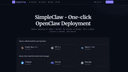
0SimpleClaw SimpleClaw - One-click OpenClaw DeploymentDeploy OpenClaw in under 1 minute. No servers or DevOps. Pick a model, connect a channel, and launch. [SimpleClaw](https://www.easyclaw.pro) has been out for a while now and makes OpenClaw deployment easier, and I hope you all like it. EasyClaw is a revolutionary "No-Ops" deployment platform designed for users who want to leverage the power of Large Language Models (LLMs) without the headache of managing servers or writing complex code. Whether you are a developer, a business owner, or an AI enthusiast, EasyClaw allows you to launch a fully functional AI chat application in just a few clicks. Why Choose EasyClaw?True Zero-Ops Experience: Forget about SSH, Docker, or cloud server maintenance. EasyClaw handles the backend infrastructure for you, meaning you can focus on the user experience rather than the plumbing. Rapid Deployment: Time is money. With our optimized workflow, you can pick a model, connect your preferred communication channel, and go live in under 1 minute. Multi-Model Integration: Access the world’s most powerful AI models, including OpenAI’s GPT-4, Anthropic’s Claude 3.5, and other open-source alternatives, all through a unified and sleek interface. Cross-Channel Support: Seamlessly connect your AI to various channels. Whether it's for web-based chat or integration with popular messaging platforms, EasyClaw makes connectivity effortless. Key Features at a Glance:Markdown-Ready Interface: Enjoy a premium chat experience with full support for code syntax highlighting, tables, and mathematical formulas. User-Friendly Dashboard: Manage your API keys, monitor usage, and customize your chatbot’s personality through an intuitive control panel. Enterprise-Grade Performance: Built on a high-concurrency architecture, ensuring low latency and high availability even during peak traffic. Privacy Focused: We prioritize your data security. Your API configurations are encrypted, ensuring that your keys and conversations remain private. How It Works:Pick a Model: Select from a library of cutting-edge AI engines. Connect a Channel: Choose where you want your AI to live (Web, API, or Social). Launch: Hit the deploy button and your personal AI instance is ready to use! Stop wasting hours on server configurations. Visit EasyClaw today and start building the future of AI interaction with the simplest deployment tool on the market.
- 33
 0
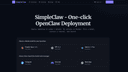
0SimpleClaw SimpleClaw - One-click OpenClaw DeploymentDeploy OpenClaw in under 1 minute. No servers or DevOps. Pick a model, connect a channel, and launch. [SimpleClaw](https://www.easyclaw.pro) has been out for a while now and makes OpenClaw deployment easier, and I hope you all like it. EasyClaw is a revolutionary "No-Ops" deployment platform designed for users who want to leverage the power of Large Language Models (LLMs) without the headache of managing servers or writing complex code. Whether you are a developer, a business owner, or an AI enthusiast, EasyClaw allows you to launch a fully functional AI chat application in just a few clicks. Why Choose EasyClaw?True Zero-Ops Experience: Forget about SSH, Docker, or cloud server maintenance. EasyClaw handles the backend infrastructure for you, meaning you can focus on the user experience rather than the plumbing. Rapid Deployment: Time is money. With our optimized workflow, you can pick a model, connect your preferred communication channel, and go live in under 1 minute. Multi-Model Integration: Access the world’s most powerful AI models, including OpenAI’s GPT-4, Anthropic’s Claude 3.5, and other open-source alternatives, all through a unified and sleek interface. Cross-Channel Support: Seamlessly connect your AI to various channels. Whether it's for web-based chat or integration with popular messaging platforms, EasyClaw makes connectivity effortless. Key Features at a Glance:Markdown-Ready Interface: Enjoy a premium chat experience with full support for code syntax highlighting, tables, and mathematical formulas. User-Friendly Dashboard: Manage your API keys, monitor usage, and customize your chatbot’s personality through an intuitive control panel. Enterprise-Grade Performance: Built on a high-concurrency architecture, ensuring low latency and high availability even during peak traffic. Privacy Focused: We prioritize your data security. Your API configurations are encrypted, ensuring that your keys and conversations remain private. How It Works:Pick a Model: Select from a library of cutting-edge AI engines. Connect a Channel: Choose where you want your AI to live (Web, API, or Social). Launch: Hit the deploy button and your personal AI instance is ready to use! Stop wasting hours on server configurations. Visit EasyClaw today and start building the future of AI interaction with the simplest deployment tool on the market.
- 34
 0
0Helpmaton is the workspace-based platform to build, manage, and scale AI agents without the chaos. Organize agents into dedicated workspaces with shared knowledge, custom budgets, and team permissions. 🚀 Key Features: • Memory & Docs: Agents learn from chats and your files. • Native Integrations: Google Workspace & Notion (OAuth). • Deployment: Slack/Discord bots. • Multi-Agent: Task delegation & web search. • Flexibility: BYO API keys or use ours. Open-source ready.
- 35
 0
0RedLinz is a web-based visual markup platform designed to improve communication between people and AI assistants by transforming visual annotations into structured, machine-readable prompts. Instead of spending time writing long explanations about interface changes, design revisions, bug reports, or content updates, users can simply upload a screenshot, highlight the exact areas that need attention, and export a detailed prompt that can be understood by leading AI models such as ChatGPT, Claude, Cursor, Perplexity, Grok, and many other AI-powered tools. The platform bridges the communication gap between visual thinking and text-based AI interactions, making it significantly easier to describe complex modifications with precision and clarity. Whether the task involves improving a user interface, fixing software bugs, editing marketing assets, or refining AI-generated images, RedLinz provides a faster and more reliable workflow that minimizes ambiguity while increasing the accuracy of AI-generated results. The platform is entirely browser-based, meaning users can start working immediately without downloading or installing any software. Images never leave the user's browser during the annotation process, providing an additional layer of privacy and security since all visual markup is performed locally on the client side. Users can upload screenshots, paste copied images directly into the application, or even begin with a blank canvas before adding annotations. Once the project is loaded, RedLinz offers a professional collection of markup tools including circles, arrows, rectangles, callout notes, highlights, numbered markers, checkmarks, deletion stamps, color replacement tools, image insertion, and several additional annotation symbols. Unlike traditional drawing applications that simply place graphics on top of an image, every annotation in RedLinz carries semantic meaning that is translated into structured instructions for AI systems. This allows AI assistants to understand not only where a change should happen but also what kind of modification is being requested. RedLinz supports a wide range of practical use cases across software development, product design, digital marketing, content creation, and creative workflows. Developers can create highly accurate bug reports by circling broken interface elements instead of writing lengthy descriptions that may be misunderstood. Designers can annotate Figma exports or staging websites to communicate design revisions with complete clarity. Product managers can specify sequential implementation steps using numbered markers, while marketers can highlight weak sections of landing pages and generate structured prompts requesting improved copywriting from AI assistants. The platform is also valuable for image generation workflows, allowing creators to revise AI-generated artwork by marking incorrect colors, misplaced objects, unwanted text, or anatomical mistakes and generating prompts that target only the selected modifications. These capabilities help eliminate unnecessary back-and-forth conversations while enabling both AI systems and human collaborators to understand requested changes immediately. One of RedLinz's most distinctive features is its semantic markup language, which assigns specific machine-readable meanings to every annotation tool. A circle instructs the AI to modify a particular element, an arrow indicates movement or positioning, rectangles define regions where changes should be applied, callout bubbles attach contextual notes, checkmarks preserve existing elements, deletion stamps remove objects, numbered markers establish execution order, strike-through tools eliminate text, color markers request color replacements, eyedroppers sample existing colors, erasers remove annotations, and image insertion tools specify where new visual assets should appear. By combining visual markup with structured coordinate data and contextual instructions, RedLinz generates prompts that are significantly more precise than manually written descriptions. This structured approach reduces misunderstandings, improves AI accuracy, and helps users achieve the desired result on the first attempt more consistently.
- 36
 0
0qtrl is a modern quality assurance platform designed to help teams start smarter, scale confidently, and optimize testing with the power of AI—without sacrificing control. Positioned between the limitations of manual testing and the rigidity of traditional automation, qtrl introduces a progressive approach to QA that evolves with your team’s maturity and needs. Many QA teams today feel trapped between extremes. Manual testing offers control but struggles to scale. Conventional automation frameworks promise speed, yet they are often brittle, expensive to maintain, and heavily dependent on specialized engineering resources. On the other end of the spectrum, fully autonomous AI testing solutions can feel opaque and unpredictable, forcing teams to relinquish oversight in exchange for efficiency. qtrl rejects this false choice. Instead, it delivers a balanced, transparent system where autonomy is earned gradually and governed intentionally. At its core, qtrl unifies test management, automation, and AI-driven execution into a single cohesive platform. Teams can begin by writing high-level test instructions—no complex scripting or automation required—and immediately generate value from day one. As confidence grows, automation can be introduced progressively. AI-generated test cases can be reviewed, refined, and approved at every step, ensuring that humans remain in control of quality standards. The platform includes enterprise-grade test management capabilities, with centralized test cases, plans, and execution histories. Full traceability and audit trails make it suitable for organizations that require compliance and documentation. Both manual and automated workflows coexist seamlessly, allowing teams to modernize at their own pace rather than through disruptive overhauls. qtrl’s Autonomous QA Agents operate within clearly defined boundaries. They execute instructions on demand or continuously, run across multiple environments, and adhere strictly to permissioned autonomy levels. Unlike simulation-based tools, qtrl performs real browser execution, providing accurate, production-like validation. Importantly, secrets and sensitive data remain encrypted and are never exposed to AI agents. The platform’s Adaptive Memory system builds a living knowledge base of your application. It learns from exploratory testing, execution patterns, and issue history to generate smarter, context-aware test suggestions. Over time, this continuous learning loop increases coverage and improves efficiency without hidden automation or black-box decisions. qtrl also integrates into real-world development workflows. It connects with requirements management systems, supports CI/CD pipelines, and delivers continuous feedback throughout the software lifecycle. Multi-environment execution enables testing across development, staging, and production with per-environment variables and consistent configurations. Governance is built by design. There are no forced AI-first workflows, no sudden loss of control, and no opaque decision-making processes. Teams decide what runs, what changes, and what scales. Autonomy increases only when the organization is ready. Built for product-led engineering teams, scaling QA departments, and enterprises modernizing legacy processes, qtrl empowers organizations to scale quality step by step. It is not hype-driven automation—it is structured, transparent progression toward intelligent, controlled QA at scale.
- 37
 0
0Claw Messenger is a specialized communication platform designed to connect AI agents directly with real-world messaging systems, making interactions feel natural and human-like. Its core idea is simple but innovative: instead of interacting with AI through dashboards or terminals, users can communicate with their AI agents through familiar messaging apps like iMessage, RCS, and SMS. This transforms AI from a tool into something that feels more like a conversational presence integrated into everyday life. One of the most distinctive features of Claw Messenger is that it allows AI agents to have their own dedicated phone number. Users can register their personal number, send messages to the agent’s number, and receive instant replies powered by webhooks. This creates a seamless communication loop where the AI agent becomes part of the user’s regular messaging environment. Importantly, access is controlled—only registered phone numbers can interact with the agent, ensuring privacy and security. A major advantage of the platform is that it does not require a Mac to use iMessage, which has traditionally been a limitation for developers. Claw Messenger handles the entire messaging infrastructure, allowing AI agents to run on Linux, Windows, Docker, or cloud servers while still being able to send and receive iMessages. This flexibility makes it highly accessible for developers working in different environments. The platform supports multiple messaging protocols through a single API, including iMessage, RCS, and SMS. It intelligently falls back between these protocols depending on availability, ensuring reliable message delivery. Additionally, Claw Messenger replicates native messaging features such as typing indicators, read receipts, and tapbacks (message reactions), providing a complete and familiar chat experience. It even supports group messaging, allowing AI agents to participate in conversations with multiple users at once. Setting up Claw Messenger is designed to be straightforward. Users simply register their phone number, configure their AI agent with the provided API or plugin, and start messaging. The platform integrates easily with popular AI frameworks like OpenClaw, LangChain, n8n, CrewAI, or any custom system capable of making HTTP requests. This makes it highly adaptable for different development workflows and use cases. Claw Messenger also offers flexible pricing plans based on message volume, starting with a low-cost entry plan and scaling up for higher usage or enterprise needs. Each plan includes essential features such as message delivery across all supported protocols, read receipts, and webhook integration. For larger organizations, custom plans are available with options like unlimited numbers and dedicated infrastructure. Beyond its technical capabilities, Claw Messenger reflects a broader vision of how AI should interact with humans. Instead of existing as isolated tools, AI agents become part of everyday conversations, accessible in the same way as friends or colleagues. This approach makes communication more intuitive and reduces the friction often associated with using AI systems. Overall, Claw Messenger stands out as a unique bridge between AI agents and real-world communication channels. By enabling direct messaging through familiar platforms and removing technical barriers, it redefines how users interact with AI—making it simpler, more natural, and deeply integrated into daily life.
- 38
 0
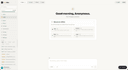
0LLMWise is the fastest way to compare, blend, and evaluate leading AI models — all from a single interface. Instead of juggling multiple AI subscriptions and browser tabs, LLMWise lets you send one prompt and see how GPT-5.2, Claude Sonnet 4.5, Gemini 3 Flash, DeepSeek R1, Grok 3, and more respond side-by-side in real time. Most professionals already use AI daily but remain locked into a single provider with no way to know if they're getting the best output. LLMWise solves this with five powerful modes: Chat — Talk to any model instantly. Built-in smart routing automatically picks the best model for your query — code questions go to GPT, creative writing to Claude, translation to Gemini — so you always get optimal results without thinking about it. Compare — Send one prompt to 2-4 models simultaneously and see responses stream in side-by-side. Perfect for evaluating which model handles your specific use case best, whether that's drafting emails, analyzing data, or writing code. Blend — Combines outputs from multiple models into a single, superior response. Uses Mixture-of-Agents architecture to synthesize the best reasoning from each model. The result consistently outperforms any individual model. Judge — Pit models against each other in a blind evaluation judged by a third AI model. Get an objective verdict on which model produces better output for your exact prompt, complete with scoring and reasoning. Mesh — Intelligent failover routing that automatically retries with backup models if your primary choice fails or is overloaded. Circuit-breaker protection ensures you always get a response. LLMWise is built for professionals who need reliable AI output without the overhead of managing multiple subscriptions. Key features include:
- 39
 0
0Writingmate is an AI web platform designed to help users and businesses solve tasks and automate workflows using the most popular text and text-to-image AI models. Writingmate AI chatbot helps users achieve the best possible results for their specific tasks by providing access to a diverse range of AI models. Key Features - More than 200 AI best models available from OpenAI, Anthropic, Meta AI, Google Gemini, Perplexity, Grok, and more. - AI model comparison mode. - Image Generation with OpenAI Image, Recraft V3, Stable Diffusion 3, and FLUX.pro. - Voice Input & Text-to-Speech. - Chat with Files. - Web Search with access to real-time web data. - AI Agents and assistants, pre-build and custom. - MCP Integrations. - AI coding with best code LLMs. Don't limit yourself to a single AI – get them all. Access the best Al models for writing, coding, learning, and content creation – all in one place. Solve your tasks more effectively.
- 40
 0
0OmniRogue is a data privacy–first AI platform that helps teams build, orchestrate, and deploy AI agents to automate real business workflows. It’s designed for organizations that want the power of modern AI without handing over sensitive data or losing operational control. With OmniRogue, you can connect tools, create multi-step agent workflows, and standardize how AI is used across your company—while maintaining privacy, governance, and clear ownership over your data. Whether you’re automating internal processes, customer operations, or knowledge workflows, OmniRogue provides a secure foundation to scale AI responsibly.
- 41
 0
0Langfa.st is a fast and minimal playground for testing and refining AI prompts. It supports over 50 large language models, including OpenAI, Anthropic, Mistral, Cohere, Google, and others — all available instantly without setup. You can insert variables, use Jinja2 templating, and compare outputs across models. There’s no need to sign up or bring your own API keys — it works out of the box. Langfa.st was built to eliminate the friction of existing tools: complicated UIs, required credentials, or overpriced subscriptions. It gives AI teams and prompt engineers a clean, disposable space to experiment, debug, and iterate — all in one tab. Free to use. You only pay if you need more volume or power features.
- 42
 0
0UseSkill is the AI skills library with 100+ integrations — pre-built workflows that deliver consistent results in 30 seconds, not 30 minutes of prompting. THE PROBLEM: With ChatGPT, you explain tasks repeatedly, copy-paste between apps, and get inconsistent results. THE SOLUTION: Pick a skill. Connect your tools once. Click run. Done. 100+ CONNECTORS INCLUDING: - CRM: Salesforce, HubSpot, Pipedrive, Zoho CRM, Close, Apollo - Productivity: Gmail, Google Sheets, Notion, Slack, Microsoft Teams, Outlook - DevOps: GitHub, Jira, Sentry, PagerDuty, Confluence, Bitbucket - Data: Snowflake, BigQuery, Databricks, Mixpanel, Amplitude, PostHog - Support: Zendesk, Freshdesk, Intercom, ServiceNow WHY USESKILL: → 30 seconds to results (not 30 minutes) → Same output every time (tested skills) → Nothing to install (browser-based) → Privacy-first (data never stored) 30200+ skills run weekly. 2,000+ users. Free, no credit card required.
- 43
 0
0А, чёрт, понял — cowork.ink это свой продукт, не форк OpenClaw. GoGogot — ваш open-source движок. Переписываю: Fast, lightweight AI agent platform — open-source alternative to OpenClaw for $20/mo OpenClaw is cool, but it's heavy, local-only, and eats through your API budget. We built something different. cowork.ink is a fast, lightweight AI agent that runs in the cloud. Real browser, real file system, real code execution — without the setup pain. Powered by our own open-source engine GoGogot, not a fork of anything. Why people pick us over OpenClaw: $20/mo, everything included. All top AI models (Claude, DeepSeek, Gemini) bundled in. No API keys to manage, no token bills, no cost surprises. OpenClaw on your own hardware? That's $1,600+ in month one. Lightweight and fast. No bloated desktop app eating your RAM. Your agent runs on an isolated cloud machine — your laptop stays clean. 60-second deploy. No Mac Mini, no Docker, no config files. Sign up, describe your task, done. Zero maintenance. We handle servers, updates, uptime, model routing. You handle your business. Full agent capabilities: real browser that searches, fills forms, extracts data. Works with any file — CSV, PDF, images, spreadsheets. Sends emails, schedules meetings, writes and runs code. Persistent memory across sessions. Cron-like scheduled tasks that run while you sleep. Built for teams, not just solo use. Admin panel with roles, container isolation, scales to 200 agents per node, 1-minute Kubernetes deployment. Enterprise security without enterprise complexity. 100% open-source. GoGogot is our engine — every line on GitHub. No telemetry, no black boxes. Self-host for free or let us run it for you. 6 ready-made roles: Customer Support, Personal Assistant, Content Writer, Data Analyst, DevOps Engineer, Bookkeeper — pre-configured and ready to go.
- 44
 0
0PrompTessor is an AI prompt analysis and optimization tool designed to help users unlock the full potential of AI. It provides smart prompt analysis, expert feedback, and prompt improvements to enhance AI outputs. The platform evaluates, improves, and optimizes AI prompts, offering actionable feedback and optimized suggestions to craft better prompts for various AI systems, including ChatGPT and LLMs.
- 45
 0
0PrompTessor is an AI prompt analysis and optimization tool designed to help users unlock the full potential of AI. It provides smart prompt analysis, expert feedback, and prompt improvements to enhance AI outputs. The platform evaluates, improves, and optimizes AI prompts, offering actionable feedback and optimized suggestions to craft better prompts for various AI systems, including ChatGPT and LLMs.
- 46
 0
0Nuveda AI is an all-in-one AI creative studio designed for creators, professionals, teams, and businesses that want to generate and enhance digital content from a single workspace. Instead of requiring users to maintain separate accounts and subscriptions for image generation, video creation, voice, music, upscaling, and other AI tools, Nuveda AI brings multiple creative workflows together under one platform. The service is available through its web application and also provides API and MCP access, making it possible to integrate its tools into custom applications, automated workflows, and AI agents. The platform covers several major categories of AI-powered creation and enhancement. Users can generate images from text prompts, create videos using prompts and visual references, produce music and audio, generate realistic avatar videos, and transform still images into moving video clips. It also includes image and video upscaling tools designed to improve resolution and visual quality. This broad collection makes Nuveda AI useful for content creators, marketers, developers, designers, agencies, and teams producing visual or multimedia content regularly. Image generation is one of the core capabilities of the platform. Users can describe the image they want using a text prompt and generate visual content with AI models. Nuveda AI also provides image upscaling for increasing resolution and improving details through AI-based super-resolution. For video creation, users can generate cinematic clips from prompts and references, while image-to-video functionality allows a static image to be transformed into an animated sequence. Motion control tools provide additional ways to animate still images with more precise movement and camera direction. Nuveda AI extends beyond visual generation into audio and voice production. Users can generate audio from text descriptions, create original music with customizable genres, moods, and tempos, and produce AI avatar videos with customized scripts and expressions. The platform also integrates voice-related capabilities and includes voice typing, allowing users to dictate prompts directly into the tools without additional setup. These features make the workspace suitable for producing complete multimedia assets rather than only individual images. The service also includes several productivity-focused AI tools. Its Prompt Enhancer can take a rough idea and transform it into a more detailed and optimized prompt, helping users obtain better results from generative models. The built-in AI Assistant combines capabilities such as web search, file uploads, image generation, and code interpretation, allowing users to perform multiple tasks within the same environment. One of Nuveda AI's most distinctive features is its support for AI agents through REST APIs and MCP. Each supported tool can be connected to external systems, allowing developers and teams to integrate AI generation into their own pipelines. AI agents can perform tasks such as creating images and videos, generating music, converting text to speech, creating avatars, controlling motion, upscaling media, generating captions, and checking available credits. This makes Nuveda AI more than a consumer-facing creative application; it can also function as infrastructure for automated AI workflows. The platform uses a credit-based pricing model with several monthly subscription levels. Users can start for free with an initial credit allocation and no credit card requirement, while paid plans provide progressively larger monthly credit allowances and access to the broader toolkit. Higher-level plans are designed for creators, professionals, agencies, and businesses with greater production requirements. Enterprise customers can also request customized credit volumes, dedicated support, SSO, API access, and invoicing. Overall, Nuveda AI positions itself as a unified AI studio where creators and teams can generate, enhance, manage, and automate multimedia production without constantly switching between different AI services. By combining multiple models and creative tools with API and MCP connectivity, the platform provides both an accessible workspace for individual creators and an extensible foundation for teams building AI-powered production workflows.
- 47
 0
0Self-hosting an AI assistant usually means 60+ minutes of SSH keys, server config, and dependency hell. I built ClawOneClick to turn that headache into a 60-second win. Pick your model, social, and hit deploy. No terminal, no config files, no DevOps experience required (BYOK available). Why it stands out: True 1-Click: Deployment that actually works in seconds. Always-On: Managed cloud infra that stays live 24/7. Privacy First: Secure, encrypted, and private. Stop configuring, start deploying!
- 48
 0
0Context Data is an enterprise data infrastructure built to accelerate the development of data pipelines for Generative AI applications. The platform automates the process of setting up internal data processing and transformation flows using an easy-to-use connectivity framework where developers and enterprises can quickly connect to all of their internal data sources, embedding models and vector database targets without having to set up expensive infrastructure or engineers.
- 49
 0
0Speed Chat is an AI learning platform that helps individuals and teams master AI through practical courses, premium prompt libraries, and real-world workflows. Whether you're a beginner or an experienced professional, Speed Chat provides structured learning paths to help you use AI more effectively. Learn how to work with leading AI models such as ChatGPT, Claude, Gemini, Midjourney, and other popular AI tools through step-by-step lessons, tutorials, and hands-on projects. The platform includes thousands of ready-to-use prompts for marketing, content creation, business, coding, design, productivity, education, and automation. Speed Chat regularly updates its content to keep learners informed about the latest AI technologies and best practices. With expert-designed courses and an extensive prompt library, users can save time, improve productivity, and develop valuable AI skills that can be applied immediately. Whether you're a marketer, entrepreneur, freelancer, student, developer, or business owner, Speed Chat makes learning AI practical, fast, and accessible.
- 50
 0
0Activepieces is an open-source AI Agent ecosystem that helps you build smart, autonomous AI agents to handle repetitive tasks. Zero coding required. In just 4 steps, non-technical users can create AI Agents that connect to hundreds of tools (like Gmail, CRMs, and databases) and get things done automatically. The AI Agents can also work independently or as a team. For example one agent can sort leads, another then sends personalized emails, and another onboards new clients. The AI agent ecosystem includes AI Agents, Tables for data storage, Todos (human approvals), and Model Context Protocols (MCPs) that enable you turn Claude, Cursor, Windsurf and other LLMs into AI Agents Whether you're automating customer support, sales workflows, or internal ops, Activepieces helps you move faster, reduce errors, and build AI-powered systems without writing code.
Frequently asked questions
GitHub Copilot is an AI-powered code autocompletion tool that generates code suggestions as you type. It can often autocomplete entire functions based on the initial input, significantly speeding up the coding process. Many developers find it indispensable for enhancing productivity and reducing the time spent on writing boilerplate code.
ChatGPT is a versatile AI tool that developers can use for coding assistance, brainstorming, and even generating recipes. It is known for its advanced conversational capabilities and is particularly useful for programming tasks. While it requires a subscription fee, many users find the investment worthwhile due to its effectiveness.
Vectorize.io is a tool designed to optimize unstructured data into vector search indexes, which are essential for retrieval-augmented generation. It helps developers efficiently structure their data, making it easier to implement vector search functionalities in their applications.
Rewritebar is an AI tool that enhances writing across any macOS application. It assists users in correcting grammar mistakes, changing writing styles, and translating text, making it a valuable resource for developers who need to communicate effectively in their documentation and code comments.
DevIntern streamlines the development process by transforming raw ideas into actionable tasks and pull requests. It automates the creation of well-defined tickets from vague descriptions and integrates with AI agents to implement code changes, significantly reducing the time spent on project management and code reviews.
Diffray utilizes a multi-agent architecture to provide specialized code reviews, focusing on various aspects such as security and performance. This approach results in fewer false positives and helps teams save time on pull request reviews, making it a more efficient tool for maintaining code quality.
SecVibe acts as an AI-powered security copilot that analyzes developer prompts and AI-generated code in real-time. It helps identify vulnerabilities and enforce secure coding practices during the development process, ensuring that security measures are integrated from the start rather than being an afterthought.
TypingMind is an advanced chat interface for interacting with various AI models. It supports custom API keys, allows the use of leading AI models, and includes features like text-to-speech capabilities. Its free tier makes it accessible for developers looking to enhance their AI interactions.
Act101 is designed for semantic code refactoring and supports a wide range of programming languages. It provides AI agents with the ability to perform structured code transformations while maintaining the integrity of the codebase. This tool is particularly useful for large-scale migrations and ensures that changes are safe and reversible.
Lisapet.ai is an AI product development platform that accelerates the prototyping and testing of AI features. It offers tools for prompt engineering, automated testing, and real-time analytics, enabling teams to develop and launch AI-powered features more efficiently while reducing manual testing efforts.