Best AI Tools for Developers
The AI that writes, reviews, and ships alongside you.
The best AI tools for developers — code generation, review, debugging, agents, and automation that plug into how you already build.
- 51
 0
0LLM Browser is a cloud-based, stealth browser platform built specifically for AI agents, enabling them to access and interact with any website—without being blocked by CAPTCHAs, proxies, or advanced anti-bot systems like Cloudflare, DataDome, or PerimeterX. Designed for seamless integration with popular AI frameworks such as LangChain, MCP servers, BrowserUse, CrewAI, and OpenAI CUA, it provides native support for HTTP and CDP modes, including compatibility with Playwright, Puppeteer, Selenium, and more. Unlike traditional automation tools, LLM Browser operates at the core level, using a custom Chromium build with undetectable fingerprinting, automated CAPTCHA solving, and full protection against DNS, WebRTC, and IP leaks. It dynamically generates realistic browser profiles from a pool of over 600,000 combinations, ensuring cross-fingerprint consistency and mimicking real user behavior through human-like mouse movements, scrolling, and typing. Hosted entirely in a secure, GDPR-compliant cloud infrastructure, it manages browser containers, network isolation, and lifecycle automation—removing the need for users to handle proxies, anti-detection logic, or server management. Whether you're building autonomous research agents, real-time RAG pipelines, or task-driven web bots, LLM Browser provides a scalable, undetectable foundation to power agentic automation at scale, helping developers bypass modern web defenses while maintaining performance, privacy, and security.
- 52
 0
0You've already heard this AI live while watching your favorite sport. **Introducing MARS8.** Now available to every developer as an API. MARS was built for live content like sports and news, where real-time translation can't afford mistakes. When millions are watching, **live doesn't lie.** Building for real content taught us: "No single model can win every use case." MARS8 ships as a family: → **MARS-Flash:** Lowest TTFB for real-time agents → **MARS-Pro:** Speed + fidelity for dubbing and audiobooks → **MARS-Instruct:** Director-level emotional control. → **MARS-Nano:** High-quality on-device. Language support covers 99% of the world's speaking population. **The results?** MARS8 benchmarks as the world's leading TTS model. **But there's one last thing.** MARS8 launches as the first TTS model on every major cloud: GCP, AWS, you name it. Stop being trapped by the API tax. Now go build something impossible with MARS8.
- 53
 0
0Point GenieOS at your URL and it learns your brand. Brief it with a simple prompt, or run it via MCP from your Chat or IDE. It builds on-brand emails, social content and landing pages in minutes. Review, edit if you like, then launch directly to your audience from the platform. GenieOS then measures against your exact objectives and sharpens the next campaign automatically. Best For: Developers and AI Engineers: Set your objectives over MCP or API, and the loop runs on its own. Fast-Adopter Marketers: Scale your output without increasing headcount. Key Features: Brand Extraction Multi-Channel Generation Outcome-Based Analytics Continuous Learning Loop Human-in-the-Loop: Nothing goes live without approval. Developer Ecosystem: Native Model Context Protocol (MCP) server, REST API, and typed SDK access. Beta Pricing: First 100 signups get three months free on the Glow plan. Refer a friend and you both get 100 extra credits. Sign up for the beta at https://gogen.ie/genieos-directories
- 54
 0
0Most AI chatbots hide the true cost of their technology, where your data goes, how much energy each conversation consumes, and who profits from your customer interactions. With Frida, you get full transparency about the AI powering your support. Frida gives you intelligent AI assistants that respect both your users and the planet. Our platform combines AI trained on your knowledge, sustainable infrastructure powered by GreenPT, and full transparency into every conversation’s environmental impact. Whether you need a website chatbot, internal knowledge assistant, or AI integrated into Slack and Teams, Frida delivers accurate answers without compromising on privacy or sustainability. Capabilities Powerful features that make AI work for your organisation. Easy to set up, simple to manage, and designed with sustainability built in. Custom AI Agents Create AI agents that sound like your brand, not a generic robot. Upload your FAQs, documentation, and product information—or let Frida crawl your website automatically. Define how your agent responds: friendly and casual, professional and precise, or anything in between. Knowledge Structure your information the way it makes sense for your organisation. Create dedicated paths for products, policies, procedures, or any topic your users ask about. Add rich content like images, videos, and downloadable files to give complete answers. Keep everything organised and easy to update as your business evolves. Brandable Chat Widget Make Frida look like you built it yourself. Customize colors, fonts, logos, and welcome messages to match your brand perfectly. Add quick-start buttons for common questions and create a welcoming experience for every visitor. With support for English, Dutch, German, French, Spanish, and more, your assistant speaks your customers’ language—literally. Multi-Channel Deployment Meet your users where they already are. Embed Frida on your website for customer support, add it to Slack or Teams for internal help, or connect via API to build custom experiences. One knowledge base, multiple touchpoints—so you train once and deploy everywhere. Smart Integrations Frida works with the tools you already use. Pull product data from Shopify or WooCommerce, search your Notion workspace during conversations, access files from Google Drive or OneDrive, and send conversations directly to Slack. No more switching between systems—Frida brings your knowledge together in one place.
- 55
 0
0AI Game Generator is an AI-powered game generation platform that quickly converts text descriptions into playable HTML5 games. Supports multiple AI models (OpenAI, DeepSeek, Replicate), subscription-based service with Creem payment integration. Perfect for game developers, designers, and creative professionals seeking efficient prototype development.
- 56
 0
0ChatXOS is the all-in-one AI chat app for iPhone. Instead of juggling separate subscriptions to ChatGPT ($20/mo), Claude ($20/mo), Gemini ($20/mo), and Grok ($30/mo), get access to all of them in one native iOS app for just $13/mo. The app includes 18+ AI models from OpenAI, Anthropic, Google, xAI, and DeepSeek. Use Claude 4.5 Opus for coding tasks, GPT-5.2 for general knowledge, Gemini 3.0 for research, Grok for real-time news, and DeepSeek for the cutting edge. Key features: - Switch models mid-conversation - Compare Mode: Run up to 4 models simultaneously and pick the best response - Chat organization with pinning and custom titles - Web search capabilities - Image/file attachments for vision models Built for mobile-first users who want the best AI for every task without subscription juggling.
- 57
 0
0ChatXOS is the all-in-one AI chat app for iPhone. Instead of juggling separate subscriptions to ChatGPT ($20/mo), Claude ($20/mo), Gemini ($20/mo), and Grok ($30/mo), get access to all of them in one native iOS app for just $13/mo. The app includes 18+ AI models from OpenAI, Anthropic, Google, xAI, and DeepSeek. Use Claude 4.5 Opus for coding tasks, GPT-5.2 for general knowledge, Gemini 3.0 for research, Grok for real-time news, and DeepSeek for the cutting edge. Key features: - Switch models mid-conversation - Compare Mode: Run up to 4 models simultaneously and pick the best response - Chat organization with pinning and custom titles - Web search capabilities - Image/file attachments for vision models Built for mobile-first users who want the best AI for every task without subscription juggling.
- 58
 0
0ChatXOS is the all-in-one AI chat app for iPhone. Instead of juggling separate subscriptions to ChatGPT ($20/mo), Claude ($20/mo), Gemini ($20/mo), and Grok ($30/mo), get access to all of them in one native iOS app for just $13/mo. The app includes 18+ AI models from OpenAI, Anthropic, Google, xAI, and DeepSeek. Use Claude 4.5 Opus for coding tasks, GPT-5.2 for general knowledge, Gemini 3.0 for research, Grok for real-time news, and DeepSeek for the cutting edge. Key features: - Switch models mid-conversation - Compare Mode: Run up to 4 models simultaneously and pick the best response - Chat organization with pinning and custom titles - Web search capabilities - Image/file attachments for vision models Built for mobile-first users who want the best AI for every task without subscription juggling.
- 59
 0
0Sprite AI is a modern, AI-powered platform designed to help creators generate high-quality pixel art sprites for games in just seconds. It removes one of the biggest barriers in game development: the need for artistic skill. With this tool, anyone—from beginners to experienced developers—can transform simple ideas into fully usable, game-ready assets. Instead of spending hours drawing and refining pixel art manually, users only need to describe what they imagine, and the system instantly generates a sprite that matches their vision. At the core of Sprite AI is its simple but powerful workflow. Users start by typing a description, such as a treasure chest filled with gold coins or a fire-breathing dragon. The AI interprets this input and produces a detailed pixel art sprite almost instantly. This “describe it and get it” approach makes the creative process fast, intuitive, and accessible. It allows developers to focus more on gameplay and storytelling rather than spending excessive time on asset creation. Beyond generation, Sprite AI also gives users the ability to customize their sprites. After creating an image, users can tweak colors, refine details, and adjust elements to better match their style or project requirements. These editing tools are designed to feel simple yet powerful, enabling creators to add a personal touch without needing advanced design knowledge. The result is a balance between automation and creative control. Another key advantage of Sprite AI is its seamless integration into game development workflows. Once a sprite is ready, it can be downloaded in multiple sizes and formats, making it compatible with popular game engines like Unity, Godot, and GameMaker. This ensures that assets can be immediately used in real projects without additional conversion or optimization. The platform is built to deliver not just images, but production-ready assets that fit directly into a developer’s pipeline. The platform also features a gallery that showcases a wide variety of generated sprites. These include characters like knights, ninjas, and skeletons, as well as objects such as weapons, magical items, and icons. This gallery serves as both inspiration and proof of what the tool can achieve, demonstrating the diversity and quality of results possible with just a short text prompt. Sprite AI offers flexible pricing plans to suit different types of users. From hobbyists working on small projects to indie developers and professional teams, each plan provides a specific number of sprites per month along with features like private generations, priority processing, and multiple file formats. The platform also emphasizes user-friendly policies such as the ability to cancel anytime and a refund guarantee if the generated assets are not satisfactory. Overall, Sprite AI represents a significant step forward in game asset creation. It combines speed, accessibility, and quality into a single tool, empowering creators to bring their ideas to life without technical or artistic limitations.
- 60
 0
03DAIStudio presents itself as a powerful and accessible platform designed to simplify the process of creating high-quality 3D models using artificial intelligence. At its core, the platform removes the traditional complexity associated with 3D modeling by allowing users to generate detailed assets from simple text prompts or images. Whether you type a description like a “realistic fantasy orc warrior” or upload a reference image, the system can transform that input into a fully textured, production-ready 3D model in a matter of seconds. This approach dramatically lowers the barrier to entry, making 3D creation available not only to professionals but also to beginners with no prior experience. One of the platform’s most compelling advantages is its speed. Tasks that would normally take hours—or even days—of manual modeling, sculpting, and texturing can now be completed in minutes. This efficiency allows creators to iterate faster, experiment more freely, and focus on creativity rather than technical limitations. The inclusion of tools such as AI Texturing and Quad Remeshing further enhances the workflow by automatically applying realistic materials and optimizing mesh topology. These features ensure that the final assets are clean, efficient, and ready for immediate use in production environments like game engines, animation software, or 3D printing pipelines. Beyond basic generation, 3D AI Studio offers a complete ecosystem of tools that support the entire creative process. Users can generate images, edit visuals, create videos, and convert 2D content into 3D assets—all within a single interface. The platform also includes an organized asset library where users can store, manage, and download their creations. This makes it easy to handle large volumes of assets and maintain an efficient workflow, especially for teams or professional projects. Additionally, the ability to export models in multiple industry-standard formats ensures compatibility with popular tools such as Unity, Unreal Engine, Blender, and various 3D printing systems. Another key strength of the platform is its versatility across industries. From game development and film production to education, product design, and virtual reality, the technology adapts to a wide range of use cases. Independent creators and large studios alike can benefit from the ability to quickly produce high-quality assets without relying on large teams or expensive software. The inclusion of an API also allows developers to integrate these capabilities directly into their own applications, enabling automation and scalability for more advanced workflows. User feedback highlights the platform’s reliability, ease of use, and impressive output quality. Many creators emphasize how it has significantly reduced production time while maintaining a high level of detail and realism. The combination of speed, accessibility, and professional-grade results positions 3D AI Studio as a transformative tool in the evolving landscape of digital creation. Overall, it represents a shift toward more intuitive, AI-driven workflows where anyone can bring their ideas to life in three dimensions quickly and efficiently.
- 61
 0
0As AI agents get more autonomous, a single bad command can wipe logs, drop tables, or exfiltrate data. Clawsec sits between the agent and the system, intercepting dangerous actions before they execute. No complex setup. One command to install: openclaw plugins install clawsec It's open source and free. We'd love your feedback and a star on GitHub.
- 62
 0
0**PDF to Markdown** is a cutting-edge AI-powered utility engineered to solve the most persistent challenges in document conversion. Unlike traditional rule-based tools that often scramble layouts or lose data, our advanced AI engine deeply understands document structure. It accurately reconstructs **complex tables**, converts **mathematical formulas** directly into LaTeX, and intelligently re-flows **multi-column text** into a readable linear format. Designed for specialized workflows, the platform features a streamlined "drag-and-drop" interface with instant local previews and a high-fidelity **side-by-side comparison view**, allowing users to verify conversions in real-time. The tool not only handles text but also extracts images into organized asset packages, ensuring a complete migration of content. Whether for academic research, technical documentation migration, or personal knowledge management, PDF to Markdown Expert delivers high-fidelity results that are ready for immediate use in tools like Obsidian, Notion, or GitBook.
- 63
 0
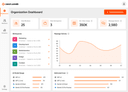
0Geekflare Connect is a BYOK AI platform for modern businesses to reduce AI spending and collaborate with the entire team. In a world where new AI models are released constantly, Geekflare AI ensures your business stays agile. Instead of being locked into a single ecosystem, your team can choose the best model for any task. Key Features: - Switch between top-tier AI models from providers like OpenAI, Google, Anthropic, Perplexity, and more, all within a single interface. - Onboard your entire organization, from marketing and sales to development and support. Work together in a shared environment, manage user access, and maintain a centralized history of your AI-powered work. - Consolidate all AI usage into one platform. Instead of managing dozens of individual subscriptions, use your own API keys (BYOK) to monitor usage, prevent redundant spending, and optimize costs across the entire organization. - Augment LLM responses with Internet access to get real-time data.
- 64
 0
0TrimSheetFast - Fast Game-Ready Trim Sheets In Seconds
game engine compatible software·production-ready softwareTrimSheetFast is an AI-powered trim sheet generator built for modern game development pipelines. It allows game developers, environment artists, and 3D professionals to generate structured, production-ready PBR trim sheets and texture atlases in seconds. Instead of wasting hours building trim sheets manually, TrimSheetFast introduces a trim-first workflow: define regions, describe materials, and instantly generate a clean, consistent atlas ready for modular assets, props, and environment kits. Built for speed, scalability, and real-time production, the platform eliminates repetitive material work while ensuring visual consistency across large asset libraries, critical for AAA games, indie projects, and archviz workflows. Key features: Trim Sheet-First Workflow Build your layout, assign material prompts per region, and generate full trim sheet atlases without UV baking or manual texturing. AI Texture Atlas Generation Generate complete, consistent trim sheet atlases with cohesive materials across all regions in seconds. Production-Ready PBR Maps Export high-quality albedo, normal, roughness, and other PBR maps optimized for real-time rendering and game engines. Built for Game Engines Fully compatible with Unity, Unreal Engine, Blender, and standard 3D pipelines for immediate integration. Fast Iteration at Scale Quickly regenerate and refine trim sheets to match evolving art direction without slowing down production. TrimSheetFast is built for studios and solo creators who need faster asset production, optimized workflows, and scalable material systems without the overhead of traditional texturing tools.
- 65
 0
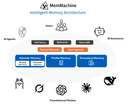
0MemMachine is an open-source memory layer that transforms AI agents and applications into intelligent, personalized assistants. Unlike traditional AI apps that start fresh each time, MemMachine enables applications to learn, store, and recall data from past sessions, enriching every interaction with context. Key Features: • Persistent Memory - Maintains memory across sessions, agents, and LLMs, building evolving user profiles • Multi-Platform Integration - Works with OpenAI, AWS Bedrock, Ollama, and more via MCP server capability • Flexible Deployment - Run locally, in the cloud, or install via pip with full data control • Open-Source - Comprehensive documentation, active community support
- 66
 0
0Rock Smith - AI-Powered Black Box QA Testing Rock Smith automates web application testing using autonomous AI agents that see and interact with your app the way real users do. Unlike traditional test automation tools that rely on brittle CSS selectors and XPath expressions, Rock Smith uses semantic element targeting—describing elements by visual appearance and context (like "the blue Submit button below the form") so tests self-heal when your UI changes. How It Works Create reusable test flows in natural language or let our Discovery engine automatically explore your site and generate tests from observed patterns. Key Features • Visual Intelligence – AI agents understand buttons, forms, and modals by appearance, not DOM structure • Edge Case Generation – Automated fuzzing creates 14 scenario types including boundary values, XSS, and injection testing • Test Personas – Simulate different user behaviors, from power users to first-time visitors.
- 67
 0
0Free AI 3D Model Generator - MeshGPT Create stunning 3D models from text or images instantly with our free AI 3d model generator. Transform your ideas into production-ready 3D assets with MeshGPT. Use Cases: ● Game Development: Quickly generate characters, props, and environment models ● Animation: Turn concept sketches into fully textured 3D assets ● Virtual & Augmented Reality: Build immersive 3D experiences efficiently ● Product Design: Visualize concepts with accurate 3D models ● Education & Research: Simulate experiments or create 3D teaching resources
- 68
 0
0PrimeClaws is a managed hosting platform built for users who want to run AI agents such as OpenClaw and Hermes continuously without having to manage servers, Docker containers, security updates, or infrastructure maintenance themselves. Instead of spending hours configuring a VPS, troubleshooting Linux environments, and maintaining software updates, users can launch an AI agent in minutes through a hosted environment that remains online 24/7. The platform is designed for entrepreneurs, developers, automation enthusiasts, and businesses that need persistent AI assistants capable of handling tasks, conversations, workflows, and integrations across multiple communication channels. One of PrimeClaws' biggest selling points is its managed OpenClaw hosting. Rather than requiring users to rent a server and manually configure Docker, SSL certificates, networking, firewalls, and monitoring tools, PrimeClaws handles the technical infrastructure behind the scenes. This allows users to focus entirely on building workflows and getting productive results from their AI agents. The service emphasizes simplicity, reliability, and accessibility for both technical and non-technical users. The platform supports a wide range of modern AI models, including GPT-5.4, GPT-5.3, Mistral Large 3, Kimi K2.5, and DeepSeek V3.2. During its launch promotion, several frontier AI models are included at no additional cost, allowing customers to start using advanced reasoning and coding models immediately without first configuring external API providers. Users can also connect their own API keys from providers such as OpenAI, Anthropic, Google, or any OpenAI-compatible endpoint when they require additional flexibility or higher usage limits. PrimeClaws focuses heavily on persistent AI automation. Agents remain online around the clock and can connect to popular platforms such as Telegram, WhatsApp, Discord, Slack, and other communication channels. This enables businesses and individuals to create assistants that continuously respond to messages, automate workflows, manage tasks, monitor information, and maintain long-term conversational memory. The platform highlights persistent memory as a core feature, allowing agents to remember previous interactions and maintain context across sessions rather than treating every conversation as a fresh start. A major differentiator is the inclusion of full infrastructure access. Users can choose between lightweight Docker-based plans and complete VPS plans. Docker plans provide isolated environments suitable for most use cases at a lower cost, while VPS plans offer dedicated virtual servers with root access, SSH support, Linux environments, and the freedom to install custom software, services, systemd applications, VPN tools like Tailscale, or virtually any compatible application. This flexibility makes PrimeClaws appealing not only for AI agents but also for broader automation and self-hosting projects. The platform also includes browser-based terminal access, allowing users to inspect logs, install packages, modify configurations, and manage their environments without requiring external SSH clients. Combined with automatic updates, restart mechanisms, and managed maintenance, this creates a balance between simplicity and control that many AI hosting platforms do not offer. Privacy and ownership are recurring themes throughout the service. PrimeClaws emphasizes that customers maintain full control over their data, can export agent information whenever they choose, request deletion of stored data, or remove their accounts entirely. The platform positions itself as an alternative to closed AI services that lock users into proprietary ecosystems. Beyond the hosting itself, PrimeClaws has invested heavily in community support. Its active Discord community provides tutorials, troubleshooting assistance, feature discussions, and examples of successful AI agent deployments. This community-driven approach helps users learn from others operating AI systems in real-world scenarios and accelerates adoption for newcomers. Overall, PrimeClaws aims to remove the technical barriers associated with running AI agents continuously. By combining managed infrastructure, frontier AI models, multi-channel integrations, persistent memory, autonomous task execution, browser-based management tools, and flexible hosting options, it offers an all-in-one environment for individuals and organizations that want reliable AI agents running 24/7 without the complexity of traditional self-hosted deployments.
- 69
 0
0Mixels.ai is a free AI pixel art generator and online pixel art editor that lets you pixelate any image, convert photos to pixel art, or generate game-ready sprites from text — all with perfect grid alignment. No mixels, no cleanup, no green fringing. The best free pixel art software and Aseprite free alternative, built for retro game devs and pixel art lovers — no download required. AI Generate Generate pixel art avatars, items, and game assets from a text prompt or use a reference photo to convert a picture to pixel art. Choose 64x64 or 128x128 resolution with isometric and 2D flat views. The AI pixel art generator produces clean, grid-aligned results every time — a true free sprite maker and ai game asset generator in one. Pixel Art Editor Online A complete free pixel art program with 9 tools — pencil, brush, eraser, fill, line, rectangle, circle, selection, and eyedropper — plus adjustable brush size, shape, hardness, opacity, and pressure sensitivity. Work with unlimited layers, 17 blend modes, 6 layer effects (HSL, vibrance, brightness/contrast, glow, white balance, quantize), pixel-perfect mode, symmetry tools, customizable grid overlay, and curated palettes from Celeste, Stardew Valley, and Shovel Knight. Full undo/redo history with state timeline. Pixel Doctor — Photo to Pixel Art Converter Upload any photo and convert it to pixel art instantly. This free image pixelator auto-removes backgrounds, crops to content, and extracts dominant colors. Pixelate a photo, turn a picture into pixel art, or create a pixel avatar — then import results directly into the editor as a new layer.
- 70
 0
0Convert Text & Images to High-Quality 3D Models in Seconds. Image to 3D AI lets you generate high-quality 3D models from images or text in seconds. Free, fast, and perfect for dev, model designer. ● Game Development: ○ Rapid prototyping for characters, props, and environments ○ Consistent multi-view outputs for better integration ○ Optimized models ready for Unity, Unreal, and other engines ● 3D Printing: ○ Clean mesh generation suitable for 3D printing workflows ○ Easy scaling and adjustments before printing ○ Faster transition from idea to physical prototype ● Interior Design: ○ Generate furniture and decor models from reference images ○ Quickly test different layouts and design styles ○ Improve client presentations with realistic 3D visuals ● Education: ○ Create 3D models for subjects like science, history, and design ○ Improve comprehension with interactive visual learning ○ Enable students to explore and build their own 3D content
- 71
 0
0Wire is a content operations CLI that replaces your entire SEO and publishing stack. Instead of paying for Ahrefs, Semrush, SurferSEO, WordPress Hosting, Yoast, and Grammarly separately, Wire handles keyword research, cannibalization detection, content optimization, static site generation, writing quality checks, and Google Search Console integration in one pipeline. Thin content, broken links, AI writing patterns, and title violations: Wire refuses to publish until problems are resolved. No warnings you can ignore. Give your AI agent the Wire bot protocol, and it operates your site autonomously: audits, rewrites, news integration, internal linking, and deployment. You configure it once. The agent handles the rest. Wire runs locally. Your content and search data never leave your machine. Output is static HTML, no database, no server, no attack surface. Free hosting via GitHub Pages. Managed service available for hands-off operation. Migrate from WordPress or MkDocs today.
- 72
 0
0Most AI voice systems look the same on the surface: a single Text-to-Speech model hidden behind an API. Easy to use, hard to customize, and nearly impossible to scale efficiently. CAMB.AI took a different approach. Built by Apple, Carnegie Mellon AI researchers, MARS8 is the first TTS family designed for production reality -not lab demos. Instead of forcing one-size-fits-all tradeoffs, MARS8 offers 4 architectures optimized for real-world use cases: 1. MARS-Flash: Sub-150ms TTFB for real-time agents. 2. MARS-Pro: Balanced speed and fidelity for dubbing and media. 3. MARS-Instruct: Fine-grained, director-level control for film production. 4. MARS-Nano: Ultra-efficient, 50M parameter model for on-device performance. MARS8 also changes the economics of Voice AI, moving from a “pay-per-character” pricing model to a compute-first approach, where developers can deploy on their own infrastructure across AWS, Google Cloud, Modal, Baseten & 25 more GPU compute platforms. Start building now!
- 73
 0
0100% Offline, Private Local AI Chat for MacOS - 100% Offline - Try before you buy - 100+ local models for every use case - Chat with Image, PDF and docs - No Recurring Subscription (One time payment) 100% Offline, Private Local AI Chat for MacOS - 100% Offline - Try before you buy - 100+ local models for every use case - Chat with Image, PDF and docs - No Recurring Subscription (One time payment) 100% Offline, Private Local AI Chat for MacOS - 100% Offline - Try before you buy - 100+ local models for every use case - Chat with Image, PDF and docs - No Recurring Subscription (One time payment)
- 74
 0
0The Product Description Generator by Good AI Tools is a free AI-powered writing tool designed to help SaaS founders, software developers, marketers, and product teams create professional product descriptions for websites, software directories, and marketing materials. Instead of spending time manually writing listing copy or optimizing descriptions for search engines, users can generate polished content by providing a few key details about their product. The tool produces multiple types of marketing copy, including product descriptions, feature summaries, benefit-focused bullet points, and SEO-friendly meta descriptions, making it a practical resource for businesses preparing product launches, directory submissions, landing pages, or promotional campaigns. The generator is built around a simple workflow that requires only a handful of inputs. Users begin by entering the product name, selecting or describing the product category, identifying the intended target audience, listing the software's primary features, and choosing the preferred writing tone. These inputs provide enough context for the AI to generate content that accurately represents the product while maintaining a clear marketing message. The process is intentionally streamlined so founders and marketing teams can create professional copy within minutes without requiring copywriting experience or advanced prompt engineering skills. One of the primary goals of the Product Description Generator is to produce descriptions that are both informative and conversion-focused. Rather than simply listing technical features, the generated content explains who the product is designed for, the problems it helps solve, and the benefits users can expect from adopting it. This emphasis on practical value helps businesses communicate their software more effectively to potential customers while making directory listings and landing pages easier to understand. The generated descriptions are intended to present products in a concise, professional, and engaging manner that encourages readers to continue exploring the software. The platform also supports search engine optimization by generating SEO-friendly meta descriptions and search snippets suitable for search engine results pages and social media previews. These shorter pieces of copy summarize the product while encouraging users to click through to the website. In addition to long-form descriptions for landing pages, the tool creates compact summaries appropriate for software directories, product cards, marketplace listings, and other environments where space is limited. This allows businesses to maintain consistent messaging across multiple platforms while adapting content to different publishing requirements. Good AI Tools also provides practical guidance on writing effective SaaS product descriptions. The platform recommends beginning every description by clearly identifying the software category so readers immediately understand the type of product being presented. It encourages businesses to explain who the product is built for, describe the core workflow it improves, and emphasize the most valuable outcome rather than overwhelming readers with technical specifications alone. The guidance also recommends keeping descriptions concise, easy to scan, and focused on helping prospective customers determine whether the product matches their needs. For software directory listings, the tool promotes a balanced writing style that prioritizes clarity and credibility. Rather than encouraging exaggerated marketing claims, Good AI Tools advises users to avoid unsupported statements regarding revenue growth, customer numbers, certifications, compliance, or guaranteed business outcomes unless those claims can be verified. Instead, product descriptions should accurately present the software's primary functionality, target audience, and strongest competitive advantages. This approach helps businesses create trustworthy listings that meet the editorial standards of many software directories while building confidence among potential customers.
- 75
 0
0Soniox is a multilingual voice AI platform that unifies speech-to-text, text-to-speech, and real-time translation in a single API across 60+ languages and 3,600 language pairs. It's built for the hardest parts of voice AI — seamless mid-sentence language switching, alphanumerics, foreign names, multi-speaker conversations, and high-noise environments — with native-speaker accuracy rather than English-first performance. Low-latency streaming transcribes with sub-200ms latency and starts generating speech from the first few words. The same models and API deploy globally with in-region processing to meet latency, data residency, and regulatory needs. Trusted by Perplexity, Samsung, LG, Wonderful, DeliverHealth, and many others. Whatever you're building — voice agents, wearables, live captioning, dictation, or speech-to-speech translation — Soniox is the speech layer powering your voice AI product.
Frequently asked questions
GitHub Copilot is an AI-powered code autocompletion tool that generates code suggestions as you type. It can often autocomplete entire functions based on the initial input, significantly speeding up the coding process. Many developers find it indispensable for enhancing productivity and reducing the time spent on writing boilerplate code.
ChatGPT is a versatile AI tool that developers can use for coding assistance, brainstorming, and even generating recipes. It is known for its advanced conversational capabilities and is particularly useful for programming tasks. While it requires a subscription fee, many users find the investment worthwhile due to its effectiveness.
Vectorize.io is a tool designed to optimize unstructured data into vector search indexes, which are essential for retrieval-augmented generation. It helps developers efficiently structure their data, making it easier to implement vector search functionalities in their applications.
Rewritebar is an AI tool that enhances writing across any macOS application. It assists users in correcting grammar mistakes, changing writing styles, and translating text, making it a valuable resource for developers who need to communicate effectively in their documentation and code comments.
DevIntern streamlines the development process by transforming raw ideas into actionable tasks and pull requests. It automates the creation of well-defined tickets from vague descriptions and integrates with AI agents to implement code changes, significantly reducing the time spent on project management and code reviews.
Diffray utilizes a multi-agent architecture to provide specialized code reviews, focusing on various aspects such as security and performance. This approach results in fewer false positives and helps teams save time on pull request reviews, making it a more efficient tool for maintaining code quality.
SecVibe acts as an AI-powered security copilot that analyzes developer prompts and AI-generated code in real-time. It helps identify vulnerabilities and enforce secure coding practices during the development process, ensuring that security measures are integrated from the start rather than being an afterthought.
TypingMind is an advanced chat interface for interacting with various AI models. It supports custom API keys, allows the use of leading AI models, and includes features like text-to-speech capabilities. Its free tier makes it accessible for developers looking to enhance their AI interactions.
Act101 is designed for semantic code refactoring and supports a wide range of programming languages. It provides AI agents with the ability to perform structured code transformations while maintaining the integrity of the codebase. This tool is particularly useful for large-scale migrations and ensures that changes are safe and reversible.
Lisapet.ai is an AI product development platform that accelerates the prototyping and testing of AI features. It offers tools for prompt engineering, automated testing, and real-time analytics, enabling teams to develop and launch AI-powered features more efficiently while reducing manual testing efforts.