Home
List · created July 2026

Best AI Tools for Developers

The AI that writes, reviews, and ships alongside you.

149Items
0Contributors
0Votes
Sort by
  1. 1GitHub Copilot

    AI-generated code autocompletions. Start typing and Copilot will generate code suggestions based on your input. Very often when you start typing the name of your function, it just autocompletes the entire function for you. It's hard to overstate how great this extension is. Does anyone even code without Copilot anymore?

    0
  2. 2ChatGPT

    ChatGPT is still the best AI in 2024. I use it for coding pretty much every day and occasionally for one-off tasks and recipes. It's worth the $20/month fee.

    0
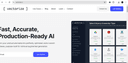
  3. 3Vectorize.io

    Turn your unstructured data into perfectly optimized vector search indexes, purpose-built for retrieval augmented generation.

    0
  4. 4Rewritebar

    Improve your writing in any macOS application with AI assistance. Quickly correct grammar mistakes, change writing styles, or translate text.

    0
  5. 5devintern

    DevIntern takes work from raw idea to merged pull request inside the tools your team already uses. @devintern/pm turns rough task descriptions, a paragraph of notes, a design, a bug report, into well-specced tickets your engineers can actually start from. @devintern/code picks those tickets up, implements them with your AI agent of choice, self-reviews its own diffs before a human sees them, and responds to reviewer comments on the resulting PR automatically. The problem. AI has made writing code fast, but everything around it (drafting the spec, opening the PR, replying to review nits, keeping the tracker in sync) still takes hours. That overhead is where the productivity gains evaporate. DevIntern compresses the whole cycle so the speed your AI tooling already gives you turns into shipped tickets, not just faster keystrokes. It also opens a path for non-technical teammates (PMs, designers, founders, support) to ship real code and features end-to-end, without waiting on engineering bandwidth. Who it's for. Engineering orgs that want their whole team to get measurably more effective without a multi-quarter platform migration. And individual contributors (engineers, PMs, founder-operators) who just want their own work to get done quicker, starting today, from their own laptop. Bring your own AI provider and keys. Runs locally for a single operator, or unattended on a server to drain the backlog 24/7. One-time perpetual licenses, not a subscription.

    0
  6. 6diffray

    Traditional AI code review tools use one generic model for everything and flood your PRs with noise. diffray takes a different approach: 30+ specialized agents, each focused on one thing (security, performance, bugs, best practices, SEO, and more). The result? 87% fewer false positives and 3x more real issues caught. Teams report cutting PR review time from 45 minutes to 12 minutes per week. Key features: * Multi-agent architecture: each agent is an expert in its domain * Codebase-aware: understands your repo context, not just the diff * Clean comments: no emoji spam, just actionable feedback * Works with GitHub; easy setup in minutes Free for open source. 14-day free trial for private repos.

    0
  7. 7SecVibe

    SecVibe is an AI-powered security copilot designed for vibe coding and AI-assisted development. It analyzes developer prompts and AI-generated code in tools like Cursor and VS Code to automatically detect vulnerabilities, enforce secure coding practices, and inject security-by-design controls in real time. Unlike traditional SAST or DAST tools that scan after development, SecVibe works at the prompt and generation level — helping teams prevent security flaws before they reach production. It’s built for startups, enterprises, and security teams that want to move fast with AI while staying compliant, resilient, and secure.

    0
  8. 8TypingMind

    Typing Mind is the most advanced Chat UI frontend for AI models like ChatGPT, Claude, Gemini, and open-source models. Created by Tony Dinh.

    0
  9. 9act101

    act101 is an AI-powered developer tool built for semantic code refactoring, structural analysis, and cross-language migrations. Instead of relying on fragile whole-file rewrites, it gives AI coding agents AST-aware operations that understand programming languages at a structural level. The platform supports 163 programming grammars and provides more than 180 refactoring operations, including extracting functions, renaming symbols, moving modules, generating code, and reorganizing imports across entire repositories with consistency and undo support. The platform works as an MCP-native server designed for AI coding environments like Claude Code, Cursor, Codex, and OpenCode. Developers can connect act101 directly to their AI agents so those agents can perform real semantic code transformations instead of generating approximate edits from raw text. One of act101’s biggest advantages is language-aware refactoring. The tool can help AI agents refactor projects written in Python, Rust, TypeScript, Go, Ruby, Java, C, COBOL, Elixir, and many other languages. Because operations are AST-aware, formatting, comments, imports, and project structure stay intact during changes. Every operation also includes automatic checkpointing and instant undo functionality. The platform also specializes in large-scale language migration workflows. Developers can use act101 to port projects such as C to Rust, Ruby to Elixir, COBOL to Java, PHP to TypeScript, or Python 2 to Python 3. Instead of treating migration as a simple conversion task, act101 introduces structured migration workflows using contracts, inventories, dependency ordering, manifests, and migration state tracking. This approach helps teams reduce behavioral drift, dependency issues, and migration confusion in large enterprise codebases. act101 includes deep repository analysis capabilities as well. The platform provides over 30 analysis tools that inspect coupling, dead code, hotspots, architectural boundaries, dependency cycles, migration readiness, and type completeness. AI agents can use these analyses to understand the structure of a codebase before making modifications. This helps reduce risky edits and improves automated engineering workflows. The platform is highly optimized for token efficiency when used with AI coding systems. Instead of loading entire files into an AI context window, act101 returns only the relevant AST-derived slices of code. According to its benchmarks, some operations reduce token usage by more than 95%, helping AI agents stay within context limits while working on large repositories. Another major focus is security and local execution. act101 runs as a single native Rust binary with no plugin runtime, no dependency graph, and no cloud-based code uploads. Code stays on the developer’s machine, minimizing supply-chain risks and protecting private repositories. The tool parses projects on demand without indexing or caching, ensuring results stay fresh and synchronized with the codebase. The platform offers multiple pricing tiers. A free plan supports personal and open-source use with query tools and basic refactoring operations. Paid plans unlock commercial licenses, advanced analysis features, structural operations, and premium language support. Enterprise offerings focus on large-scale migration projects and autonomous AI agent fleets operating across production systems. Overall, act101 positions itself as infrastructure for AI-native software engineering. Instead of AI merely suggesting code changes, the platform enables agents to perform reliable, semantic, and reversible engineering operations directly on real-world codebases.

    0
  10. 10Lisapet.ai

    Lisapet.ai is the next-level AI product development platform that empowers teams to prototype, test, and ship robust AI features 10x faster. Key Features - Best-in-class AI Playground: Swiftly test and iterate your prompts. Reduce the hassle of prompt prototyping. Our best-in-class AI playground makes the workflow faster, saving you time and effort in designing prompts. - Test-driven prompt engineering: Evalute and measure quality across large data sets. Build a collection of test cases to find the best prompt/model combination across different scenarios Benefits - Save Time: Cut down manual testing and free up your team to focus on shipping features. - Increase Confidence: Automate your testing to ensure reliable AI behavior before deployment. - Optimize Performance: Easily identify the best-performing prompts through side-by-side testing and real-time analytics. - Collaborate Seamlessly: Share progress with stakeholders and incorporate feedback directly within the platform. - Reduce Costs: Monitor token usage and optimize spending with detailed cost breakdowns. Use Case - Rapid Development of AI-Powered Features: Equip your product teams with tools to build, test, and launch AI-powered features without bottlenecks. - Scalable Prompt Engineering: Automate testing and validation to save time and reduce errors in prompt design. - Collaborative Testing: Enable cross-team collaboration by sharing reports and integrating feedback seamlessly.

    0
  11. 11GitGenie

    AI-powered Git helper that generates meaningful commit messages directly from your code changes. Product Long Description GitGenie is a free and open-source AI-powered Git assistant that automatically generates professional commit messages from your code changes. Designed to save developers time and improve workflow, GitGenie ensures a clean, consistent commit history without the hassle of manually writing messages. The tool works globally across projects, whether Node.js based or not, and can be installed once via npm for use in any repository. With its intelligent commit generation, GitGenie boosts productivity, maintains best practices, and helps developers focus more on building rather than documenting. GitGenie is permanently free and community-driven, making it an essential productivity tool for developers of all levels.

    0
  12. 12Narrow AI

    Introducing Narrow AI: Take the Engineer out of Prompt Engineering Narrow AI autonomously writes, monitors, and optimizes prompts for any model - so you can ship AI features 10x faster at a fraction of the cost. Maximize quality while minimizing costs - Reduce AI spend by 95% with cheaper models - Improve accuracy through Automated Prompt Optimization - Achieve faster responses with lower latency models Test new models in minutes, not weeks - Easily compare prompt performance across LLMs - Get cost and latency benchmarks for each model - Deploy on the optimal model for your use case Ship LLM features 10x faster - Automatically generate expert-level prompts - Adapt prompts to new models as they are released - Optimize prompts for quality, cost and speed Learn more at getnarrow.ai

    0
  13. 13vuln0x

    ou ship fast with AI coding tools like Cursor, Bolt, Lovable, and v0. But speed creates blind spots — and attackers know it. vuln0x is an AI-powered security scanner built specifically for vibe-coded projects. At its core is Sentinel, an autonomous AI penetration tester that thinks and acts like a real hacker. Give Sentinel a target URL. It launches a full 7-phase attack methodology — reconnaissance, enumeration, vulnerability scanning, exploitation, and reporting — completely autonomously. It deploys 29+ real offensive security tools including Nmap, Nuclei, SQLMap, Nikto, and more. Each finding feeds the next, chaining discoveries together just like a human pentester would. Beyond Sentinel, the platform runs 40+ parallel security scanners covering the OWASP Top 10, SSL/TLS misconfigurations, DNS issues, security headers, exposed sensitive files, subdomain takeovers, and more. Every scan produces an A+ to F risk score so you instantly know where you stand. Every vulnerability comes with plain-English explanations and copy-paste remediation code. AI found the bug, AI tells you how to fix it. Key features include scheduled recurring scans, webhook alerts for new vulnerabilities, CI/CD integration, multi-project management, and team collaboration. The platform supports deep scanning for modern frameworks including Next.js, React, and single-page applications. Free tier available with no credit card required. Start scanning in under 60 seconds. Your AI writes the code. Our AI makes sure it's secure.

    0
  14. 14Dynamiq

    Dynamiq the operating platform for building, deploying, monitoring and fine-tuning generative AI applications. Key features: 🛠️ Workflows: Build GenAI workflows in a low-code interface to automate tasks at scale 🧠 Knowledge & RAG: Create custom RAG knowledge bases and deploy vector DBs in minutes 🤖 Agents Ops: Create custom LLM agents to solve complex task and connect them to your internal APIs 📈 Observability: Log all interactions, use large-scale LLM quality evaluations 🦺 Guardrails: Precise and reliable LLM outputs with pre-built validators, detection of sensitive content, and data leak prevention 📻 Fine-tuning: Fine-tune proprietary LLM models to make them your own Benefits: ⛑️ Air-gapped Solution: Dynamiq specializes in enabling clients that manage highly sensitive data to leverage LLMs while maintaining ironclad security thank to stringent security controls. 🕹️ Vendor-Agnostic: Through integration capabilities, our clients can build GenAI applications using a variety of models from providers such as OpenAI and have the flexibility to switch to other providers if needed. 🧲 All-In-One Solution: We cover the entire GenAI development process from ideation to deployment Use cases: 🏋️ AI Assistants: Equip your team with custom AI assistants that streamline tasks, enhance information access, and boost productivity 🧠 Knowledge Base: Build a dynamic AI knowledge base with our platform that streamlines decision-making, enhances productivity and allows employees to spend less time navigating through extensive company documents, files, and databases 🎢 Workflow Automations: Design powerful, no-code workflows that leverage your enterprise's knowledge to enhance content creation, CRM enrichment, and customer support.

    0
  15. 15DeepSite AI

    DeepSite AI is an advanced AI-powered website generator that revolutionizes web development by enabling users to create professional, production-grade websites through simple text descriptions—no coding knowledge required. Powered by cutting-edge DeepSeek V3 technology, the platform offers instant website generation with real-time previews, automatic SEO optimization, and responsive design that adapts seamlessly across all devices. Whether you're building business websites, blogs, e-commerce platforms, portfolios, or landing pages, DeepSite AI provides an intuitive editor that makes website creation accessible to everyone. The platform features built-in SEO tools, fast deployment capabilities, and supports multiple website types, saving approximately 95% of development time compared to traditional methods while dramatically reducing costs. With DeepSite AI, users can instantly preview changes, adjust designs on the fly, and deploy professional websites in minutes rather than weeks or months.

    0
  16. 16Dreamflow

    Dreamflow helps you build mobile apps the way you want to build. Start by prompting features with AI, refine the experience in a powerful visual editor, or dive into full Flutter code when you need complete control. Unlike tools that lock you into prototypes or no-code abstractions, Dreamflow keeps all three surfaces, prompt, visual, and code, in sync. That means you get the speed of AI, the flexibility of drag-and-drop design, and the confidence of owning production-ready Flutter code you can scale and publish on the app store.

    0
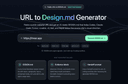
  17. 17URL to Design.md

    URL to Design.md: Generate AI-ready DESIGN.md briefs from public webpages URL to Design.md helps AI-assisted frontend builders turn a public website URL into a structured Markdown design context package. Instead of asking Codex, Claude Code, Cursor, Lovable, v0, Bolt, or Replit to follow a vague screenshot prompt, paste a public page and get a DESIGN.md that describes visual direction, layout hierarchy, colors, typography, spacing, components, interaction notes, evidence labels, and agent handoff prompts. One URL, Agent-Ready Design Context 1. Public URL to DESIGN.md — Extract visible structure, CTA hierarchy, visual signals, and page patterns into a reusable Markdown brief. 2. Design Tokens and Components — Summarize colors, type scale, spacing, radius, shadows, buttons, cards, forms, navigation, hero blocks, and footer patterns. 3. Evidence Labels — Mark conclusions as detected, inferred, or needs review so builders know what came from page evidence and what requires judgment. 4. Agent Handoff Prompts — Copy prompts for Codex, Claude Code, Cursor, Lovable, v0, and generic AI coding workflows. 5. Responsible Boundaries — Works with public webpages only and focuses on design context, not private pages, proprietary asset copying, editable Figma layers, or pixel-perfect cloning.

    0
  18. 18GlowUp UI

    GlowUp UI is a design tool that instantly generates beautiful UI redesign variants from any screenshot. Built for vibe coders, the growing wave of non-technical builders using AI tools like Lovable, Cursor, Bolt, and v0 to ship real products, GlowUp UI bridges the gap between functional and polished. Most vibe-coded projects work, but they don't look great. Generic templates, inconsistent spacing, default component styles. The UI tells users "this was built fast," not "this was built well." GlowUp UI fixes that in seconds. Upload a screenshot of any interface, and the tool generates multiple redesign variants with improved layout, typography, colour, and visual hierarchy. No design skills required. No Figma. No back-and-forth with AI prompts trying to describe what "better" looks like. The workflow is simple. Take a screenshot of the UI you want to improve, whether it's a landing page, dashboard, settings panel, or signup flow. Upload it to GlowUp UI, choose your preferred style direction, and hit generate. Within moments, you'll receive several distinct redesign options, each offering a different visual interpretation of your original layout. Pick the one that fits, grab the code, and drop it straight into your project. GlowUp UI is purpose-built for the tools vibe coders already use. The generated output is clean, component-based code ready to paste into Lovable, Cursor, Bolt, v0, or any modern frontend workflow. There's no context-switching, no design handoff, and no translation layer between what you see and what you ship. What you pick is what you get. Beyond one-off redesigns, GlowUp UI maintains a growing template gallery. A curated library of high-quality UI patterns across common application types. Browse cards, modals, dashboards, forms, and more, each available as a starting point or source of inspiration for your next build. Filter by category, style, or component type to find exactly what you need. Pricing is flexible and straightforward. Choose a monthly plan for regular generation credits, or grab a one-off pack if you just need a quick burst of redesigns for a specific project. No complex tiers, no hidden fees. Just pick what fits how you build. Whether you're a solo founder shipping an MVP, a creator building a SaaS side project, or an agency prototyping client work,

    0
  19. 19Vibe Coding Agent Skills

    How Do AI Agent Skills Work? The magic lies in seamless integration and a user-friendly interface. Users interact with the platform through a natural language interface or a rich API. When a user requests a task — for instance, "Generate 10 SEO-optimized blog post titles for a FinTech startup" — the platform intelligently identifies the most relevant AI Agent Skill (in this case, an "SEO Content Title Generator" skill within the "Content Writing" category). Behind the scenes, the platform then: Parses the request: Utilizing advanced NLP, it extracts key parameters like industry, desired output quantity, and optimization goals. Invokes the Skill: The chosen AI Agent Skill is activated, receiving the parsed parameters as input. Executes the Task: The skill, drawing upon its vast training data and specialized algorithms, performs the requested operation. Generates Output: The skill produces the coherent, actionable result. Presents to User: The output is delivered back in a clear, formatted manner, often with additional context or recommendations. Furthermore, the platform supports skill chaining and orchestration. Complex multi-step workflows can be automated.

    0
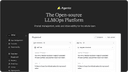
  20. 20Agenta

    Agenta is an open-source LLMOps platform that helps AI teams build and ship reliable LLM applications. Developers and subject matter experts work together to experiment with prompts, run evaluations, and debug production issues. The platform addresses a common problem: LLMs are unpredictable, and most teams lack the right processes. Prompts get scattered across tools. Teams work in silos and deploy without validation. When things break, debugging feels like guesswork. Agenta centralizes your LLM development workflow: Experiment: Compare prompts and models side by side. Track version history and debug with real production data. Evaluate: Replace guesswork with automated evaluations. Integrate LLM-as-a-judge, built-in evaluators, or your own code. Observe: Trace every request to find failure points. Turn any trace into a test with one click. Monitor production with live evaluations.

    0
  21. 21Cutline

    Building Cutline. We’ve identified a 'Vibecoding Cliff' where AI coding agents start to fail as production constraints (security, stability, latency) increase. Cutline is a technical product manager that helps vibecoders build with security, stability, and scalability from the start. Cutline helps you survive the MVP cliff by dynamically injecting security, stability, and scalability requirements into your coding agent, avoiding 'vibecoding whack-a-mole' sessions where the coding agent drops a previous requirement to satisfy the new one. We built Cutline after frustration with off-the-shelf AI for product management: sycophantic guidance and declining efficiency in highly constrained situations that call for ruthless prioritization.

    0
  22. 22Octopodas

    Octopoda is an open source infrastructure layer that gives AI agents persistent memory, automatic loop detection, and full observability. Agents forget everything between sessions. Octopoda fixes that with a remember/recall API that survives restarts, crashes, and deployments. The loop detection system monitors 5 signals to catch agents stuck repeating themselves before they burn your API budget, with real-time cost estimation showing exactly how much each loop wastes. A built-in dashboard shows every agent's health score, memory explorer with version history, audit trail logging every decision with reasoning, and a timeline replay that lets you scrub through everything your agent did step by step. Works with LangChain, CrewAI, AutoGen, and OpenAI Agents SDK with one-line integrations. Runs locally with SQLite or connects to cloud with one environment variable. Free tier, MIT licensed. 177 signups, 120 GitHub stars, zero marketing spend.

    0
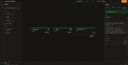
  23. 23Runsight

    Runsight — YAML-first workflow engine for AI agents. Design agent workflows visually. The canvas writes YAML to your filesystem — commit it, diff it, review it in PRs like any other code. When something breaks at 2 AM, you don't restart and hope. You pause the running agent, edit the prompt, and resume. No redeployment. What makes it different: → Git-native. Workflows are YAML files in your repo, not rows in a database. → Per-run cost tracking. Know what every agent call costs before the invoice arrives. → Runtime intervention. Pause, inspect, fix, resume — while the workflow is running. Built for engineering teams who run agents in production and need the same rigor they have for everything else: version control, code review, and the ability to kill a runaway process. Open source. Self-hosted.

    0
  24. 24Stunning

    Stunning.so is an AI-powered platform that enables users to quickly build full-stack web applications. By simply chatting with AI, you can create a wide range of websites, from coffee shop sites to task managers, sales dashboards, and more. The platform integrates a powerful set of tools, including the latest coding LLMs, and features real-time support for RTL (right-to-left) languages. Stunning also showcases real websites built by its community, offering inspiration for projects like an indoor playground in Singapore, a beauty service website, and a Spotify clone UI. Whether you’re a developer or a business owner, Stunning makes it easier to turn your ideas into fully functional websites 10x faster with the help of artificial intelligence.

    0
  25. 25Siesta AI

    Siesta AI is an all-in-one platform for SME teams to adopt AI the right way. Think of it as a Swiss knife for assisted work — it lets you create smart AI assistants that connect to your data and tools, automate workflows, and streamline daily operations. The platform runs flexibly on SaaS or your private cloud, remains secure and model-agnostic, and gives you full control with no vendor lock-in. Siesta AI is an all-in-one platform for SME teams to adopt AI the right way. Think of it as a Swiss knife for AI adoption — a single, versatile system that brings human decision-making and automation together. It helps teams create smart AI assistants that understand context, connect to your tools and data, and take action. Siesta AI includes standard features like public assistants, data connectors, analytics, and secure data management — everything you need to make AI a natural part of everyday work. It runs flexibly on SaaS or your private cloud, giving you full control over your data with no vendor lock-in. Designed to be model-agnostic, it lets you choose or combine the best AI models for your business needs, making AI adoption simple, safe, and scalable.

    0
Good to know

Frequently asked questions