Home
Auto list · updated automatically

Best Books

54Items
0Contributors
5Votes
Sponsored
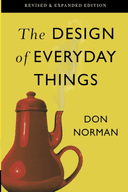
  • The Design Of Everyday Things

    Even the smartest among us can feel inept as we fail to figure out which light switch or oven burner to turn on, or whether to push, pull, or slide a door. The fault, argues this ingenious -- even liberating -- book, lies not in ourselves, but in product design that ignores the needs of users and the principles of cognitive psychology. The problems range from ambiguous and hidden controls to arbitrary relationships between controls and functions, coupled with a lack of feedback or other assistance and unreasonable demands on memorization. The Design of Everyday Things shows that good, usable design is possible. The rules are simple: make things visible, exploit natural relationships that couple function and control, and make intelligent use of constraints. The goal: guide the user effortlessly to the right action on the right control at the right time. The Design of Everyday Things is a powerful primer on how -- and why -- some products satisfy customers while others only frustrate them.

    0
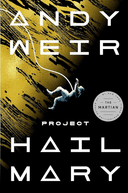
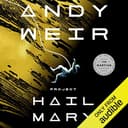
  • Project Hail Mary

    Ryland Grace is the sole survivor on a desperate, last-chance mission—and if he fails, humanity and the earth itself will perish. Except that right now, he doesn’t know that. He can’t even remember his own name, let alone the nature of his assignment or how to complete it. All he knows is that he’s been asleep for a very, very long time. And he’s just been awakened to find himself millions of miles from home, with nothing but two corpses for company. His crewmates dead, his memories fuzzily returning, Ryland realizes that an impossible task now confronts him. Hurtling through space on this tiny ship, it’s up to him to puzzle out an impossible scientific mystery—and conquer an extinction-level threat to our species. And with the clock ticking down and the nearest human being light-years away, he’s got to do it all alone. Or does he? An irresistible interstellar adventure as only Andy Weir could deliver, Project Hail Mary is a tale of discovery, speculation, and survival to rival The Martian—while taking us to places it never dreamed of going.

    0
Sort by
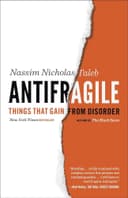
  1. 1Antifragile: Things That Gain from Disorder

    "Antifragile: Things That Gain from Disorder" by Nassim Nicholas Taleb is a groundbreaking exploration of systems and entities that thrive and grow stronger in the face of stress, volatility, and chaos. Taleb introduces the concept of "antifragility," which goes beyond resilience or robustness. Through a mix of philosophy, practical wisdom, and real-world examples, Taleb illustrates how embracing uncertainty and leveraging disorder can lead to success and innovation. This book is essential for anyone interested in risk management, personal development, and understanding how to benefit from uncertainty and change.

    1
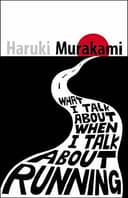
  2. 2What I Talk About When I Talk About Running

    What I Talk About When I Talk About Running is a memoir by Haruki Murakami where he talks about two things that define a big part of his life: running and writing. Murakami didn’t always plan on being a novelist. He was running a jazz bar in his twenties when, while watching a baseball game, he suddenly thought, “I could write a novel.” He gave it a shot, it worked out, and he eventually sold his bar to focus on writing full-time. But sitting at a desk all day, smoking and not moving much, wasn’t doing his health any good. That’s when he picked up running. For Murakami, running is more than just exercise—it’s part of his routine and, in a way, a metaphor for writing. Both take endurance. Both are long hauls where you push yourself day after day, even when you don’t feel like it. The book follows him as he trains for marathons, competes in triathlons, and grapples with the slow decline of his physical abilities as he ages. He talks a lot about acceptance—accepting getting older, accepting bad race times, and accepting that sometimes you just don’t do as well as you hoped. His attitude is basically: That’s life. You move on. The writing style is straightforward, like he’s just talking to you over a coffee. He doesn’t dress things up. Sometimes he rambles, mentioning things like cycling habits or going off on tangents about global warming. At one point, he describes running the original marathon route in Greece—sun blazing, salt stinging his eyes, everything uncomfortable. But through it all, there’s this calm acceptance. He’s not trying to convince anyone to run; he just shares what it means to him. By the end, what sticks isn’t just the running or the writing, but the way he embraces both the highs and the lows—the post-race blues, the joy of finishing, and the satisfaction of something as simple as a cold beer after a long run. It’s a book about effort, routine, and learning to keep going, no matter what.

    0
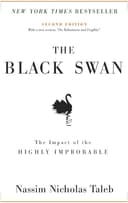
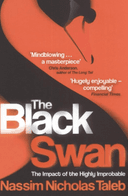
  3. 3The Black Swan by Nassim Nicholas Taleb

    Skin in the Game may be nice but The Black Swan is the OG Nicholas Taleb. Read this book to learn how to think and avoid biases and reread at least once very couple of years.

    0
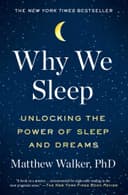
  4. 4Why We Sleep

    By Mathew Walker - We sleep 1/3 of our life yet understand so little about it...

    0
  5. 5Project Hail Mary by Andy Weir

    "Project Hail Mary" is a space adventure story written by Andy Weir, the same guy who wrote "The Martian." It's about a man named Ryland Grace who wakes up on a spaceship with no memory of who he is or why he's there. He figures out he's on a mission to save Earth from disaster. The story follows him as he tries to remember his past and complete his mission, which involves a lot of science and problem-solving. Along the way, he meets an alien, and they form an unlikely friendship. The book is full of cool science stuff, suspense, and humor. It's like a mix of a mystery and a space adventure, with a lot of heart. The narration by Ray Porter is superb, with sound effects and excellent voice work.

    0
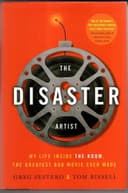
  6. 6The Disaster Artist

    The best book about the best director in the world. It was such a great book it was adapted into a movie. Bet the other books on this list can't say that!

    0
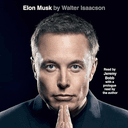
  7. 7Elon Musk

    This is the only audiobook I've ever listened to lol. But it is a very interesting story about Elon, arguably the most interesting person alive.

    0
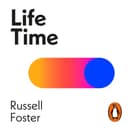
  8. 8Life Time by Russell Foster

    A book about the circadian rhythm. Apparently, it's really misunderstood, even by your doctor. Read this book to understand your body better. It helped me improve my sleep.

    0
  9. 9The Design Of Everyday Things

    Even the smartest among us can feel inept as we fail to figure out which light switch or oven burner to turn on, or whether to push, pull, or slide a door. The fault, argues this ingenious -- even liberating -- book, lies not in ourselves, but in product design that ignores the needs of users and the principles of cognitive psychology. The problems range from ambiguous and hidden controls to arbitrary relationships between controls and functions, coupled with a lack of feedback or other assistance and unreasonable demands on memorization. The Design of Everyday Things shows that good, usable design is possible. The rules are simple: make things visible, exploit natural relationships that couple function and control, and make intelligent use of constraints. The goal: guide the user effortlessly to the right action on the right control at the right time. The Design of Everyday Things is a powerful primer on how -- and why -- some products satisfy customers while others only frustrate them.

    0
  10. 10The Black Swan

    "The Black Swan" by Nassim Nicholas Taleb is a seminal work that explores the profound impact of rare and unpredictable events, termed "Black Swans." Taleb argues that these events, which are often overlooked or underestimated, have massive consequences on our world. He highlights the limitations of traditional forecasting methods and emphasizes the need for resilience and adaptability in the face of uncertainty. Blending philosophy, economics, and personal anecdotes, Taleb provides a compelling critique of our understanding of risk and uncertainty. This book is essential for anyone interested in risk management, economics, and understanding the unpredictable nature of our world.

    0
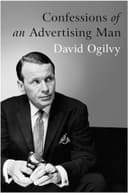
  11. 11Confessions of an Advertising Man

    David Ogilvy was considered the "father of advertising" and a creative genius by many of the biggest global brands. First published in 1963, this seminal book revolutionized the world of advertising and became a bible for the 1960s ad generation. It also became an international bestseller, translated into 14 languages. Fizzing with Ogilvy's pioneering ideas and inspirational philosophy, it covers not only advertising, but also people management, corporate ethics, and office politics, and forms an essential blueprint for good practice in business.

    0
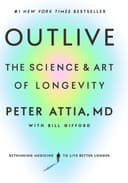
  12. 12Outlive By Peter Attia

    Modern healthcare is often reactive. This is part of the reason why preventative medicine is so key.

    0
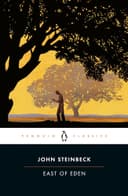
  13. 13East of Eden

    In his journal, Nobel Prize winner John Steinbeck called East of Eden “the first book,” and indeed it has the primordial power and simplicity of myth. Set in the rich farmland of California’s Salinas Valley, this sprawling and often brutal novel follows the intertwined destinies of two families—the Trasks and the Hamiltons—whose generations helplessly reenact the fall of Adam and Eve and the poisonous rivalry of Cain and Abel.

    0
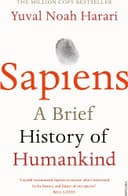
  14. 14Sapiens: A Brief History of Humankind by Yuval Noah Harari

    The great thing about this book is that it takes a big-picture view of human history. It attempts to explain the main themes of human history without getting bogged down in the details. Sapiens also debunks many popular myths about human history, including the one that people today live happier lives and have better diets than our hunter-gatherer predecessors. It comes with an epilogue about the future of humankind in light of ever-accelerating technological progress. With the recent advances in AI it is more relevant than ever. If you're going to read one book on history this year, read this one.

    0
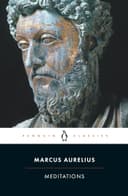
  15. 15Meditations by Marcus Aurelius

    From wikipedia: Meditations is a series of personal writings by Marcus Aurelius, Roman Emperor from AD 161 to 180, recording his private notes to himself and ideas on Stoic philosophy. Meditations are worth reading if only to get a glimpse at the thoughts of a man who lived a life in truly extraordinary circumstances of being a Roman Emperor. It's surprising how relevant the themes of his diaries are two thousand years later.

    0
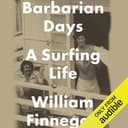
  16. 16Barbarian Days by William Finnegan

    Barbarian Days: A Surfing Life is William Finnegan’s story about growing up obsessed with surfing. It’s not just about catching waves—it’s about a whole way of life that’s demanding, addictive, and sometimes dangerous. Finnegan started young, learning to surf in California and Hawaii, and kept chasing waves into adulthood, traveling through places like Fiji, Australia, Indonesia, and Africa. Along the way, he mixes adventure with self-reflection, talking about friendships formed in the water, the culture around surfing, and how it all fit with the times—especially during the social changes of the 1960s and '70s. The book isn’t just about the thrill of surfing; Finnegan dives into the technical side of waves and the patience it takes to master them. He’s honest about his youthful recklessness—like taking LSD before surfing a massive wave in Maui—and the risks that came with his travels, from malaria scares to navigating shady markets. Still, surfing pulls him along, even when he’s juggling a career as a war reporter and later, family life. At its core, Barbarian Days is an old-fashioned adventure tale mixed with a thoughtful look at what it means to be hooked on something so completely. Finnegan’s writing captures both the beauty and the grind of surfing, making you feel like you’re right there with him—whether on a remote beach or paddling out into icy waves off Long Island.

    0
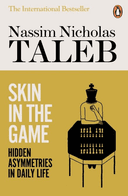
  17. 17Skin in the Game: Hidden Asymmetries in Daily Life

    Skin in the Game: Hidden Asymmetries in Daily Life is a nonfiction book by Nassim Nicholas Taleb, published in 2018. Taleb’s main point is pretty simple: people should share in the risks of the decisions they make. If you benefit from something, you should also face the downsides if things go wrong. He calls this having “skin in the game.” Without that, people can make reckless choices that hurt others while staying safe themselves. The book covers everything from politics and business to religion and everyday life. Taleb doesn’t hold back on criticism. He talks about how some policymakers and financial experts make decisions that affect millions but don’t suffer when those decisions backfire. He uses examples like bankers profiting during booms but getting bailed out during crashes. Taleb also goes after what he calls “Intellectual Yet Idiot” types—educated people who, in his view, complicate things and give advice without understanding real-world consequences. He argues that real knowledge comes from doing and risking something yourself, not just sitting in a classroom or writing articles. One part of the book dives into how stubborn minorities—like people who strictly follow certain dietary rules—can influence the majority’s choices without even trying. There’s even a section where he talks about religion, saying that the idea of God taking human form (in Christianity) is the ultimate example of having skin in the game. Taleb’s writing style is direct, sometimes blunt, and he isn’t shy about calling out what he sees as nonsense. The book is part of his Incerto series, which looks at uncertainty and risk in modern life. Some people love his no-nonsense approach; others find him a bit too combative. Either way, Skin in the Game is about accountability—if you play the game, you should be prepared to take a hit when things go south.

    0
  18. 18AI Book Recommendations

    Get personalized book recommendations powered by artificial intelligence. Our AI analyzes your reading preferences and suggests books that match your interests, helping you discover your next favorite read.

    0
  19. 19Mythos by Stephen Fry

    Greek myths retold by Stephen Fry. He is both the author and the narrator of this book. His wit and sense of humor come across in both the text and in the delivery. Plus, you actually get to learn Greek myths.

    0
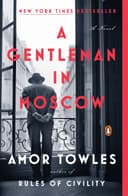
  20. 20A Gentleman in Moscow by Amor Towles

    A Gentleman in Moscow is a historical fiction novel by Amor Towles. It follows Count Alexander Rostov, a Russian aristocrat who, after the Bolshevik Revolution, is sentenced to house arrest in the grand Hotel Metropol in Moscow. Instead of being imprisoned in a cell, he’s confined to the hotel, which becomes both his cage and his world. The story spans several decades, starting in the 1920s and running through key moments of Soviet history. Most of it unfolds inside the hotel, which is no ordinary place—it's a bustling, self-contained universe. Rostov, who begins the story living in a lavish suite, is forced to move into a tiny attic room. Despite this fall from grace, he navigates his new life with wit and charm, forming friendships with the hotel staff, guests, and unexpected visitors. The book isn’t just about the Count’s personal journey—it’s also about how time changes people and places, how history creeps in even when you’re standing still, and how small acts of kindness and loyalty can shape a lifetime. The setting, the Metropol, is richly described, from fine dining rooms to back corridors. There’s a good bit about food, music, and Russian culture, and plenty of philosophical musings, but it never gets too heavy. At its core, the novel is about making the best of what life throws at you. The Count is an old-world gentleman stuck in a new world that wants to forget people like him. How he handles that—sometimes with grace, sometimes with stubbornness—is what makes the book compelling. It's quietly dramatic, occasionally funny, and surprisingly heartwarming, all without needing big action scenes.

    0
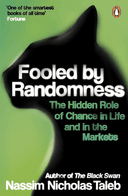
  21. 21Fooled by Randomness

    "Fooled by Randomness" is a thought-provoking book by Nassim Nicholas Taleb that delves into the role of chance in our lives and how we often mistake random events for meaningful patterns. Through a mix of personal anecdotes, philosophical insights, and statistical analysis, Taleb explores how randomness affects the world of finance, business, and daily life. The book challenges readers to rethink their perceptions of success, failure, and the forces that drive outcomes. This book is ideal for readers interested in finance, probability, and the philosophical implications of randomness.

    0
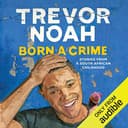
  22. 22Born a Crime by Trevor Noah

    Born a Crime: Stories from a South African Childhood is Trevor Noah’s autobiography, published in 2016. It tells the story of his early years growing up in South Africa during and after apartheid. The title comes from the fact that his birth—he had a black Xhosa mother and a white Swiss-German father—was literally considered a crime under apartheid laws that banned interracial relationships at the time. The book is a mix of humor and tough truths. Much of it focuses on Trevor’s relationship with his mother, Patricia, who plays a huge role in his life. She’s portrayed as tough, religious, and fiercely independent—someone who dragged him to multiple church services every week, even during times of violence and unrest. Her strong influence shapes his character, often through strict discipline and sharp lessons about right and wrong. Trevor shares stories from his childhood that range from funny to intense. There’s a scene where his mother throws him out of a moving minibus to save him from a potentially dangerous driver. He also talks about using his talent for languages to navigate different cultural groups in South Africa, and how he hustled by selling bootleg CDs to make money. But not all his stories are light—he describes living with his abusive stepfather, Abel, whose violence culminated in him shooting Trevor’s mother, though she miraculously survived. Despite the heavy topics—racism, poverty, domestic abuse—Noah’s storytelling is funny, honest, and full of warmth. The book gives a personal look at how apartheid shaped everyday life but also highlights the resilience of his family, especially his mother. The memoir was widely praised, becoming a bestseller and earning spots on numerous “best of the year” lists. It struck a chord with readers around the world, and even inspired figures like U.S. Senator Tammy Duckworth and First Lady Jill Biden, who assigned it as reading for her English class. A film adaptation is in the works, with Lupita Nyong’o set to play Trevor’s mother and co-produce the project.

    0
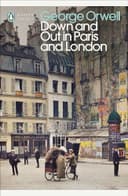
  23. 23Down and Out in Paris and London

    by George Orwell an expedition into who people are and what life is

    0
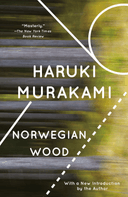
  24. 24Norwegian Wood

    Toru, a serious young college student in Tokyo, is devoted to Naoko, a beautiful and introspective young woman, but their mutual passion is marked by the tragic death of their best friend years before. As Naoko retreats further into her own world, Toru finds himself drawn to a fiercely independent and sexually liberated young woman. Stunning and elegiac, Norwegian Wood first propelled Haruki Murakami into the forefront of the literary scene.

    0
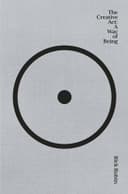
  25. 25The Creative Act

    “I set out to write a book about what to do to make a great work of art. Instead, it revealed itself to be a book on how to be.” —Rick Rubin

    0
Good to know

Frequently asked questions