Recently Added

Chickadee Bandit
Chickadee Bandit is a private, all-in-one family organizer: an encrypted hub with 100+ apps for calendars, chores, co-parenting and caregiving, at one price per household. Each household gets its own encrypted database, shared calendar, messages and 100+ apps for chores, health, money, co-parenting and more. Apps inherit roles and privacy, so kids, adults and guests see only what they should. Developers and AI assistants can build custom apps from a simple manifest while the platform handles auth, permissions, encryption, notifications and sync.

FreeMaker AI
FreeMaker is a free AI photo editing platform designed to make professional image editing accessible to everyone. By bringing AI-powered tools such as unwanted object removal, background replacement, outfit changes, image enhancement, and 4K upscaling into a simple online workspace, it eliminates the need for complicated editing software. Edit and transform your images for $0—no sign-up, no watermark, and no unnecessary limitations.

ContentCreators.com
ContentCreators.com is one place for content creators to create, grow, and monetize, instead of juggling twenty separate tools. Creators get a single profile page that shows all their channels, follower counts, rate cards, and portfolio work. The site also has a job board with thousands of live creator and content roles, a library of growth playbooks, 145+ free interactive toolkits (checklists, planners, generators), YouTube, Instagram, and TikTok earnings calculators, a creator-economy glossary, and a directory of 1,100+ curated creator tools. It is built for YouTubers, TikTokers, Instagram creators, podcasters, and newsletter writers.

ShuttleOps
ShuttleOps is a badminton club management app built by a badminton player and club administrator. It brings players, sessions, payments and court rotation together, making clubs easier to run and club nights easier to enjoy. Running a club often means juggling attendance messages, spreadsheets, payment records and decisions about who plays next. ShuttleOps connects these jobs in one place. Organisers can prepare sessions, manage bookings, track attendance and collect fees. Players can see upcoming sessions, book their place and manage their payments through the app. Plan sessions with less administration Set session dates, courts, prices and player capacity, then reuse settings for future club nights. Control booking windows, manage waiting lists and set different prices for members and guests. Players can confirm their attendance directly, reducing the need to gather responses from separate messages and polls. Organisers can see who plans to attend and record who actually plays. Keep games moving with the Digital Peg Board ShuttleOps helps organisers manage live sessions through its Digital Peg Board. It allocates available players to courts and rotates waiting players into games, supporting fairer waiting times and varied matches. Session helpers can start and finish games, make adjustments and record scores when needed. Statistics show playing time, waiting time, partners and opponents, giving organisers a clearer picture of each session. Simplify club payments Manage session charges, memberships and player balances alongside attendance. Players can pay through Stripe Direct Debit, while organisers can record payments collected outside the app. Payment records, amounts owed and payouts stay connected to the club's activity. Supported plans can group session charges into monthly collections, reducing separate transactions and making payment administration easier to follow.

Wordy
Wordy is a language-learning app that teaches with real movie and TV scenes: 15,000+ short clips feed video quizzes, translation and spelling challenges with spaced repetition. 9,000+ words per language across CEFR A1–C2, 20+ languages, plus a Streaming Mode that syncs interactive subtitles to Netflix and HBO. Available on iOS, Android and as a Chrome extension. Ad-free, freemium.

Dropclips.io
Dropclips is an online batch video editor for people who keep making the same edits to different videos. Instead of opening each clip and repeating the work, you build a pipeline once, add your videos and run the whole batch through it. It’s designed for creators, podcasters, marketers and anyone preparing multiple clips for social media, client delivery or everyday publishing. A pipeline is a sequence of editing steps that you control. Combine the operations you need, arrange them in order and save the pipeline for your next batch. You can start with a ready-made preset or create your own workflow. When new footage arrives, reuse the same setup to keep your output consistent. The available tools cover common video preparation tasks. Trim clips, crop the frame, rotate or flip footage, change playback speed and normalize audio. Reframe videos into different aspect ratios for vertical, square or landscape publishing. Choose a crop, blurred padding or a solid background to fit the destination format. You can also apply a rectangular or circular blur with adjustable intensity to a selected area. Add automatic captions, burn them into the video or export them as subtitle files. Apply a watermark, and attach an intro or outro using your own image or video asset. Intro and outro are separate steps, so you can use either or both. Transitions include a direct cut and blur transitions at different speeds. Generate thumbnails and storyboards alongside your video outputs, then download the finished files. Dropclips is particularly useful when one source needs several versions. For example, you could prepare vertical, square and portrait outputs from the same batch, with captions and a consistent watermark. Another pipeline might simply normalize audio and convert files for delivery. Each workflow can be as simple or as involved as the job requires.

Totalum
Totalum lets you add an AI app builder to your own product, without building one yourself. Here is the idea. Your users type what they want in plain English. Totalum writes the app, sets up the database, puts it online and keeps it running. All of this happens behind your brand, on your domain. Your users never see the name Totalum. You connect to it with one HTTP API call. There is no SDK to install, no framework to switch to and nothing to migrate. If your programming language can make a web request, it can run an AI app builder. Most teams are live in about five minutes. What your users get is a real app, not a demo. Every project is a full Next.js and React website with working sign-up and login, a real database, and pages that load fast and rank well on Google. You can add any npm package. And the code stays theirs: each project can sync to a GitHub repository, so nobody is locked in. Everything an app needs afterwards is included: - Database created and updated automatically - Hosting and deploys, with version history and one-click undo - File uploads and storage - Sending emails - Built-in AI, so the apps your users build can call AI models and generate images - Custom domains with SSL - Logs and analytics You never open Cloudflare, run a server, or need a DevOps person. Totalum runs all of it for you. It works for AI coding agents too. Claude, Cursor and Codex can call the Totalum API directly, and there is an MCP server if you use one. And if you would rather not build the interface at all, we publish a complete AI app builder as open source on GitHub. Clone it, add your logo and your API key, and it is your product today. Reselling is built in. Each of your customers gets their own separate project, and one account can hold millions of them. You can set a monthly spending cap per project and watch spending in real time, so your margins stay predictable.

Ducat Protocol
Ducat Protocol is a Bitcoin-native credit and stablecoin protocol built on Bitcoin Layer 1. It focuses on expanding the financial utility of Bitcoin through decentralized infrastructure designed around the Bitcoin ecosystem. The protocol explores how Bitcoin can support credit and stable-value applications while remaining closely connected to the network that provides the underlying foundation. Bitcoin-Native Financial Infrastructure Bitcoin is widely recognized as a decentralized digital asset and payment network. As the ecosystem continues to develop, builders are exploring ways to extend its usefulness beyond storing and transferring value. Bitcoin-native finance is part of this development, covering financial applications and infrastructure designed specifically around Bitcoin. Ducat Protocol operates within this emerging area. Its focus on Bitcoin-native credit and stablecoin infrastructure reflects the broader effort to create decentralized financial systems that can make greater use of Bitcoin. Credit and stable-value assets can serve important functions within digital financial ecosystems. Credit infrastructure can provide additional ways for participants to use digital assets, while stablecoins are designed to provide a comparatively stable unit of value for transactions and other financial applications. Understanding Bitcoin-Native Finance Bitcoin-native financial systems require careful consideration of how their underlying mechanisms work. Important areas include collateralization, transparency, security, stability mechanisms, decentralization and protocol risk. These considerations are particularly relevant when evaluating credit and stablecoin protocols. Users should understand the mechanisms supporting a protocol rather than relying solely on broad descriptions or promotional claims. Ducat Protocol contributes to this developing landscape by focusing on financial infrastructure built around Bitcoin Layer 1. This approach places Bitcoin at the center of the protocol's broader financial ecosystem. Exploring Ducat Protocol As Bitcoin-native finance develops, projects such as Ducat Protocol provide another example of how developers are exploring financial applications around Bitcoin. The intersection of Bitcoin, decentralized credit and stable-value assets represents an evolving area of blockchain technology. Anyone interested in Ducat Protocol should use its official resources to understand the protocol's current design, documentation, ecosystem and latest developments. As with any decentralized financial technology, users should independently understand the mechanisms and associated risks before interacting with a protocol. For official information and current resources, visit the Ducat Protocol website: https://ducatprotocol.com

Dynal AI
Dynal AI is an AI-powered LinkedIn content creation and personal branding tool that combines a web workspace with a browser extension. It helps founders, executives, consultants, sales professionals, and creators turn their ideas and expertise into content and conversations that reflect their own voice. The web workspace brings content creation and management into one place. Users can turn ideas, notes, links, and source materials into LinkedIn post drafts, refine their writing, and create supporting visuals and carousels. Content planning, scheduling, and publishing features help users maintain a consistent presence alongside their everyday work. Dynal’s Brand DNA gives the AI context about each user’s background, expertise, target audience, and writing style. This helps users create content that fits their professional identity, with control over the final wording and presentation. The browser extension brings AI-assisted replies directly into the LinkedIn browsing experience. While reading posts and participating in conversations, users can draft and refine responses without switching to a separate writing tool. Users review and decide what to publish, keeping their own judgment and perspective at the center of each interaction. Founded by Alex Xu, Dynal grew out of a practical challenge: sharing useful ideas on LinkedIn often takes more time than busy professionals can spare. Developing an angle, writing a clear post, and preparing visuals can turn a simple idea into hours of work. Dynal connects these activities in a workflow that helps users move from inspiration to publication. Dynal is built around human-driven creativity. AI supports users in expressing their knowledge and experience while they remain in control of their content. Whether sharing lessons from building a company, explaining professional expertise, or joining relevant discussions, Dynal helps people build a consistent personal brand and develop meaningful professional connections on LinkedIn.

Capture Studio
Capture Studio records your screen and gives you a real editor to finish the video in. No round trip to another app, no account, no uploads: everything runs on your own PC, and it's a one-time purchase. Record a display, a window or a region, with webcam and microphone. Then edit on a multi-track timeline: trim, split, speed, transitions, and keyframes on the effects that need them. Explaining is the point, so the annotations are built for it. Callouts, numbered steps, spotlights, arrows, keystrokes, text and title cards, all placed by dragging in the preview. Auto-polish does the tedious pass: it cuts the idle gaps, smooths the cursor, and zooms to follow it so the viewer's eye lands where yours did. Subtitles and voiceovers are generated on-device, so nothing you record leaves the machine. Export to MP4 or GIF, or hand over a project bundle with its media so someone else can open it and keep editing.
Label CleanUp
Label Cleanup is a web-based metadata cleaning tool designed to help users inspect and remove supported AI-related source tags, Content Credentials, and personal metadata embedded in photos and videos before sharing them online. Users can upload a final media file and run a free scan to identify information attached to it, including AI source declarations and readable privacy data such as GPS coordinates, capture dates, device information, and creator details. The platform supports common image and video formats, including JPEG, PNG, WebP, TIFF/DNG, MP4, and MOV, with files up to 200 MB. Its cleanup process handles supported C2PA Content Credentials, XMP, EXIF, and IPTC metadata while preserving the underlying photo or video data. After cleaning, the platform scans the output again so users can review and download the checked copy. Label Cleanup is particularly designed for content being prepared for platforms such as Instagram, Facebook, TikTok, X, LinkedIn, and Pinterest. Importantly, it focuses on metadata cleanup rather than visual editing: it does not erase visible logos or text watermarks, alter image pixels, or remove pixel-based invisible watermarks. The free service covers scanning and viewing findings, while actual metadata cleaning requires a subscription.

Orbitype
Orbitype is a managed Go-to-Market Runtime designed for B2B revenue teams that want to automate and operate their sales and growth processes through AI agents and connected workflows. The platform helps businesses find and research relevant prospects, personalize outreach, manage conversations, qualify interested buyers, and turn suitable prospects into qualified sales meetings. Rather than functioning as a single-purpose lead generation tool, Orbitype provides an environment where companies can build, connect, and operate broader revenue systems using shared data, context, workflows, agents, integrations, and approval processes. The platform can work with multiple lead sources, allowing teams to start with LinkedIn searches, integrated lead databases, agentic Google searches, CRM records, proprietary lists, or other connected data sources. Once prospects are identified, Orbitype researches the company, individual, and relevant role to evaluate factors such as ideal customer profile fit, relevance, buying signals, and potential timing. This research is used to prioritize opportunities and provide context for the subsequent outreach process. Orbitype focuses heavily on contextual personalization. Instead of relying only on basic variables such as a prospect's name or company, its system combines prospect research with the company's positioning and go-to-market strategy. It can generate relevant conversation openings, adapt value propositions to different roles and situations, and personalize messages across LinkedIn and email while maintaining the defined tone, rules, and strategic guidelines. This allows teams to establish a consistent sales motion while adapting communication to individual prospects. The platform also supports multichannel outreach and conversation management. Teams can coordinate LinkedIn and email interactions within the same workflow, while connecting services such as Google Workspace, Microsoft 365, or IMAP. Orbitype can synchronize inboxes, calendars, and CRM information so conversations retain their context across channels. After an initial interaction, the platform can follow up, recover stalled conversations, qualify replies, identify genuine interest, and guide suitable prospects toward booking a meeting. Beyond outbound sales, Orbitype includes tools for continuous content creation and broader revenue operations. AI agents can generate LinkedIn posts, website content, blog articles, landing pages, newsletters, and campaigns, as well as repurpose existing content across different channels. This allows teams to use the same platform not only to reach prospects directly but also to create content intended to build demand and establish trust. A key aspect of Orbitype is its extensibility. Businesses can start with a focused outbound workflow and later expand into customer relationship management, forecasting, support, customer growth, market intelligence, demand generation, or custom internal systems. Users can describe the system they need in natural language, install community templates, or combine existing templates with their own requirements. Data, interfaces, workflows, agents, integrations, and approval processes can be adapted to fit a company's specific operating model. Orbitype combines AI agents with structured workflows. Agents can research, create, and make decisions using the available business context, while workflows execute defined and repeatable steps. This combination is intended to provide both flexibility and operational consistency. Solution partners can also use the platform to install proven systems for clients, adapt data sources and approval processes, and deliver automated revenue systems without proportionally increasing their operational workload. The platform is aimed primarily at B2B revenue teams and solution partners. For sales teams, Orbitype provides tools for prospect discovery, research, personalization, multichannel outreach, qualification, and meeting generation. For partners, it provides an environment for building and deploying customized systems for clients. Companies can start with outbound sales and gradually extend the platform across their broader revenue journey. Overall, Orbitype combines prospect intelligence, AI-powered research, personalized outreach, conversation management, content creation, and configurable agentic workflows in one environment. Its central approach is to give B2B organizations a system that can start with qualified meetings and expand into additional revenue processes while maintaining shared data and context across the operation.
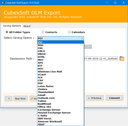
CubexSoft OLM Converter Tool
Mac OLM Converter is a reliable tool to import OLM files into PST, PDF, EML, MBOX, MSG, HTML, ICS, and other formats. It also supports migrating emails and mailbox items to Gmail, Office 365, IMAP, Thunderbird, Yahoo Mail, and more. Convert single or multiple OLM files while preserving emails, contacts, calendars, tasks, notes, and other mailbox data.

Construcción de Tejados y Cubiertas en Pamplona, Navarra
Construcción de Tejados y Cubiertas en Pamplona, Navarra En Tejados Pamplona, Navarra realizamos la Construcción de Tejados y Cubiertas empleando materiales de alta resistencia, combinando diseño y funcionalidad. Nuestro objetivo es que tu vivienda en Pamplona, Navarra cuente con un tejado sólido, seguro y preparado frente a humedades y variaciones climáticas. Web/Service: https://tejadosdavid.com/construccion-de-tejados-y-cubiertas/pamplona-navarra/ Telp: 614 005 281

DataVare IMAP Backup Tool
DataVare IMAP Backup Tool is a simple and useful application for backing up emails from IMAP-based email accounts (Gmail, Google Workspace, Zoho Mail, cPanel, HostGator, Yandex, and many others). It helps users download and save mailbox data on a local computer, providing an additional copy of important emails for backup, migration, or future access. The tool allows users to connect their IMAP account and back up mailbox data in a few simple steps. It supports emails along with attachments and lets users select specific folders or save complete mailbox data. This makes it convenient for users who want to keep only the required emails or create a complete backup of their account. The software maintains the folder structure and helps keep email data organised during the backup process. The application comes with an easy-to-use interface that both tech and non-tech users can effortlessly use. It also lets users choose the destination path for storing the backed-up data. Moreover, the software works efficiently and smoothly on Windows and Mac OS.

DataVare IMAP Backup Tool
DataVare IMAP Backup Tool is a simple and useful application for backing up emails from IMAP-based email accounts (Gmail, Google Workspace, Zoho Mail, cPanel, HostGator, Yandex, and many others). It helps users download and save mailbox data on a local computer, providing an additional copy of important emails for backup, migration, or future access. The tool allows users to connect their IMAP account and back up mailbox data in a few simple steps. It supports emails along with attachments and lets users select specific folders or save complete mailbox data. This makes it convenient for users who want to keep only the required emails or create a complete backup of their account. The software maintains the folder structure and helps keep email data organised during the backup process. The application comes with an easy-to-use interface that both tech and non-tech users can effortlessly use. It also lets users choose the destination path for storing the backed-up data. Moreover, the software works efficiently and smoothly on Windows and Mac OS.

MBA Preferred
MBAPreferred.com is a curated job board focused on career opportunities where an MBA provides a meaningful advantage. We identify and organize MBA Preferred and MBA Advantage jobs across strategy, finance, operations, consulting, marketing, technology, compliance, procurement, risk, and other business functions. Instead of searching through thousands of generic listings, professionals can quickly find roles where their MBA background is relevant and valuable. Jobs are clearly categorized and searchable by location, job type, and career area, making it easier for MBA professionals to discover opportunities aligned with their education and experience.

Instagram Transcript
Instagram Transcript (ins-transcript.com) is the fastest way to transcribe Instagram Reels, video posts, and IGTV into clean, timestamped text. Powered by advanced Whisper AI models, it delivers 99%+ word accuracy even with noisy background audio. Automatically detects 100+ languages, allows inline text editing, and exports to TXT, SRT, and VTT subtitles for seamless video editing. Try your first transcript completely free without registration, or unlock flexible pay-as-you-go credit packs.

Tejados Alcala de Henares
"Construya el Tejado de sus Sueños en Alcalá de Henares, Madrid En Tejados Alcalá de Henares, hacemos realidad el tejado que siempre quisiste. Construimos cubiertas fuertes, bonitas y a tu medida para que tu casa en Alcalá brille y aguante todo. Web/Service: https://tejadosalcalahenares.com/construccion-de-tejados-y-cubiertas/alcala-de-henares-madrid/ Telp: 919 893 267"

ImageHub
ImageHub – Free AI Image Tools for Every Visual Task ImageHub is an all-in-one AI-powered image platform designed to make image creation and editing faster, easier, and more accessible. Whether you want to generate a new image from a text prompt, improve an existing photo, remove unwanted elements, create product visuals, or transform your images into creative styles, ImageHub brings a wide range of AI image tools together in one place. With ImageHub's AI Image Generator, you can turn simple text descriptions into original visuals without needing advanced design skills. You can also use Image-to-Image generation to transform an existing photo by describing the changes you want. For creative projects, ImageHub offers tools such as an AI Art Generator, Anime Generator, Headshot Generator, Emoji Maker, and Character Swap.

Crave
An AI-powered social platform built around dishes. Crave is building an AI-powered social platform for food lovers. Try AI dish discovery and share a dish review today. The iPhone social app is in development. Discover dishes that match your tastes, explore food ideas, and connect with people through the meals they love. Crave makes it easier to find your next favorite dish and share the experience with a community of food lovers.

Icontract
Create, customize, sign, and securely manage legal documents with AI-powered drafting, templates, e-signatures, and cloud storage. Icontract is an AI-powered legal document and e-signature platform that helps individuals and businesses create, customize, sign, organize, and securely store contracts online. Generate documents using AI, collaborate with clients, collect legally binding electronic signatures, manage document versions, and access your contracts from anywhere. From NDAs and employment agreements to leases, service contracts, and business forms, iContract simplifies document creation and management.

Sherlock - AI Face Search
Sherlock is an AI face search and reverse image search app that helps you discover visually similar faces, photos, and public web matches using a single image. Whether you're looking for a similar face, running a reverse image search, or trying an AI face search to see where a photo shows up online, Sherlock keeps it fast, simple, and private. Some people search for a face finder, others just want to find face matches or run a quick face check. It covers all of that from one photo. Upload a face photo, take a new picture, or paste an image URL. It analyzes your photo to surface similar faces and images, along with any publicly available social profile matches, wherever they exist, so you get a fuller picture in one place. KEY FEATURES - AI face search from a single photo - Reverse face search across supported public web sources - Reverse image search using a photo or an image URL - Search by image from your gallery, camera, files, or a link - Preview images and match scores for every result - Open source links directly from your search - Search history stored locally on your device HOW SHERLOCK WORKS 1. Upload a face photo or paste an image URL 2. Crop the face you want to search 3. Sherlock runs its AI face search and reverse image search across supported sources, using facial recognition to work as a face detector and line up any facial match it can find 4. Review your matches, ranked by score, with direct source links Results may include publicly accessible websites, blogs, forums, news pages, image-sharing platforms, and social profile pages from supported public web sources. This can be useful when you want a second opinion on a photo, when you're trying to confirm a profile is genuine, or when you simply want to know more about a picture before you decide what to do with it. PRIVACY BY DESIGN It does not build personal profiles or permanently store your photos, keeping things straightforward and private. Search history stays on your device. Every result comes only from supported, publicly available sources, nothing more. CREDITS AND SUBSCRIPTION Each search uses a credit, available through a subscription or as an in-app purchase. Plans and pricing are clearly shown in the app before you buy anything, so there are no surprises when you're ready to search. IMPORTANT It's a visual similarity search tool, not an identity verification service. It uses AI face recognition for visual similarity only, and results may be incomplete, inaccurate, or outdated - always review them carefully. Sherlock does not identify people, verify identities, or guarantee that similar images belong to the same person. Do not use Sherlock to harass, stalk, impersonate, or discriminate against others, or to make decisions about employment, housing, insurance, credit, education, legal matters, or eligibility for any service. This app is meant to help you feel a little more informed, not to replace good judgment, common sense, or a real conversation with the person involved. Always follow applicable laws, privacy rights, and platform policies wherever you are. Download Sherlock today for AI face search, reverse image search, and reverse face search you can rely on. Questions or need help? Contact us at: rtpopyakter@gmail.com Privacy Policy: https://sites.google.com/view/sherlock-ai-facesearch-privacy/home Terms & Conditions: https://sites.google.com/view/sherlock-ai-facesearch-terms/home

Crave
Crave is an AI-powered social platform built around dishes for food lovers. Discover dishes with AI, explore new flavors, and share thoughtful dish reviews with a growing community. The iPhone social app is in development, bringing a fresh way to find, save, and talk about great food. Try AI dish discovery and share a dish review today.