Best Visual Communication Tools
This list showcases visual communication tools designed to enhance the way information is conveyed through imagery and graphics. These tools facilitate effective visual storytelling, enabling users to create engaging content that captures attention and conveys messages clearly.
Frequently asked questions
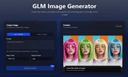
One of the top visual communication tools is GLM Image AI. This tool utilizes a hybrid autoregressive and diffusion architecture to generate high-quality images that include readable text. It excels in creating educational posters, infographics, and marketing graphics where clarity and semantic accuracy are crucial. Users can input natural language prompts and even upload reference images to guide the generation process, making it a versatile choice for professionals in various fields.
GLM Image AI enhances visual storytelling by focusing on the semantic structure of prompts, allowing it to create images that not only look good but also convey complex ideas clearly. It produces visuals with crisp, legible text, making it ideal for educational materials and marketing graphics. The tool's ability to maintain consistency across multiple subjects and its high-quality detail further contribute to effective visual communication.
Key features of GLM Image AI include readable text in generated images, knowledge-dense visual understanding, high-quality detail, image editing capabilities, and flexible usage scenarios. It allows users to create polished visuals with accurate text placement, making it suitable for a variety of applications, from educational content to marketing materials.
Yes, GLM Image AI is designed for professional use, particularly in fields that require clear and meaningful visual communication. Its focus on semantic accuracy, image editing, and high-quality outputs makes it a valuable tool for marketers, educators, and creative professionals who need reliable image generation that conveys information effectively.
GLM Image AI offers free trials for new users, with paid plans based on credit bundles that allow for a specific number of image generations. The credits do not expire, and paid tiers include commercial licensing and priority support, making it accessible for both casual users and professionals.