- 1
0Open Source Software is a dynamic platform dedicated to providing open-source alternatives to well-known software projects. This initiative aims to foster a collaborative environment where users can explore, submit, and contribute to a comprehensive database of open-source solutions. Open Source alternatives to popular projects.
- 2
0Our Self-Hosted Software List is your go-to resource for finding secure, customizable software that you can run on your own servers. With options ranging from free open-source tools to proprietary business solutions, it supports a wide variety of needs. Hosting software locally ensures better control over data and reduces dependency on external providers. The platform spans categories like project management, communication, analytics, and more. We help you prioritize data sovereignty and long-term flexibility.
- 3
0Gluu offers various authentication solutions based on open-source software. There is a self-hosted solution, a managed solution, and a free fully open-source solution based on the Linux Foundation Janssen Project.
- 4
0Flux AI is an open-source image generation tool, offering precision, complexity, and realism with various model options for diverse creative needs.
- 5

0Atomic Chat is a powerful, open-source AI platform designed to run entirely on your local device, offering a private, fast, and cost-free alternative to traditional cloud-based AI tools. Unlike most AI services that rely on remote servers, subscriptions, and data collection, Atomic Chat focuses on giving users full control over their data and experience. Everything—from conversations to processing—happens directly on your computer, ensuring complete privacy and independence from external systems. One of the defining features of Atomic Chat is its fully local operation. The platform does not send any data to the cloud, meaning that zero bytes of user information ever leave the device. This makes it particularly appealing for users who prioritize security, confidentiality, or offline access. In fact, Atomic Chat works 100% offline, allowing users to interact with AI models without any internet connection. This is a major advantage compared to cloud-based AI tools, which require constant connectivity and often impose usage limits or restrictions. Another key strength of Atomic Chat is its support for over 1,000 AI models. Users can choose from a wide variety of models, including well-known ones like Llama, Qwen, DeepSeek, Gemma, and others. These models can be downloaded and run locally with just a few clicks, giving users the flexibility to select the best model for their needs—whether it’s for writing, coding, research, or general conversation. The platform supports multiple formats such as GGUF, MLX, and ONNX, making it compatible with a broad ecosystem of AI models. Performance is also a major focus of Atomic Chat. It integrates a technology called TurboQuant, which significantly improves efficiency. TurboQuant allows models to run up to eight times faster than traditional setups while using much less memory. This means users can run larger and more advanced models on their own devices without sacrificing speed or quality. Despite heavy optimization, the platform maintains high accuracy, ensuring that responses remain reliable and effective. The user experience is designed to be simple and accessible. Installing Atomic Chat is straightforward, similar to installing any standard desktop application. Once installed, users can quickly select a model and start chatting immediately, without complex configuration or technical setup. The interface is clean and organized, with features like chat and project separation, allowing users to manage different tasks without losing context. Persistent memory across sessions also helps maintain continuity in conversations. Atomic Chat is also built with advanced use cases in mind. It supports autonomous workflows, meaning users can create AI agents that can think, act, and execute tasks locally. This opens the door to more complex applications, such as automation, personal assistants, or custom AI-driven tools—all running securely on the user’s machine. Being open-source is another important aspect of the platform. Users can inspect the code, verify how it works, and even modify it if needed. This level of transparency builds trust and gives developers the freedom to adapt the tool to their specific requirements. Overall, Atomic Chat represents a shift toward user-owned AI. By eliminating subscriptions, removing data tracking, and enabling fully local execution, it empowers users to take control of their AI experience. It is an ideal solution for those who value privacy, flexibility, and performance without relying on external services.
- 6
0FireRed-Image-Edit is an open-source native AI image editing model. It supports precise text-guided editing, preserves text layout and portrait identity, and can be used for background replacement, photo retouching, old photo restoration, virtual try-on, etc. With natural lighting, consistent effects and efficient inference, it is ideal for design, e-commerce and content creation.
- 7
0Davinci MagiHuman AI is an open-source, high-performance audio-video model with a single-stream Transformer. It generates fully synchronized digital human videos (expressions, motions, voice) from one image. Supporting 6 languages, fast HD rendering and stable quality, it’s widely used in virtual hosting, corporate presentations, education and cross-border short videos.
- 8
0Octopoda is an open source infrastructure layer that gives AI agents persistent memory, automatic loop detection, and full observability. Agents forget everything between sessions. Octopoda fixes that with a remember/recall API that survives restarts, crashes, and deployments. The loop detection system monitors 5 signals to catch agents stuck repeating themselves before they burn your API budget, with real-time cost estimation showing exactly how much each loop wastes. A built-in dashboard shows every agent's health score, memory explorer with version history, audit trail logging every decision with reasoning, and a timeline replay that lets you scrub through everything your agent did step by step. Works with LangChain, CrewAI, AutoGen, and OpenAI Agents SDK with one-line integrations. Runs locally with SQLite or connects to cloud with one environment variable. Free tier, MIT licensed. 177 signups, 120 GitHub stars, zero marketing spend.
- 9
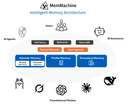
0MemMachine is an open-source memory layer that transforms AI agents and applications into intelligent, personalized assistants. Unlike traditional AI apps that start fresh each time, MemMachine enables applications to learn, store, and recall data from past sessions, enriching every interaction with context. Key Features: • Persistent Memory - Maintains memory across sessions, agents, and LLMs, building evolving user profiles • Multi-Platform Integration - Works with OpenAI, AWS Bedrock, Ollama, and more via MCP server capability • Flexible Deployment - Run locally, in the cloud, or install via pip with full data control • Open-Source - Comprehensive documentation, active community support
- 10
0Davinci MagiHuman AI is an open-source, high-performance audio-video model with a single-stream Transformer. It generates fully synchronized digital human videos (expressions, motions, voice) from one image. Supporting 6 languages, fast HD rendering and stable quality, it’s widely used in virtual hosting, corporate presentations, education and cross-border short videos.
- 11
0<a href="https://davincimagihuman.net"> Davinci MagiHuman AI</a > is an open-source, high-performance audio-video model with a single-stream Transformer. It generates fully synchronized digital human videos (expressions, motions, voice) from one image. Supporting 6 languages, fast HD rendering and stable quality, it’s widely used in virtual hosting, corporate presentations, education and cross-border short videos.
- 12
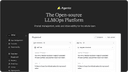
0Agenta is an open-source LLMOps platform that helps AI teams build and ship reliable LLM applications. Developers and subject matter experts work together to experiment with prompts, run evaluations, and debug production issues. The platform addresses a common problem: LLMs are unpredictable, and most teams lack the right processes. Prompts get scattered across tools. Teams work in silos and deploy without validation. When things break, debugging feels like guesswork. Agenta centralizes your LLM development workflow: Experiment: Compare prompts and models side by side. Track version history and debug with real production data. Evaluate: Replace guesswork with automated evaluations. Integrate LLM-as-a-judge, built-in evaluators, or your own code. Observe: Trace every request to find failure points. Turn any trace into a test with one click. Monitor production with live evaluations.
- 13
0Scribbler is an open-source, browser-based JavaScript notebook and compiler designed to make coding experiments simple, interactive, and accessible to everyone. Unlike traditional IDEs or editors, Scribbler combines a notebook-style interface — where you can mix text, JavaScript, HTML, and CSS — with instant code execution, all within your browser. No installations, no Node.js, no backend servers. Just open Scribbler and start coding. With Scribbler, you can: * Run JavaScript code instantly in a clean, distraction-free interface * Create notebooks that blend explanations with live code and outputs * Load ES6 modules and libraries dynamically for advanced projects * Share or host notebooks easily — no server setup required Scribbler takes inspiration from Python’s Jupyter Notebook but is built purely with frontend technologies, making it lightweight, flexible, and easy to use anywhere. Whether you’re experimenting with algorithms, building dashboards, or teaching JavaScript fundamentals, Scribbler provides a powerful yet beginner-friendly coding playground. 👉 Try it now: https://app.scribbler.live 👉 Learn more: https://scribbler.live
- 14
0Humo AI is an open-source video generation tool jointly built by Tsinghua University and ByteDance. Centered on human generation, it supports multimodal instructions of text, image and audio. It realizes precise audio-video matching and consistent cross-frame characters, applicable for digital human broadcasting and creative short films
- 15
0🚀 30%+ faster than any competing model — The 9B model matches output quality of models 5x its size while generating images in a fraction of the time. 💻 Runs on your hardware — The 4B model needs just 13GB VRAM, making professional AI image generation accessible on RTX 3090/4070 without expensive cloud infrastructure. 📜 Apache 2.0 for commercial use — The 4B model is fully open-source. Use it in commercial projects, products, and services with zero licensing restrictions. 🎨 Generation + editing in one model — No more juggling separate models. Handle text-to-image, image-to-image, and multi-reference editing in a single unified workflow.
- 16
0Humo AI is an open-source video generation tool jointly built by Tsinghua University and ByteDance. Centered on human generation, it supports multimodal instructions of text, image and audio. It realizes precise audio-video matching and consistent cross-frame characters, applicable for digital human broadcasting and creative short films
- 17
0Hexabot is an open-source AI chatbot and agent solution that allows users to create and manage multi-channel, multilingual AI-powered chatbots with ease. Designed for flexibility and customization, Hexabot offers powerful text-to-action capabilities, enabling developers and businesses to tailor their bots to meet specific needs. Built by the community for the community, Hexabot empowers individuals and organizations to create innovative, interactive agents and democratizes access to AI technology.
- 18
0HappyHorse AI is an outstanding AI video generation model launched in 2026. It supports text-to-video, image-to-video, enhancement and local editing, enabling one-click generation of high-quality 1080P high-frame-rate videos. Its core strength lies in native audio-video synchronization, multilingual voice and accurate lip-sync, with realistic visuals and high efficiency. Users can easily produce professional videos from text or images for short-form content, product promotion, advertising and social media. Being open-source and commercially friendly, it performs well in global evaluations and has become a top choice for efficient creation.
- 19
0Activepieces is an open-source AI Agent ecosystem that helps you build smart, autonomous AI agents to handle repetitive tasks. Zero coding required. In just 4 steps, non-technical users can create AI Agents that connect to hundreds of tools (like Gmail, CRMs, and databases) and get things done automatically. The AI Agents can also work independently or as a team. For example one agent can sort leads, another then sends personalized emails, and another onboards new clients. The AI agent ecosystem includes AI Agents, Tables for data storage, Todos (human approvals), and Model Context Protocols (MCPs) that enable you turn Claude, Cursor, Windsurf and other LLMs into AI Agents Whether you're automating customer support, sales workflows, or internal ops, Activepieces helps you move faster, reduce errors, and build AI-powered systems without writing code.
- 20
0Formerly known as NextAuth. It's is an open-source authentication library originally built for NextJS. Auth.js is free to use and comes with over 80 integrations for various third-party identity providers such as Google, Facebook, Auth0, Apple etc. You can use it with your own database if you choose to. It works with MySQL, Postgres, MSSQL and MongoDB. Auth.js is compatible with Next.js, SvelteKit and SolidStart as of March 2024.
- 21
0# Framepack AI: The Revolutionary AI Video Generation Model Framepack AI is a breakthrough neural network structure for AI video generation. It employs innovative "next frame prediction" technology combined with a unique fixed-length context compression mechanism, enabling users to generate high-quality, high-framerate (30fps) videos up to 120 seconds long with very low hardware barriers (requiring only consumer-grade NVIDIA GPUs with 6GB of VRAM). ## What Makes Framepack AI Unique? The core innovation of Framepack AI lies in its **fixed-length context compression** technology. In traditional video generation models, context length grows linearly with video duration, leading to a sharp increase in VRAM and computational resource demand. Framepack AI effectively solves this challenge by intelligently evaluating the importance of input frames and compressing this information into fixed-length context 'notes'. This significantly reduces the demand for VRAM and computational resources, making it possible to generate long videos on consumer hardware. ## Key Features * **Fixed-Length Context Compression**: Intelligently compresses all input frames into fixed-length context information, preventing memory usage from scaling with video length and dramatically reducing VRAM requirements. * **Minimal Hardware Requirements**: Requires an NVIDIA RTX 30XX, 40XX, or 50XX series GPU with at least 6GB of VRAM. Compatible with both Windows and Linux operating systems, supporting FP16 and BF16 data formats. * **Efficient Generation**: Generates frames at approximately 2.5 seconds per frame on RTX 4090 desktop GPUs, with optimization (like teacache) reducing this to 1.5 seconds per frame. * **Strong Anti-Drift Capabilities**: Progressive compression and differential handling of frames by importance mitigates the 'drift' phenomenon common in long video generation, ensuring consistent quality throughout. * **Multiple Attention Mechanisms**: Support for PyTorch attention, xformers, flash-attn, and sage-attention provides flexible optimization options for different hardware setups. * **Open-Source and Free**: Developed by ControlNet creator Lvmin Zhang and Stanford University professor Maneesh Agrawala. Framepack AI is a fully open-source project with its code and models publicly available on GitHub, backed by an active community and rich ecosystem. ## Getting Started with Framepack AI You can download Framepack AI from its official GitHub repository. It can be used as a standalone application or integrated with platforms like ComfyUI. The community, such as RunningHub, has also created a Framepack plugin for zero-threshold usage. Framepack AI is dedicated to advancing AI video generation technology. Join us in exploring the future of video creation!
- 22
0Databasus is an open source tool to backup PostgreSQL, MySQL and MongoDB Features: - Support of multiple databases: PostgreSQL, MySQL, MariaDB and MongoDB - Scheduled backups for multiple DBs in the same time - Storage targets: local disk, S3, Cloudflare R2, Google Drive, Azure Blob, NAS, etc. - Notifications about backup status via email, Telegram, Slack, Discord, MS Teams and customizable webhooks - Works with both self-hosted PostgreSQL and managed services (RDS, Cloud SQL, Azure Database for PostgreSQL, etc.) - Workspaces, users access and audit logs (for teams) - Runs as a single Docker container or via Helm on Kubernetes; can also be installed via a shell script - Suitable for production environments
- 23
0Postgresus is a free, open source and self-hosted tool to backup PostgreSQL. Make backups with different storages (S3, Google Drive, FTP, etc.) and notifications about progress (Slack, Discord, Telegram, etc.) Key features: - Scheduled backups for multiple PostgreSQL databases - Storage targets: local disk, S3, Cloudflare R2, Google Drive, Azure Blob, NAS, etc. - Notifications about backup status via email, Telegram, Slack, Discord, MS Teams and customizable webhooks - Works with both self-hosted PostgreSQL and managed services (RDS, Cloud SQL, Azure Database for PostgreSQL, etc.) - Runs as a single Docker container or via Helm on Kubernetes; can also be installed via a shell script - Team management with different workspaces, RBAC and audit logs - Encryption for secrets and backup files
Frequently asked questions
Flux AI is an open-source image generation tool that provides precision, complexity, and realism. It offers various model options to cater to diverse creative needs, making it a versatile choice for artists and developers looking to create stunning visuals.
Gluu Server provides a range of authentication solutions based on open-source software. It includes a self-hosted solution, a managed solution, and a free fully open-source option based on the Linux Foundation Janssen Project, allowing organizations to choose the best fit for their needs.
Auth.js, formerly known as NextAuth, is an open-source authentication library designed for NextJS. It is free to use and supports over 80 integrations with various third-party identity providers like Google, Facebook, and Auth0. Users can also integrate it with their own databases, including MySQL, Postgres, MSSQL, and MongoDB, making it a flexible solution for developers.
Hexabot is an open-source AI chatbot solution that allows users to create and manage multi-channel, multilingual chatbots. It features a visual editor, a plugin system, and powerful text-to-action capabilities. Hexabot is designed for flexibility and customization, empowering developers and businesses to tailor their bots to meet specific needs while democratizing access to AI technology.