Best AI Software
Software that's genuinely smart, not just labeled AI.
The best AI software across every domain — writing, images, video, code, data, and business workflows — the applications where artificial intelligence is the product, not a sticker.
- 126
 0
0MindMarks is an AI productivity tool that turns long, messy AI conversations into structured, reusable knowledge. It helps users organize, search, and revisit chats across ChatGPT, Claude, and Gemini with features like folders, search, prompt management, exports, and better navigation. It is built for power users, researchers, students, and professionals who want to get more long-term value from their AI workflows. Key features: 1. Folders for organizing AI chats 2. Search across past conversations 3. Prompt management and reuse 4. Auto-generated chat outlines 5. Export to multiple formats 6. Better navigation for long threads 7. Cross-platform support for ChatGPT, Claude, and Gemini 8. Structured knowledge capture from messy chats
- 127
 0
0LLM Reference is a comprehensive AI model intelligence platform designed to help developers, startups, researchers, and businesses choose the best large language models for their specific use cases. The platform tracks the rapidly evolving AI ecosystem by monitoring models, providers, benchmarks, pricing changes, and performance updates across the entire generative AI market. Instead of manually comparing dozens of AI models and providers, users can use LLM Reference to quickly discover which models are best for coding, agents, writing, research, vision, long-context tasks, image generation, video generation, and much more. The platform positions itself as a decision-making tool for teams building AI products. Because the AI landscape changes constantly with new models, benchmark updates, and price reductions appearing every week, LLM Reference focuses heavily on keeping information fresh and actionable. According to the platform, it currently tracks over 1,700 AI models, more than 130 providers, and hundreds of AI labs worldwide. One of the most important features of LLM Reference is its model directory and comparison system. Users can search models by category, capability, or use case. Whether someone is looking for the best coding model, the cheapest frontier model, a model optimized for agents, or a long-context AI system, the platform organizes everything into structured leaderboards and curated recommendations. The site includes specialized categories such as coding, RAG systems, autonomous agents, vision models, classification models, JSON and tool-use support, long-context processing, image generation, video generation, transcription, translation, and music generation. This makes the platform useful not only for developers building SaaS products, but also for creative professionals, research teams, and enterprise AI workflows. LLM Reference also provides editorial “picks” and expert recommendations that simplify model selection. Instead of forcing users to analyze raw benchmarks manually, the platform highlights models considered best overall, cheapest, freshest, or strongest for specific audiences. For example, some models are recommended specifically for coding, while others are highlighted for research quality, writing style, agent reliability, or image generation capabilities. Another major strength of the platform is benchmark tracking. LLM Reference continuously refreshes benchmark scores across major AI evaluation suites, allowing users to compare real-world model performance over time. Metrics from coding benchmarks, chatbot arenas, reasoning tests, and tool-use evaluations are consolidated into one place so teams can evaluate tradeoffs between quality, speed, and cost. The platform heavily emphasizes pricing transparency as well. AI costs can vary dramatically depending on provider and usage scale, so LLM Reference tracks live pricing information including token costs, provider differences, and price cuts across the market. Users can compare which providers offer the lowest cost per million tokens while still maintaining competitive performance. A particularly valuable section is the “Pulse” feature, which summarizes weekly changes across the AI industry. This includes newly released models, pricing updates, benchmark refreshes, and notable market shifts. Instead of monitoring dozens of AI company announcements manually, users can quickly understand what changed in the ecosystem during the week. LLM Reference also supports provider comparisons and “most-asked comparisons” between major AI systems like GPT, Claude, Gemini, DeepSeek, and other frontier models. These side-by-side comparisons help developers determine which models best fit their workflow, budget, and technical requirements. The platform appears especially useful for AI engineers, SaaS founders, AI agencies, growth teams, and technical decision-makers who need reliable information before integrating expensive AI infrastructure into products. Since AI capabilities and pricing evolve extremely fast, choosing the wrong model can lead to unnecessary costs, poor user experience, or technical limitations. LLM Reference aims to solve that problem by acting as a constantly updated intelligence hub for the AI model ecosystem. Overall, LLM Reference is essentially a real-time research and comparison platform for the modern AI industry. By combining benchmark analysis, pricing intelligence, provider tracking, curated recommendations, and ecosystem monitoring into one interface, the platform helps users make faster and smarter decisions about which AI models to use for real-world applications.
- 128
 0
0ShadowLock is a comprehensive AI risk detection and governance platform designed specifically for Managed Service Providers (MSPs), IT administrators, and security teams that need visibility and control over the growing use of artificial intelligence tools within organizations. As AI adoption accelerates across workplaces, many employees are using applications such as ChatGPT, Claude, Gemini, Copilot, and other AI-powered services without formal approval or oversight. This phenomenon, often referred to as “Shadow AI,” creates significant security, compliance, privacy, and legal risks for organizations. ShadowLock was created to help businesses identify, manage, and control these risks before they lead to data breaches, compliance violations, or costly incidents. The platform provides organizations with a centralized solution for detecting unauthorized AI usage across multiple environments, including web browsers, desktop applications, browser extensions, cloud services, and Microsoft 365 tenants. By combining endpoint monitoring, browser-level enforcement, and cloud application detection, ShadowLock offers broad coverage of the modern AI landscape. Its primary objective is to give organizations complete visibility into how AI tools are being used and what sensitive information may be exposed through them. One of the platform’s key strengths is its ability to detect a wide range of AI-related activities. ShadowLock can identify visits to AI websites, monitor the use of AI browser extensions, discover desktop AI applications running on company devices, and detect AI-powered features embedded within approved software platforms. It also distinguishes between personal and corporate AI accounts, helping organizations prevent employees from using unauthorized personal accounts to process business information. To reduce the risk of sensitive information leakage, ShadowLock includes advanced data protection capabilities. The platform can intercept file uploads, detect sensitive information being pasted into AI prompts, and even identify confidential data while users are typing. Rather than simply monitoring activity, it can actively enforce policies that block, warn, or allow specific actions based on organizational requirements. This enables businesses to prevent customer records, credentials, personally identifiable information (PII), protected health information (PHI), source code, contracts, and other confidential data from being submitted to unauthorized AI services. ShadowLock also addresses the compliance challenges associated with modern AI usage. Organizations operating under frameworks such as HIPAA, GDPR, CCPA, SOC 2, and other regulatory requirements can use the platform to strengthen governance controls and maintain detailed audit trails. Every enforcement action, policy decision, and detected event can be logged and exported, providing valuable evidence during audits, security reviews, compliance assessments, and cyber insurance evaluations. The platform is designed with scalability and ease of deployment in mind. A lightweight endpoint agent can be deployed silently through existing Remote Monitoring and Management (RMM) systems, minimizing disruption for users and administrators. Once installed, the agent works alongside a browser enforcement layer that automatically applies organizational policies across supported browsers. In addition, ShadowLock integrates with Microsoft 365 environments through Microsoft Graph to detect AI applications that have received OAuth permissions, providing visibility into AI-related risks that may exist outside traditional endpoint monitoring. For MSPs, ShadowLock offers a multi-organization dashboard that allows service providers to manage AI risk across multiple customer environments from a single interface. IT teams can monitor risk levels, review alerts, manage policies, track device inventories, and generate customer-facing reports. This centralized approach simplifies AI governance while helping providers demonstrate value to their clients. Privacy is another core principle of the platform. ShadowLock focuses on collecting risk signals rather than monitoring content. Sensitive information is classified locally on the device, and the platform is designed to avoid transmitting actual content, recording keystrokes, or storing uploaded files. Instead, it logs metadata and event information necessary for governance and compliance purposes while maintaining user privacy. Overall, ShadowLock serves as a proactive AI governance and security solution that helps organizations gain visibility into their AI surface, enforce data protection policies, reduce compliance exposure, and maintain control over rapidly expanding AI usage across their environments. By combining detection, enforcement, reporting, and compliance support within a single platform, it enables businesses to safely embrace AI while minimizing operational and regulatory risks.
- 129
 0
0Searchless is a forward-thinking platform built for a world where traditional search is rapidly losing its dominance. As of Q1 2026, more than half of Google searches end without a click, signaling a major shift in how people discover information online. At the same time, AI tools have dramatically increased their influence, reshaping the way users interact with content, brands, and digital experiences. Searchless exists to help businesses understand and adapt to this transformation, offering intelligence tailored to the emerging era of AI-powered discovery. At its core, Searchless focuses on what happens beyond traditional search engines. Instead of optimizing only for rankings and clicks, it helps marketers, founders, publishers, and agencies understand how AI systems—such as ChatGPT, Gemini, Perplexity, Claude, and Grok—find, interpret, and recommend information. These systems no longer rely solely on keywords or freshness. They prioritize structured evidence, trustworthy sources, and content that is easy to extract and present as direct answers. This means that brands must rethink their strategies if they want to remain visible and relevant. The platform provides deep insights into AI visibility, a concept that goes far beyond SEO. AI visibility measures how often and how effectively a brand appears in AI-generated answers, recommendations, and citations. Instead of focusing on pageviews, Searchless emphasizes turning visibility into actual business outcomes—what they call “pipeline.” This includes understanding how content gets selected, how it survives compression into concise answers, and how it performs in high-intent scenarios where users are ready to act. Searchless also delivers a wide range of research, analysis, and practical guides. These resources explore topics like how AI engines choose sources, why structured content outperforms unorganized pages, and how citation behavior is evolving across platforms. For example, studies show that AI systems tend to favor pages with clear definitions, transparent methodologies, and strong external validation. Freshness alone is no longer enough; credibility and clarity are now critical factors. To help users take action, Searchless offers tools such as AI visibility audits. These audits replace traditional ranking reports by providing a more meaningful view of performance in the AI era. They evaluate factors like citation frequency, recommendation presence, and overall visibility across multiple AI engines. This allows companies to identify gaps, prioritize improvements, and build a stronger presence where it truly matters. In addition to insights and tools, Searchless provides services designed to execute these strategies effectively. From content creation and distribution to technical optimization and white-label solutions for agencies, the platform supports every stage of the AI visibility journey. It also highlights emerging opportunities, such as AI-driven commerce, personalized discovery, and new advertising models within AI systems. Ultimately, Searchless positions itself as a guide to what comes after traditional search. It recognizes that the rules of digital discovery are being rewritten and that success now depends on understanding how AI thinks, selects, and communicates information. For anyone looking to stay ahead—whether a startup founder, a marketing team, or an agency—Searchless offers the intelligence needed to navigate and win in this new landscape.
- 130
 0
0Createimg.ai is an all-in-one AI image generation platform that makes creating professional, commercial-ready visuals easier than ever. With advanced Text-to-Image and Image-to-Image generation, users can turn simple ideas or reference photos into stunning, high-resolution artworks in just seconds. The platform integrates multiple leading AI models such as Seedream v4, Flux.1, and Nano Banana, enabling users to explore a variety of styles — from realistic photography to artistic illustration and cinematic visuals.Designed for creators, designers, marketers, and brands, Createimg.ai provides a ready-to-use prompt library and an inspiring showcase gallery to help users discover new creative possibilities. It supports custom aspect ratios and formatting options, ensuring flexibility for every project — whether it’s for e-commerce, advertising, content marketing, or social media visuals.Best of all, no signup or installation is required. Users can access the tool instantly, enjoy generous free daily generations, and download all results in HD without watermarks or restrictions. With its clean interface, fast processing, and commercial-safe outputs, Createimg.ai is the ultimate AI-powered creative partner for anyone who wants to bring ideas to life — effortlessly and beautifully.
- 131
 0
0OmniRogue is a data privacy–first AI platform that helps teams build, orchestrate, and deploy AI agents to automate real business workflows. It’s designed for organizations that want the power of modern AI without handing over sensitive data or losing operational control. With OmniRogue, you can connect tools, create multi-step agent workflows, and standardize how AI is used across your company—while maintaining privacy, governance, and clear ownership over your data. Whether you’re automating internal processes, customer operations, or knowledge workflows, OmniRogue provides a secure foundation to scale AI responsibly.
- 132
 0
0ThoughtStack is an AI-powered productivity workspace designed to transform long, unstructured conversations with artificial intelligence into organized, reusable knowledge. Instead of leaving users with lengthy chat transcripts that are difficult to revisit, ThoughtStack automatically converts important ideas into structured Thought cards that can be searched, edited, expanded, and reused across future projects. The platform is built for professionals, founders, researchers, writers, creators, and anyone who regularly collaborates with AI to solve complex problems, generate ideas, or develop long-term projects. Unlike traditional AI chat applications that focus primarily on conversation, ThoughtStack is designed around the concept of persistent knowledge management. Users begin by selecting a specialized workflow or template, such as competitor analysis, market research, product exploration, or other guided problem-solving tasks. These templates provide structure from the beginning, helping users avoid the blank-page problem while ensuring that conversations remain focused on achieving specific goals rather than becoming disorganized brainstorming sessions. One of ThoughtStack's defining features is its intelligent AI agent that continuously organizes information while users work. As conversations progress, the agent automatically identifies important ideas, decisions, insights, summaries, action items, and supporting information, converting them into structured Thought cards instead of leaving everything buried inside a chat history. This automatic organization allows users to focus entirely on thinking and collaborating with AI rather than manually taking notes or reorganizing conversations afterward. Each Thought card supports rich Markdown formatting, allowing users to include headings, bullet lists, checklists, code blocks, images, links, and formatted documentation. Because the workspace is organized into individual reusable knowledge cards, information can be quickly searched, reviewed, expanded, edited, or incorporated into future projects. Rather than repeatedly asking an AI assistant the same questions, users gradually build a growing library of structured knowledge that remains available long after a conversation has ended. ThoughtStack is particularly useful for workflows that involve deep research, long conversations, and ongoing projects. Whether performing competitor analysis, synthesizing large amounts of information, creating writing briefs, planning content strategies, or exploring new product ideas, the platform maintains context throughout extended discussions while keeping results organized in a clean workspace. This makes it easier to revisit previous work, continue unfinished projects, and build upon earlier thinking without starting from scratch. A unique capability of the platform is its integration with Claude, providing a two-way connection between the AI assistant and the user's ThoughtStack workspace. Claude can access existing projects for additional context, helping it generate more informed responses based on previously stored information. At the same time, responses generated by Claude can be automatically saved back into ThoughtStack as new Thought cards, creating a continuous feedback loop between AI conversations and structured knowledge management. This integration helps users preserve valuable work while maintaining context across multiple sessions. ThoughtStack follows a community-driven development model, where users actively influence the platform's roadmap and feature development. The project is built in public, with feedback gathered from its user community through Reddit and other channels. Instead of charging high subscription fees that include hidden AI costs, the platform uses a transparent pricing model based on pass-through large language model (LLM) usage fees, typically only a small amount per interaction, plus a modest management fee that supports hosting, infrastructure, and ongoing development. This approach allows users to pay primarily for the AI resources they actually consume. New users can explore the platform through a free guest-mode demo that provides a limited AI usage budget without requiring an account. Creating an account unlocks the ability to save projects, purchase additional credits, and continue building long-term knowledge libraries. The platform is designed to work across desktop and mobile devices, allowing users to access their projects and Thought cards wherever they work.
- 133
 0
0Clutch Click is a SaaS analytics platform that helps businesses monitor and optimize their brand presence in AI-powered search results. As AI assistants like ChatGPT, Claude, and Gemini become primary information sources, the platform tracks four key metrics—Visibility Score (how prominently brands appear), Position (ranking in AI responses), Share of Voice (percentage of mentions vs. competitors), and Sentiment (tone and perception)—across all major AI models including ChatGPT, Claude, Gemini, Mistral AI, Meta AI, Qwen, DeepSeek, Moonshot AI, and Grok. The platform features automated weekly monitoring, competitive intelligence tracking, historical trend analysis with interactive charts, and prompt management with clustering capabilities. It offers three subscription tiers (Free, Pro at $14/month, and Agency at $99/month). Clutch Click also operates as a search agency, providing hands-on SEO, content marketing, and link building services to help businesses scale their online presence and improve their performance in both traditional and AI-powered search results. Ideal for marketing teams measuring the impact of SEO and content efforts across the evolving AI search landscape.
- 134
 0
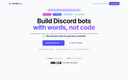
0VibeBot.gg stands as a pioneering platform in the rapidly evolving landscape of artificial intelligence and community management. Specifically designed for creators, community managers, and businesses, VibeBot offers a streamlined, "no-code" approach to building, deploying, and managing sophisticated AI-powered bots for Discord and web environments. In an era where engagement is the most valuable currency, VibeBot provides the tools necessary to automate interactions, provide instant customer support, and create unique interactive experiences without requiring a single line of programming knowledge. This accessibility democratizes AI technology, allowing anyone from a small Discord server owner to a growing tech startup to harness the power of Large Language Models (LLMs) like GPT-4 to enhance their digital presence. The core philosophy of VibeBot revolves around the concept of "Vibe Coding"—the ability to describe a bot’s personality, knowledge base, and behavior in plain natural language. Unlike traditional bot development which involves complex API integrations and hosting management, VibeBot.gg offers a centralized dashboard where users can define their bot’s "brain" through simple text instructions. This means you can instruct your bot to be a helpful customer support agent, a witty community mascot, or a specialized technical assistant. The platform handles the heavy lifting of infrastructure, ensuring that once your bot is configured, it remains operational 24/7 with high uptime and low latency, as evidenced by their transparent public status monitoring systems. One of the standout features of VibeBot is its deep integration with Discord, the world’s leading communication platform for communities. Through the vibebot.gg interface, users can invite their custom-built AI agents to their servers with just a few clicks. These bots are not just simple auto-responders; they are context-aware entities capable of understanding the nuances of ongoing conversations. They can be trained on specific documentation, FAQs, or private datasets provided by the user, making them incredibly effective at answering niche questions that a general AI wouldn't know. This "knowledge injection" transforms a standard bot into a specialized expert that serves as the first line of support, significantly reducing the workload on human moderators and support staff. Beyond its utility as a support tool, VibeBot.gg places a heavy emphasis on "vibe" and personality. The platform allows for granular control over the bot's tone of voice, ensuring that the AI aligns perfectly with the brand or community it represents. Whether the goal is a professional and formal assistant or a chaotic and humorous companion for a gaming group, the customization options are vast. Furthermore, the platform supports multi-modal interactions and is constantly evolving to include new features such as automated task delegation and real-time data retrieval. This flexibility ensures that the bot remains a dynamic part of the community rather than a static, forgotten tool. The technical infrastructure supporting VibeBot.gg is designed for reliability and scale. With a dedicated AI engine and deployment system, the platform ensures that bot responses are generated quickly, maintaining the flow of natural conversation. The site also provides comprehensive resources for its users, including detailed documentation, setup guides, and a changelog that tracks the continuous improvements made to the service. For those looking to monetize or scale their operations, VibeBot offers tiered pricing plans that cater to different needs, from casual hobbyists to enterprise-level deployments requiring high-volume message processing and advanced security features. In conclusion, VibeBot.gg is more than just a bot builder; it is a gateway to the future of automated community interaction. By removing the technical barriers to AI development, it empowers users to focus on what truly matters: creativity and community engagement. As AI continues to reshape how we interact online, platforms like VibeBot will be at the forefront, providing the essential bridge between complex machine learning models and the everyday needs of digital communities. Whether you are looking to automate your customer service, spice up your Discord server, or experiment with the latest in AI technology, VibeBot.gg offers a comprehensive, user-friendly, and powerful solution to bring your digital agents to life.
- 135
 0
0AI Banana Image Generator Effortlessly Edit Images with Natural Language in Just 1-2 Seconds. Experience the power of cutting-edge Nano Banana AI technology, designed to revolutionize image editing and generation. Simply describe the changes you want using plain English, and the system instantly delivers high-quality results while maintaining up to 95% identity accuracy. Seamlessly create cohesive multi-image narratives, modify intricate details, or generate entirely new visuals—all without requiring traditional editing skills or software expertise. Perfect for storytellers, designers, marketers, and anyone seeking fast, intuitive image customization.
- 136
 0
0LoRA AI is a creative platform for generating high-quality AI images and cinematic videos using models like Flux and WAN. It allows creators to train custom AI models to replicate unique styles in minutes without needing a GPU or coding skills. Users benefit from professional-grade results with full commercial rights and access to a marketplace for monetization. This tool streamlines the creative process for designers and content creators looking for consistent, high-fidelity AI generation. Whether you are building a brand identity or producing digital art, LoRA AI provides the infrastructure to scale your visual content production efficiently.
- 137
 0
0SoraVideo is a browser-based AI video creation tool built for text-to-video and image-to-video workflows. Start from a prompt or a reference image, generate multiple variations, compare results side by side, and refine quickly by adjusting prompts and settings. Because rendering happens in the cloud, you don’t need local GPU setup or heavy software installs. It’s ideal for creators, marketers, agencies, and product teams producing video assets at scale—ads, short social clips, concept videos, storyboards, and product demos. Export-ready outputs make it easy to publish or continue editing in your existing workflow.
- 138
 0
0Stunning.so is an AI-powered platform that enables users to quickly build full-stack web applications. By simply chatting with AI, you can create a wide range of websites, from coffee shop sites to task managers, sales dashboards, and more. The platform integrates a powerful set of tools, including the latest coding LLMs, and features real-time support for RTL (right-to-left) languages. Stunning also showcases real websites built by its community, offering inspiration for projects like an indoor playground in Singapore, a beauty service website, and a Spotify clone UI. Whether you’re a developer or a business owner, Stunning makes it easier to turn your ideas into fully functional websites 10x faster with the help of artificial intelligence.
- 139
 0
0Atomic Chat is a powerful, open-source AI platform designed to run entirely on your local device, offering a private, fast, and cost-free alternative to traditional cloud-based AI tools. Unlike most AI services that rely on remote servers, subscriptions, and data collection, Atomic Chat focuses on giving users full control over their data and experience. Everything—from conversations to processing—happens directly on your computer, ensuring complete privacy and independence from external systems. One of the defining features of Atomic Chat is its fully local operation. The platform does not send any data to the cloud, meaning that zero bytes of user information ever leave the device. This makes it particularly appealing for users who prioritize security, confidentiality, or offline access. In fact, Atomic Chat works 100% offline, allowing users to interact with AI models without any internet connection. This is a major advantage compared to cloud-based AI tools, which require constant connectivity and often impose usage limits or restrictions. Another key strength of Atomic Chat is its support for over 1,000 AI models. Users can choose from a wide variety of models, including well-known ones like Llama, Qwen, DeepSeek, Gemma, and others. These models can be downloaded and run locally with just a few clicks, giving users the flexibility to select the best model for their needs—whether it’s for writing, coding, research, or general conversation. The platform supports multiple formats such as GGUF, MLX, and ONNX, making it compatible with a broad ecosystem of AI models. Performance is also a major focus of Atomic Chat. It integrates a technology called TurboQuant, which significantly improves efficiency. TurboQuant allows models to run up to eight times faster than traditional setups while using much less memory. This means users can run larger and more advanced models on their own devices without sacrificing speed or quality. Despite heavy optimization, the platform maintains high accuracy, ensuring that responses remain reliable and effective. The user experience is designed to be simple and accessible. Installing Atomic Chat is straightforward, similar to installing any standard desktop application. Once installed, users can quickly select a model and start chatting immediately, without complex configuration or technical setup. The interface is clean and organized, with features like chat and project separation, allowing users to manage different tasks without losing context. Persistent memory across sessions also helps maintain continuity in conversations. Atomic Chat is also built with advanced use cases in mind. It supports autonomous workflows, meaning users can create AI agents that can think, act, and execute tasks locally. This opens the door to more complex applications, such as automation, personal assistants, or custom AI-driven tools—all running securely on the user’s machine. Being open-source is another important aspect of the platform. Users can inspect the code, verify how it works, and even modify it if needed. This level of transparency builds trust and gives developers the freedom to adapt the tool to their specific requirements. Overall, Atomic Chat represents a shift toward user-owned AI. By eliminating subscriptions, removing data tracking, and enabling fully local execution, it empowers users to take control of their AI experience. It is an ideal solution for those who value privacy, flexibility, and performance without relying on external services.
- 140
 0
0CoverX AI is an AI-powered platform built specifically for the commercial insurance industry, helping retail insurance agencies simplify and accelerate complex producer workflows. Available through CoverX AI, the platform focuses on transforming time-consuming insurance analysis into a faster, more intelligent, and more scalable process. By combining artificial intelligence with agency expertise, CoverX AI enables insurance professionals to spend less time on manual document review and more time building client relationships, developing strategy, and closing business. At its core, CoverX AI is designed to support commercial insurance producers and agencies that regularly manage large, detailed policies and proposals. Traditional insurance workflows often involve reviewing hundreds of pages of forms, endorsements, exclusions, and coverage comparisons manually. This process can consume significant amounts of time while increasing the risk of missed details or inconsistencies. CoverX AI addresses these challenges by automating critical parts of the workflow while still keeping agents at the center of decision-making and client communication. One of the platform’s key tools is the Form Analyzer, which instantly reviews incumbent insurance policies and surfaces important information that would normally require extensive manual analysis. The system can identify policy gaps, highlight problematic exclusions, detect critical language within forms, and uncover important coverage details in minutes rather than hours. This allows insurance professionals to move quickly while maintaining a high level of accuracy and insight when evaluating policies for clients and prospects. Another major component of the platform is the Quote and Policy Comparison tool. Commercial insurance often involves comparing multiple quotes and policy structures side by side, a process that can become extremely complicated when dealing with lengthy documentation. CoverX AI simplifies this workflow by generating clear comparisons that visualize differences in pricing, exclusions, coverage terms, and conditions. The platform helps transform agents into more strategic advisors by making complex insurance information easier to understand and communicate. The Proposal Generator further enhances the workflow by enabling agencies to create polished, client-ready proposals quickly and efficiently. Instead of manually assembling documents and formatting presentations, users can generate professional proposals tailored to specific opportunities. These proposals help agencies present value clearly, communicate coverage benefits effectively, and respond to prospects faster than competitors. Speed and presentation quality are especially important in competitive insurance markets, and CoverX AI aims to give agencies an operational advantage in both areas. A defining characteristic of CoverX AI is its positioning as a collaborative intelligence platform rather than a replacement for insurance professionals. The company emphasizes that its AI delivers intelligent analysis, while agents continue to provide intelligent advice. This distinction reinforces the idea that the platform is designed to augment expertise, not replace it. By automating repetitive analytical tasks, agencies can increase productivity without sacrificing the strategic and relationship-driven aspects of insurance advisory work. The platform also highlights measurable business benefits for agencies. CoverX AI helps organizations scale revenue without requiring proportional increases in headcount. Faster analysis workflows allow teams to manage more accounts efficiently, while improved precision reduces the likelihood of overlooking critical policy details. Clearer communication tools also help agencies strengthen trust with clients by presenting complex coverage information in a more understandable format. Testimonials featured on the platform reinforce these advantages. Agency leaders describe how CoverX AI reduces the burden of manual review, accelerates proposal creation, and enables teams to handle larger volumes of business more effectively. The platform is particularly valuable for agencies managing commercial accounts with policies ranging from dozens to hundreds of pages. Overall, CoverX AI represents a modern AI-driven solution for the commercial insurance industry. By streamlining policy analysis, quote comparison, and proposal generation, the platform empowers insurance agencies to work faster, communicate more clearly, and scale operations more efficiently. Combining automation with professional expertise, CoverX AI helps transform traditional insurance workflows into a smarter, more strategic process built for the demands of modern agencies.
- 141
 0
0HappyHorse AI is a browser-based AI video creation platform designed for cinematic storytelling, creative experimentation, and commercial content production. It allows users to generate high-quality videos using simple inputs like text prompts or images, eliminating the need for complex editing software or powerful hardware. Built with a focus on speed and usability, the platform provides a streamlined workflow where creators can move from idea to finished video in just a few minutes. At its core, HappyHorse AI offers two main creation modes: text-to-video and image-to-video. In the text-to-video workflow, users simply describe a scene, including elements like subject, action, camera movement, and mood, and the system generates a video based on that prompt. This makes it ideal for creating concept clips, advertisements, or social media content directly from imagination. In the image-to-video mode, users upload photos or illustrations and animate them into motion while preserving their original composition. This is particularly useful for product showcases, portrait animations, or enhancing static visuals. One of the platform’s key strengths is its multi-model workspace. Instead of relying on a single AI model, HappyHorse AI allows users to access and compare multiple video generation models within the same interface. Its flagship model, HappyHorse 1.0, is optimized for cleaner motion, more polished visuals, and branded content production. This flexibility enables creators to experiment with different styles, speeds, and outputs without switching tools or platforms. The workflow is intentionally simple and efficient. Users start by describing their scene or uploading an image, then choose a model and adjust settings such as aspect ratio, resolution, and duration. Once the video is generated, it can be previewed and exported as an MP4 file, ready for sharing or further editing. The platform supports common formats like 16:9, 9:16, and 1:1, making it suitable for everything from YouTube videos to TikTok and Instagram content. HappyHorse AI is designed for fast iteration, allowing users to quickly test multiple ideas and refine their results. Instead of spending hours on a single production, creators can generate several variations, compare outputs, and select the best version. This makes it especially useful for marketing teams, designers, and content creators who need to produce engaging visuals بسرعة and efficiently. The platform also supports commercial workflows, making it suitable for campaigns, product launches, and client presentations. Features like AI-generated visuals, flexible controls, and export-ready files ensure that the output can be used in real-world projects. Additionally, optional audio-aware workflows are available depending on the selected model, allowing for more advanced video planning. Another advantage is accessibility. HappyHorse AI runs entirely in the browser, meaning users do not need a local GPU or specialized setup. This lowers the barrier to entry and makes professional-grade video generation available to a wider audience. New users can start with free credits, making it easy to explore the platform before committing to a paid plan. Overall, HappyHorse AI stands out as a practical and efficient solution for AI video creation. By combining simplicity, flexibility, and powerful generation capabilities, it enables users to turn ideas into motion quickly and effectively. Whether for social media, advertising, or creative exploration, it provides a complete workspace for modern video production without the traditional complexity.
- 142
 0
0Alma is an advanced AI platform designed around the concept of persistent memory, autonomous background agents, and unified creative tools. Unlike traditional AI assistants that forget previous conversations after each session, Alma is built to continuously remember user preferences, projects, communication styles, decisions, and ongoing work across every interaction. The platform positions itself as a long-term AI companion capable of evolving alongside the user, gradually building a deeper understanding of their goals, personality, workflows, and habits over time. By combining memory systems, research automation, creative studios, and productivity tools into one subscription, Alma aims to provide a more integrated and personalized AI experience. One of Alma’s core features is its persistent memory system. The platform automatically extracts useful information from conversations, such as personal preferences, writing styles, project details, recurring goals, and important decisions. These memories remain accessible across future chats, allowing the AI to maintain continuity and contextual understanding without forcing users to repeat the same information repeatedly. Users also remain in control of their stored memories, with options to review, edit, export, or delete saved data whenever needed. Alma describes this as a “complete memory system” that goes beyond simple vector storage by understanding personality traits, behavior patterns, communication preferences, and contextual relationships between topics. Another major feature of Alma is its system of autonomous background agents. Users can describe long-term goals or monitoring tasks in plain language, and Alma plans and executes them automatically over hours, days, or even weeks. Examples include competitor research, brand monitoring, scheduled reporting, trend analysis, or ongoing information gathering tasks. These agents operate independently in the background and periodically report findings back to the user. This functionality transforms Alma from a reactive chatbot into a more proactive digital assistant capable of managing long-term workflows and continuous research activities with minimal supervision. Alma also integrates multiple creative AI studios into a single workspace and pricing system. Users gain access to image generation, video creation, and music production tools under one shared monthly AI budget instead of paying for separate subscriptions across multiple platforms. The Image Studio supports advanced image models for generating, editing, upscaling, and refining visual content. The Video Studio includes support for cinematic AI video generation, storyboard planning, and avatar creation. Meanwhile, the Music Studio allows users to generate studio-style music tracks, focus loops, intros, and songs with optional vocals and lyrics. This unified creative environment is designed for creators, marketers, writers, designers, and content producers who need multimedia generation tools without managing multiple disconnected services. The platform also includes productivity and research-oriented capabilities aimed at writers, researchers, developers, and power users. Alma supports web search with AI-generated summaries, trend tracking, document generation, long-form writing assistance, grammar correction, translation, and export functionality for formats such as PDF, DOCX, XLSX, PPTX, HTML, Markdown, and JSON. Developers can access advanced integrations through APIs, bring-your-own-provider-key support, VS Code extensions, and MCP compatibility for connecting Alma with external development environments and AI-aware clients. These tools allow the platform to function not only as a conversational assistant but also as a workflow automation and knowledge management system. Another defining aspect of Alma is its emphasis on personalization and cognitive adaptation through what it calls the “Soul Engine v2.” This system allows the AI to develop a deeper understanding of user identity, worldview, communication style, reasoning preferences, and behavioral patterns. The goal is to create interactions that feel increasingly natural, context-aware, and tailored to individual users over time. Combined with automatic context assembly, Alma attempts to reduce the need for repetitive prompt engineering by dynamically selecting relevant memories and contextual information for each conversation. Overall, Alma presents itself as an all-in-one AI ecosystem that combines persistent memory, autonomous research agents, creative media generation, productivity tools, and personalized interaction systems into a unified platform. By focusing on long-term contextual understanding, automation, and integrated multimedia workflows, Alma aims to move beyond traditional chatbot experiences and become a continuously evolving AI workspace that adapts to the user’s personal and professional life.
- 143
 0
0AI3DGen is an AI-powered platform that generates high-quality 3D models from text prompts or reference images in minutes. It eliminates the steep learning curve of traditional 3D modeling software, making 3D content creation accessible to everyone—from game developers and indie studios to designers and 3D printing enthusiasts. What it does: Users simply describe what they want (e.g., "a vintage wooden chair with metal legs" or "a futuristic spaceship") or upload a reference image, and the AI generates a fully textured, production-ready 3D model. The output supports multiple formats including OBJ, GLB, and STL, making it compatible with game engines (Unity, Unreal), design tools (Blender, Maya), and 3D printers. Key features: Text-to-3D and Image-to-3D generation Real-time 3D preview in browser Multiple export formats (OBJ, GLB, STL, FBX) Clean topology and realistic textures No installation required—runs entirely in the cloud Fast generation, typically under 2 minutes Why it stands out of the ranking: AI3DGen represents a paradigm shift in 3D content creation. While traditional tools require years of training, our platform democratizes 3D design by leveraging state-of-the-art generative AI. It's one of the few tools that balances speed, quality, and accessibility, making it a strong contender in the AI-powered 3D generation space. Whether for prototyping, game development, or product visualization, AI3DGen delivers professional-grade results without the professional-grade learning curve.
- 144
 0
0Minded is an AI automation platform focused on helping businesses build intelligent AI agents capable of performing real operational tasks across digital systems and workflows. Rather than functioning as simple chatbots or conversational assistants, Minded positions its AI agents as practical digital workers that can actively complete tasks, interact with tools, and automate repetitive business processes. The platform is designed to reduce operational bottlenecks by allowing companies to deploy AI agents that behave more like human team members capable of navigating software environments and executing actions independently. One of the central ideas behind Minded is simplifying AI agent creation for non-technical users. Traditional automation systems often require engineering resources, custom integrations, or complex development work before they become useful in real-world business environments. Minded aims to remove those barriers by allowing users to build and manage AI agents using natural language instructions instead of extensive coding. This makes the platform accessible to founders, operators, support teams, and business professionals who want to automate workflows quickly without relying heavily on developers or internal technical teams. A major feature of the platform is its browser agent functionality. Minded enables AI agents to interact directly with websites, dashboards, and online tools in a way that resembles how human employees operate digital systems. Instead of requiring APIs for every service, the AI agents can navigate interfaces, click buttons, complete forms, and perform browser-based actions autonomously. This capability significantly expands the range of tasks that businesses can automate, especially when working with third-party software that may not provide easy developer integrations. Another standout component is the AI Recorder feature, which allows users to train AI agents using screen recordings. Rather than manually programming workflows step by step, businesses can demonstrate tasks visually, similar to how they might train a new employee or contractor. The platform interprets these demonstrations and uses them to teach AI agents how to execute workflows automatically. This training model lowers the learning curve for AI automation and allows organizations to replicate operational knowledge more efficiently across teams and systems. Minded emphasizes the concept of managing AI agents similarly to managing human workers. Users can communicate instructions in plain English, assign tasks, and guide workflows naturally without needing deep technical expertise. This human-centric approach makes AI automation feel more collaborative and approachable, helping businesses integrate AI into daily operations faster. The platform’s goal is not only to automate isolated tasks, but to create intelligent agents capable of continuously supporting customer service, operations, internal workflows, and business productivity. The company also highlights speed and practical deployment as key advantages. According to its positioning, businesses can build AI agents that start delivering value almost immediately instead of waiting for lengthy development cycles or engineering prioritization. By enabling AI agents to operate existing systems through browser interaction and natural language instructions, Minded allows organizations to automate processes without rebuilding infrastructure or redesigning internal software stacks. Security and compliance also appear to be important priorities for the platform. Minded references standards such as GDPR compliance and SOC 2 Type II certification, which indicates a focus on data protection, operational security, and enterprise readiness. These certifications help position the platform as suitable for businesses handling sensitive customer information or operating in regulated industries where trust and compliance are essential. Overall, Minded presents itself as a modern AI workforce platform that bridges the gap between conversational AI and practical business automation. Through browser-based agents, visual training systems, natural language management, and fast deployment capabilities, the platform enables businesses to automate digital operations in a more intuitive and scalable way. Its focus on usability, task execution, and operational efficiency makes Minded particularly appealing to companies looking to integrate AI into everyday workflows without the complexity traditionally associated with enterprise automation systems.
- 145
 0
0SaaS Hub Directory is your command-line gateway to a curated universe of AI and SaaS tools. Whether you’re coding your next app, optimizing workflows, or just exploring what’s possible, our retro-styled terminal interface puts powerful tools at your fingertips. Browse by category, filter by feature, or search by intent—discover everything from AI image generators to marketing automations, personal finance apps, and productivity boosters. Built for developers, founders, creators, and curious minds, we surface high-impact software to help you execute faster. Submit your own tool, get featured, and join a community of digital builders. At SaaS Hub Directory, you don’t just explore tools—you deploy smarter decisions.
- 146
 0
0Solver Tools is your digital productivity toolbox. We curate AI and SaaS tools that help you work smarter, streamline daily tasks, and overcome modern challenges in business, creativity, and tech. Whether you're looking to improve focus, automate workflows, or discover hidden gems that boost efficiency, Solver Tools brings together practical solutions that solve real problems. With tools spanning categories like writing, data, health, design, and marketing, it's your go-to hub to explore, compare, and access the software you need—fast. Looking to share your own tool? Submit it to reach a wide audience of professionals, makers, and doers who are ready to solve with you.
- 147
 0
0Helpmaton is the workspace-based platform to build, manage, and scale AI agents without the chaos. Organize agents into dedicated workspaces with shared knowledge, custom budgets, and team permissions. 🚀 Key Features: • Memory & Docs: Agents learn from chats and your files. • Native Integrations: Google Workspace & Notion (OAuth). • Deployment: Slack/Discord bots. • Multi-Agent: Task delegation & web search. • Flexibility: BYO API keys or use ours. Open-source ready.
- 148
 0
0Most AI chatbots hide the true cost of their technology, where your data goes, how much energy each conversation consumes, and who profits from your customer interactions. With Frida, you get full transparency about the AI powering your support. Frida gives you intelligent AI assistants that respect both your users and the planet. Our platform combines AI trained on your knowledge, sustainable infrastructure powered by GreenPT, and full transparency into every conversation’s environmental impact. Whether you need a website chatbot, internal knowledge assistant, or AI integrated into Slack and Teams, Frida delivers accurate answers without compromising on privacy or sustainability. Capabilities Powerful features that make AI work for your organisation. Easy to set up, simple to manage, and designed with sustainability built in. Custom AI Agents Create AI agents that sound like your brand, not a generic robot. Upload your FAQs, documentation, and product information—or let Frida crawl your website automatically. Define how your agent responds: friendly and casual, professional and precise, or anything in between. Knowledge Structure your information the way it makes sense for your organisation. Create dedicated paths for products, policies, procedures, or any topic your users ask about. Add rich content like images, videos, and downloadable files to give complete answers. Keep everything organised and easy to update as your business evolves. Brandable Chat Widget Make Frida look like you built it yourself. Customize colors, fonts, logos, and welcome messages to match your brand perfectly. Add quick-start buttons for common questions and create a welcoming experience for every visitor. With support for English, Dutch, German, French, Spanish, and more, your assistant speaks your customers’ language—literally. Multi-Channel Deployment Meet your users where they already are. Embed Frida on your website for customer support, add it to Slack or Teams for internal help, or connect via API to build custom experiences. One knowledge base, multiple touchpoints—so you train once and deploy everywhere. Smart Integrations Frida works with the tools you already use. Pull product data from Shopify or WooCommerce, search your Notion workspace during conversations, access files from Google Drive or OneDrive, and send conversations directly to Slack. No more switching between systems—Frida brings your knowledge together in one place.
- 149
 0
0GPT Imagine is a premium AI image generator powered by GPT Image 2. It offers intuitive Text-to-Image and Image-to-Image capabilities, flexible aspect ratios, and selectable quality tiers. With a built-in Prompt Library, creating professional marketing visuals and social media assets has never been easier.
- 150
 0
0Seedance 2.0 is an AI video generator that helps creators produce professional 1080p videos from text and image prompts. Many creators struggle with complex editing software and high production costs. This platform solves that by integrating models like Sora and Veo to generate cinematic footage instantly. Key features include character animation, automatic beat-syncing, and AI-driven editing tools that reduce production time from days to minutes.
Frequently asked questions
ChatGPT is considered the most advanced conversational AI in 2024. Users appreciate its capabilities for coding and various one-off tasks, making it a versatile tool. It is available for a subscription fee of $20/month, which many find worthwhile due to its efficiency and effectiveness.
ZenCall is an AI phone agent designed to handle phone calls on your behalf. Users have praised it for being efficient and robust, along with providing excellent customer service, making it a valuable tool for managing communication.
Good AI Tools serves as a comprehensive directory for discovering a wide range of AI tools aimed at enhancing productivity, creativity, and business growth. It includes innovative software solutions such as machine learning platforms and automation tools, catering to various users from business professionals to developers.
Vectorize.io specializes in transforming unstructured data into optimized vector search indexes, which are specifically designed for retrieval augmented generation. Users find it efficient for structuring data and creating user-friendly vector search indexes, although the free plan limits usage to one RAG Pipeline.
AI PowerPoint Maker is an AI-driven presentation generator that simplifies the process of creating PowerPoint presentations. It is designed to save time and enhance the quality of presentations for users looking to create engaging content quickly.
AppMole is an all-in-one platform that provides a variety of AI-driven tools and resources tailored for creators, influencers, and developers. It includes web apps, marketing tools, and design applications, along with the latest AI applications and a free eBook, making it a valuable resource for enhancing productivity.
Aitoolnet is a leading directory and search engine for AI tools, featuring over 10,000 AI tools that are updated daily. It helps users find the latest AI tools suitable for their work or creative projects, making it a go-to resource for anyone interested in AI applications.
Tools List HQ is a central hub for discovering and comparing the latest AI-powered tools across various categories, including image generation and content creation. It offers a curated selection of software lists, making it easier for creators, entrepreneurs, and developers to find the right tools for their tasks.
AI Accounting Apps is a dedicated directory for AI accounting software, specifically designed for bookkeepers, accountants, and finance professionals. It provides in-depth analysis of AI accounting tools, although it focuses solely on this niche.
AI Tools is a comprehensive directory featuring a wide range of AI-driven products, including AI assistants, SEO AIs, eCommerce AIs, and programming AIs. It is user-friendly and allows easy submission of new tools, making it a valuable resource for anyone interested in AI technologies.