Wyoming is renowned for its stunning natural beauty, featuring vast landscapes, majestic mountains, and abundant wildlife, including bison. It is home to Yellowstone National Park, the first national park in the U.S., which offers incredible outdoor recreational opportunities such as hiking, camping, and wildlife viewing.
In Wyoming, you can enjoy a variety of outdoor activities including hiking, fishing, camping, and wildlife watching. The state's national parks and vast wilderness areas provide ample opportunities for adventure enthusiasts to explore and connect with nature.
Yellowstone National Park is famous for its geothermal features, including geysers like Old Faithful, hot springs, and mud pots. The park also boasts stunning landscapes, diverse ecosystems, and a wide range of wildlife, making it a must-visit destination for nature lovers.
Wyoming is home to a rich variety of wildlife, including bison, elk, deer, wolves, and bears. The state's national parks and protected areas provide excellent opportunities for wildlife viewing, especially in Yellowstone and Grand Teton National Parks.
This list focuses on mountain states known for their stunning landscapes, outdoor recreational opportunities, and unique cultural heritage. These regions are characterized by majestic mountain ranges, national parks, and a strong connection to nature, making them ideal destinations for adventure enthusiasts.
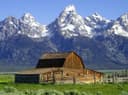
The most rectangular of them all. But seriously, it's a great state! Lots and lots of nature, plenty of mountains and bisons. It is also home to Yellowstone National Park, the first national park in the U.S.

The Golden State. Home to Hollywood and the Silicon Valley. Produces 80% of the world's almonds. What a great state. Although these days its major cities of Los Angeles and San Francisco are full of drug addicts who poop in the streets. That's too bad :(

the best state around. very beautiful. Okay maybe Portland is weird.

The best state with affordable real estate, no state income tax, no corporate income tax.

Very tropical and chill state. Better than the rest of them.

The most rectangular of them all. But seriously, it's a great state! Lots and lots of nature, plenty of mountains and bisons. It is also home to Yellowstone National Park, the first national park in the U.S.

The Golden State. Home to Hollywood and the Silicon Valley. Produces 80% of the world's almonds. What a great state. Although these days its major cities of Los Angeles and San Francisco are full of drug addicts who poop in the streets. That's too bad :(

The best state with affordable real estate, no state income tax, no corporate income tax.

the best state around. very beautiful. Okay maybe Portland is weird.

The most rectangular of them all. But seriously, it's a great state! Lots and lots of nature, plenty of mountains and bisons. It is also home to Yellowstone National Park, the first national park in the U.S.

Very tropical and chill state. Better than the rest of them.

Why isn't it a state?!

Warsaw is the capital of Poland, sitting on the Vistula River in the east-central part of the country. With nearly 1.9 million people in the city and over 3 million in the wider metropolitan area, itβs Polandβs biggest city. Itβs a place where old and new collideβmodern skyscrapers stand next to rebuilt historic districts, and its skyline is a mix of glass towers and ornate churches. The Old Town, destroyed in World War II and painstakingly rebuilt, is now a UNESCO World Heritage Site. Walking through its cobblestone streets, youβll find the Royal Castle and the colorful Market Square. Not far off is the Royal Route, a stretch of old palaces, churches, and the Presidential Palace, leading down to the grand WilanΓ³w Palace and its gardens. Despite the scars of warβmost of the city was flattened during WWIIβWarsaw bounced back fast. The post-war communist era left a mark with grey apartment blocks and the towering Palace of Culture and Science, a gift from the Soviet Union thatβs still one of the tallest buildings in Poland. Now, Warsawβs business district is full of sleek glass skyscrapers, including the Varso Tower, the tallest in the EU. Green spaces are everywhere. Εazienki Park, home to peacocks and the Chopin monument, is a popular spot for Sunday strolls. The Vistula Riverbanks are packed with bars and cycling paths in summer. Even with its urban sprawl, about a quarter of the city is covered by parks and forests. Warsawβs history is complicated. It was once a cultural melting pot, with a large Jewish community before the Holocaust. The city remembers that past with places like the POLIN Museum and the remnants of the Warsaw Ghetto. It also honors its wartime resistance, especially the 1944 Warsaw Uprising, with monuments and the powerful Uprising Museum. The cityβs cultural life is rich. It hosts jazz festivals, classical concerts (especially anything Chopin-related), and has a buzzing nightlife. Food-wise, youβll find everything from traditional Polish pierogi and hearty soups to modern vegan spots and Michelin-starred restaurants. Thereβs even a strong cafΓ© culture, with old-school spots alongside trendy coffee bars. Weather in Warsaw is typical for Central Europeβcold, snowy winters and warm, sometimes stormy, summers. Spring and autumn can be mild and pleasant, though the weather can change quickly. In short, Warsaw is a city of contrasts. Itβs got a tragic past but a vibrant present, blending historic charm with modern energy. Whether youβre wandering through its parks, exploring museums, or sipping coffee along the river, thereβs plenty to take in.

Ireland is a small country with a big presence. Its capital, Dublin, is a lively city known for its mix of history, culture, and modern energy. Walk through the streets and youβll find Georgian buildings, contemporary architecture, and plenty of places to hear live music or have a chat over a coffeeβor a pint. The country has changed a lot over the past few decades. Once more rural and conservative, modern Ireland is progressive and increasingly diverse. It's known for its strong economy, driven in part by tech and finance companies that have set up shop in Dublin. But away from the business districts, life moves at a slower pace, especially in smaller towns and the countryside. Culture runs deep. Ireland has long punched above its weight in literature, music, and the arts. Writers like James Joyce and W.B. Yeats are still celebrated, but contemporary authors, filmmakers, and musicians continue to make their mark. Traditional Irish music hasnβt fadedβit just sits comfortably alongside modern genres, often blending with them in interesting ways. Dance, especially the kind popularized by Riverdance, remains part of the cultural fabric without feeling forced or overly nostalgic. Food in Ireland has shifted from its meat-and-potatoes reputation. While hearty stews and fresh-baked bread are still common, thereβs been a focus on fresh, local ingredients and creative cooking. In coastal areas, youβll find top-quality seafood, and farmers' markets are popular across the country. Sport plays a big part in daily life. Gaelic games like football and hurling are uniquely Irish and deeply connected to local pride, but people follow soccer, rugby, and golf with just as much enthusiasm. While Irelandβs landscape is famousβgreen fields, dramatic coastlines, and rugged hillsβitβs not just postcard scenery. Many people live in suburban areas, and the country has seen growing urban development. Still, nature is never far away. Irelandβs recent history includes both economic highs and lows, as well as major social changes. The country has legalized same-sex marriage, eased restrictions on abortion, and shifted away from the strong influence of the Catholic Church. Yet, traditional values like community and hospitality havenβt disappearedβtheyβve just adapted to a changing world. At its core, Ireland is a place that blends the old with the new. Itβs a country where centuries-old traditions coexist with modern ideas, where the past is present but doesnβt overshadow the future.

The Golden State. Home to Hollywood and the Silicon Valley. Produces 80% of the world's almonds. What a great state. Although these days its major cities of Los Angeles and San Francisco are full of drug addicts who poop in the streets. That's too bad :(

the best state around. very beautiful. Okay maybe Portland is weird.

Ireland is a small country with a big presence. Its capital, Dublin, is a lively city known for its mix of history, culture, and modern energy. Walk through the streets and youβll find Georgian buildings, contemporary architecture, and plenty of places to hear live music or have a chat over a coffeeβor a pint. The country has changed a lot over the past few decades. Once more rural and conservative, modern Ireland is progressive and increasingly diverse. It's known for its strong economy, driven in part by tech and finance companies that have set up shop in Dublin. But away from the business districts, life moves at a slower pace, especially in smaller towns and the countryside. Culture runs deep. Ireland has long punched above its weight in literature, music, and the arts. Writers like James Joyce and W.B. Yeats are still celebrated, but contemporary authors, filmmakers, and musicians continue to make their mark. Traditional Irish music hasnβt fadedβit just sits comfortably alongside modern genres, often blending with them in interesting ways. Dance, especially the kind popularized by Riverdance, remains part of the cultural fabric without feeling forced or overly nostalgic. Food in Ireland has shifted from its meat-and-potatoes reputation. While hearty stews and fresh-baked bread are still common, thereβs been a focus on fresh, local ingredients and creative cooking. In coastal areas, youβll find top-quality seafood, and farmers' markets are popular across the country. Sport plays a big part in daily life. Gaelic games like football and hurling are uniquely Irish and deeply connected to local pride, but people follow soccer, rugby, and golf with just as much enthusiasm. While Irelandβs landscape is famousβgreen fields, dramatic coastlines, and rugged hillsβitβs not just postcard scenery. Many people live in suburban areas, and the country has seen growing urban development. Still, nature is never far away. Irelandβs recent history includes both economic highs and lows, as well as major social changes. The country has legalized same-sex marriage, eased restrictions on abortion, and shifted away from the strong influence of the Catholic Church. Yet, traditional values like community and hospitality havenβt disappearedβtheyβve just adapted to a changing world. At its core, Ireland is a place that blends the old with the new. Itβs a country where centuries-old traditions coexist with modern ideas, where the past is present but doesnβt overshadow the future.

Poland sits in Central Europe, stretching from the Baltic Sea in the north to mountains in the south. It shares borders with Germany to the west, Lithuania and Russia to the northeast, and several other countries along the east and south. Its landscape is a mixβflat plains in the center and north, and hilly or mountainous areas in the south. The coastline along the Baltic Sea is known for sandy beaches and coastal ridges. Inland, there are thousands of lakes, especially in the northeast, and big rivers like the Vistula and Oder cut across the land. The weather is temperate. Summers are warm, winters moderately cold. Rain tends to fall more during the summer months, and winters are becoming drier over time. Poland has deep roots in European history. It became a kingdom in 1025, later forming a powerful union with Lithuania. The PolishβLithuanian Commonwealth was once one of Europeβs biggest states, with a unique political system. Poland's fortunes shifted in the late 18th century, when its neighbors carved it up, erasing it from maps for over a century. It re-emerged after World War I, only to be invaded at the start of World War IIβa conflict that brought devastation and the horrors of the Holocaust. After the war, Poland fell under Soviet influence, but by 1989, it was the first Eastern Bloc country to shake off communism, thanks largely to the Solidarity movement. Today, Poland is a democratic country with a population of over 38 million. Warsaw, the capital, is the largest city. Others like KrakΓ³w, GdaΕsk, and WrocΕaw are known for historic centers and vibrant culture. The economy is strong, with Poland being one of the larger economies in the European Union. Nature lovers come for places like the Tatra Mountains or the ancient BiaΕowieΕΌa Forest, home to Europeβs largest land mammalβthe European bison. There are 23 national parks, and over 17 sites are recognized as UNESCO World Heritage locations, from medieval town squares to the haunting Auschwitz-Birkenau memorial. Culturally, Poland has a rich tradition of music, literature, and art. Composer FrΓ©dΓ©ric Chopin and novelist Joseph Conrad both came from here. More recently, Polandβs fantasy literature, like Andrzej Sapkowskiβs The Witcher series, has found global fame. Polish cuisine is hearty, with dishes like pierogi (dumplings), bigos (a cabbage and meat stew), and ΕΌurek (sour rye soup). Vodka has its roots here, but beer and wine are also popular. Sports are big in Polandβfootball (soccer) is a national passion, though volleyball and speedway racing attract large crowds too. The country also boasts top tennis players like Iga ΕwiΔ tek and mountaineers whoβve climbed the worldβs highest peaks. Despite its complicated past, Poland today balances its historical heritage with modern growth. Old town squares sit beside new buildings, and traditions are kept alive alongside a fast-developing economy and infrastructure.