📚Best Books Ever
The list includes famous classics and top modern reads in every genre - novels, non-fiction, poetry, drama, you name it. Vote for your personal favorites. If any must-read books are missing, add them to the list so others can vote on them too. Simple as that.
- 6

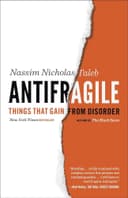
"Antifragile: Things That Gain from Disorder" by Nassim Nicholas Taleb is a groundbreaking exploration of systems and entities that thrive and grow stronger in the face of stress, volatility, and chaos. Taleb introduces the concept of "antifragility," which goes beyond resilience or robustness. Through a mix of philosophy, practical wisdom, and real-world examples, Taleb illustrates how embracing uncertainty and leveraging disorder can lead to success and innovation. This book is essential for anyone interested in risk management, personal development, and understanding how to benefit from uncertainty and change.
- 4

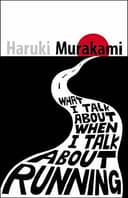
What I Talk About When I Talk About Running is a memoir by Haruki Murakami where he talks about two things that define a big part of his life: running and writing. Murakami didn’t always plan on being a novelist. He was running a jazz bar in his twenties when, while watching a baseball game, he suddenly thought, “I could write a novel.” He gave it a shot, it worked out, and he eventually sold his bar to focus on writing full-time. But sitting at a desk all day, smoking and not moving much, wasn’t doing his health any good. That’s when he picked up running. For Murakami, running is more than just exercise—it’s part of his routine and, in a way, a metaphor for writing. Both take endurance. Both are long hauls where you push yourself day after day, even when you don’t feel like it. The book follows him as he trains for marathons, competes in triathlons, and grapples with the slow decline of his physical abilities as he ages. He talks a lot about acceptance—accepting getting older, accepting bad race times, and accepting that sometimes you just don’t do as well as you hoped. His attitude is basically: That’s life. You move on. The writing style is straightforward, like he’s just talking to you over a coffee. He doesn’t dress things up. Sometimes he rambles, mentioning things like cycling habits or going off on tangents about global warming. At one point, he describes running the original marathon route in Greece—sun blazing, salt stinging his eyes, everything uncomfortable. But through it all, there’s this calm acceptance. He’s not trying to convince anyone to run; he just shares what it means to him. By the end, what sticks isn’t just the running or the writing, but the way he embraces both the highs and the lows—the post-race blues, the joy of finishing, and the satisfaction of something as simple as a cold beer after a long run. It’s a book about effort, routine, and learning to keep going, no matter what.
- 3

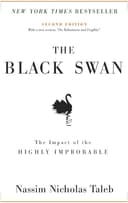
Skin in the Game may be nice but The Black Swan is the OG Nicholas Taleb. Read this book to learn how to think and avoid biases and reread at least once very couple of years.
- 2

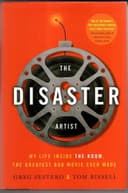
The best book about the best director in the world. It was such a great book it was adapted into a movie. Bet the other books on this list can't say that!
- 1

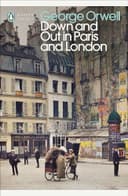
by George Orwell an expedition into who people are and what life is
- 1

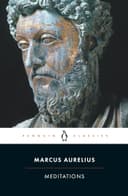
From wikipedia: Meditations is a series of personal writings by Marcus Aurelius, Roman Emperor from AD 161 to 180, recording his private notes to himself and ideas on Stoic philosophy. Meditations are worth reading if only to get a glimpse at the thoughts of a man who lived a life in truly extraordinary circumstances of being a Roman Emperor. It's surprising how relevant the themes of his diaries are two thousand years later.
- 1

“I set out to write a book about what to do to make a great work of art. Instead, it revealed itself to be a book on how to be.” —Rick Rubin
- 1

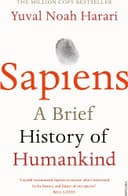
The great thing about this book is that it takes a big-picture view of human history. It attempts to explain the main themes of human history without getting bogged down in the details. Sapiens also debunks many popular myths about human history, including the one that people today live happier lives and have better diets than our hunter-gatherer predecessors. It comes with an epilogue about the future of humankind in light of ever-accelerating technological progress. With the recent advances in AI it is more relevant than ever. If you're going to read one book on history this year, read this one.
- 0

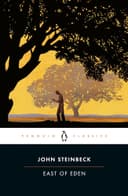
In his journal, Nobel Prize winner John Steinbeck called East of Eden “the first book,” and indeed it has the primordial power and simplicity of myth. Set in the rich farmland of California’s Salinas Valley, this sprawling and often brutal novel follows the intertwined destinies of two families—the Trasks and the Hamiltons—whose generations helplessly reenact the fall of Adam and Eve and the poisonous rivalry of Cain and Abel.
- 0

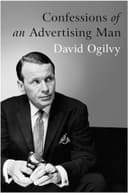
David Ogilvy was considered the "father of advertising" and a creative genius by many of the biggest global brands. First published in 1963, this seminal book revolutionized the world of advertising and became a bible for the 1960s ad generation. It also became an international bestseller, translated into 14 languages. Fizzing with Ogilvy's pioneering ideas and inspirational philosophy, it covers not only advertising, but also people management, corporate ethics, and office politics, and forms an essential blueprint for good practice in business.
- 0

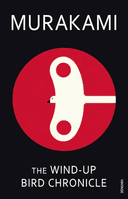
In a Tokyo suburb, a young man named Toru Okada searches for his wife’s missing cat—and then for his wife as well—in a netherworld beneath the city’s placid surface. As these searches intersect, he encounters a bizarre group of allies and antagonists. Gripping, prophetic, and suffused with comedy and menace, this is one of Haruki Murakami’s most acclaimed and beloved novels.
- 0

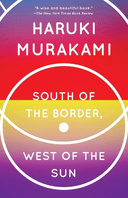
Hajime has arrived at middle age with a loving family and an enviable career, yet he feels incomplete. When a childhood friend, now a beautiful woman, shows up with a secret from which she is unable to escape, the fault lines of doubt in Hajime’s quotidian existence begin to give way. Rich, mysterious, and quietly dazzling, in South of the Border, West of the Sun the simple arc of one man’s life becomes the exquisite literary terrain of Murakami’s remarkable genius.
- 0

Best IG Follower Export Tool to export Instagram Followers including email and phone number online(With Email,No Restriction) . Just export Instagram followers list and Instagram profiles with one click.
Frequently Asked Questions
According to our users, 'Antifragile' by Nassim Nicholas Taleb is the best book about antifragility. In this book, Taleb explores how certain things benefit from disorder and chaos. It's a compelling read for anyone interested in resilience and how to thrive in an unpredictable world.
The best books by Nassim Nicholas Taleb according to our users are 'Antifragile', 'Skin in the Game', and 'The Black Swan'. These books delve into different aspects of risk, uncertainty, and decision-making, making them essential reads for anyone interested in understanding complex systems and avoiding biases.
'What I Talk About When I Talk About Running' by Haruki Murakami is a memoir where the author shares his thoughts and experiences about running and writing. Murakami discusses how running became a significant part of his life, helping him think and generate ideas for his writing. The book is like a diary, detailing his runs, races, and how running impacts his life and work. It's an inspiring read for both runners and those who enjoy stories about perseverance.
'The Disaster Artist' is a fascinating book about the making of 'The Room', a film often described as the best worst movie ever made. Written by Greg Sestero and Tom Bissell, the book provides an insider's look at the enigmatic director Tommy Wiseau and the challenges faced during the production of the movie. It's an entertaining read that was also adapted into a successful film.
'Sapiens: A Brief History of Humankind' by Yuval Noah Harari is a comprehensive overview of human history. Harari explores the evolution of Homo sapiens, debunks popular myths, and discusses the major themes that have shaped human society. The book also includes an epilogue about the future of humanity in the face of technological advancements, making it a must-read for anyone interested in history and the future.
'Meditations' by Marcus Aurelius is a series of personal writings by the Roman Emperor, offering insights into Stoic philosophy and his thoughts on life. Despite being written nearly two thousand years ago, the themes are surprisingly relevant today. It's a valuable read for anyone interested in philosophy, history, or personal development.