Best Books by Nassim Nicholas Taleb
Nassim Nicholas Taleb has penned some of the most thought-provoking and influential books of our time. Known for his deep insights into randomness, probability, and risk, his works challenge conventional wisdom and offer unique perspectives on modern life. Here’s a curated list of his best books. If you have a favorite that’s not listed, feel free to add it to help others discover Taleb's best works.
Frequently asked questions
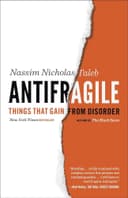
'Antifragile: Things That Gain from Disorder' explores how certain systems and entities can thrive and grow stronger when faced with stress and chaos. Taleb introduces the concept of 'antifragility,' which emphasizes the benefits of embracing uncertainty and leveraging disorder for success and innovation. This book is essential for those interested in risk management and personal development.
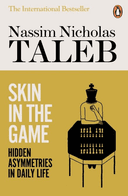
'Skin in the Game' argues that individuals should share in the risks of their decisions. Taleb critiques how some decision-makers can benefit without facing the consequences of their actions, leading to reckless choices. The book covers various aspects of life, including politics and business, and emphasizes accountability and the importance of real-world experience over theoretical knowledge.
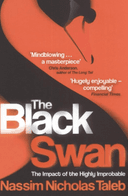
'The Black Swan' focuses on the impact of rare and unpredictable events, which Taleb calls 'Black Swans.' He critiques traditional forecasting methods and highlights the need for resilience in the face of uncertainty. The book blends philosophy, economics, and personal anecdotes to challenge conventional wisdom and provide insights into risk management.
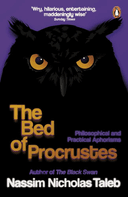
'The Bed of Procrustes' is a collection of aphorisms that distills Taleb's philosophical insights into concise statements. It critiques modern society's flaws and biases, using humor and sharp commentary to address topics like knowledge, science, and human behavior. This book is ideal for readers who appreciate deep philosophical musings and Taleb's unconventional perspectives.
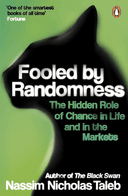
'Fooled by Randomness' examines the role of chance in our lives and how we often misinterpret random events as meaningful patterns. Through personal anecdotes and statistical analysis, Taleb challenges readers to rethink their perceptions of success and failure, making it a thought-provoking read for those interested in finance and the philosophical implications of randomness.