One of the top design systems is Shadcn Examples, which offers a vast collection of reusable UI examples and application templates built with modern frontend technologies like React and Tailwind CSS. This platform is ideal for developers and designers looking to create professional web applications quickly. It provides a variety of pre-designed UI components that can be easily integrated into projects, covering categories such as admin dashboards, e-commerce pages, and more. Shadcn Examples emphasizes flexibility and modularity, allowing users to combine UI blocks to assemble full applications efficiently.
Shadcn Examples assists developers by providing a wide range of pre-designed UI examples that can be used as inspiration or directly integrated into their projects. The platform focuses on reusable 'blocks' that allow developers to quickly assemble full applications, making it especially useful for startups and SaaS creators. Additionally, it offers live demos of each example, enabling developers to evaluate layouts and responsiveness before making a purchase. This resource helps accelerate frontend development by providing high-quality, production-ready templates.
Shadcn Examples primarily utilizes modern frontend technologies such as React, Tailwind CSS, and Next.js, but it also supports Vue.js and Svelte implementations. This makes it versatile for developers working with different frameworks. The platform's components are designed with responsive design practices and are compatible with TypeScript, ensuring that they can be easily customized while maintaining a modern visual consistency.
With Shadcn Examples, developers can build a variety of applications including admin dashboards, chat apps, e-commerce pages, authentication systems, and more. The platform provides templates for specific functionalities like shopping carts, checkout systems, and product detail pages, making it suitable for a wide range of digital products. Its modular approach allows for rapid assembly of applications, which is particularly beneficial for startups and indie developers looking to launch products quickly.
This list showcases various design systems that provide a structured approach to creating cohesive user interfaces. These systems encompass guidelines, components, and best practices that facilitate consistent design across digital products.
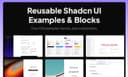
Shadcn Examples is a large collection of reusable UI examples, application templates, and interface blocks built primarily with modern frontend technologies such as React, Tailwind CSS, shadcn/ui, Radix UI, Next.js, Vue.js, and Svelte. The platform is designed for developers, designers, startups, and SaaS creators who want to build professional-looking web applications faster without starting from scratch. The website provides a wide range of pre-designed UI examples that developers can use as inspiration or directly integrate into their own projects. These examples cover many popular application categories including admin dashboards, chat apps, Kanban boards, social media apps, file managers, note-taking apps, music apps, e-commerce pages, authentication systems, checkout pages, pricing tables, settings pages, POS systems, and more. Every template is built using modern responsive design practices and is compatible with TypeScript. One of the platform’s core focuses is the shadcn/ui ecosystem, which has become highly popular among modern React developers because of its clean design philosophy, accessibility, and flexibility. Shadcn Examples expands on this ecosystem by offering production-quality layouts and components that save developers significant design and development time. Instead of manually building every page structure, users can quickly access polished examples for dashboards, landing pages, forms, notifications, product pages, and entire web app interfaces. The platform also emphasizes flexibility across frameworks. Although many examples are built with React and Next.js, the site also supports Vue.js and Svelte implementations, making it attractive to developers using different frontend stacks. Tailwind CSS serves as the main styling system throughout the platform, allowing components and layouts to remain highly customizable while maintaining modern visual consistency. Another major feature of the platform is its focus on reusable “blocks.” These blocks are modular UI sections that developers can combine to rapidly assemble full applications. Examples include Bento Grids, shopping carts, checkout systems, notification pages, role management panels, pricing sections, and product detail pages. This modular approach is especially useful for startups, SaaS founders, and indie developers who need to launch products quickly. Shadcn Examples positions itself as both an inspiration gallery and a productivity tool. Developers can preview live demos of each example before purchasing access, helping them evaluate layouts, responsiveness, and overall design quality. The platform offers lifetime access through a one-time payment model, giving users unlimited access to all current and future examples and blocks. The site also appeals strongly to the growing AI SaaS and startup ecosystem because many templates are optimized for modern web applications and dashboards commonly used in AI products, admin systems, and software platforms. The clean aesthetics, responsive layouts, and production-ready structure make the examples suitable for professional commercial projects. Overall, Shadcn Examples is a developer-focused UI resource platform that helps accelerate frontend development by providing high-quality, reusable interface templates and components built with today’s most popular web technologies. It combines modern design systems, scalable architecture, and framework flexibility into a practical toolkit for building polished applications faster and more efficiently.

Even the smartest among us can feel inept as we fail to figure out which light switch or oven burner to turn on, or whether to push, pull, or slide a door. The fault, argues this ingenious -- even liberating -- book, lies not in ourselves, but in product design that ignores the needs of users and the principles of cognitive psychology. The problems range from ambiguous and hidden controls to arbitrary relationships between controls and functions, coupled with a lack of feedback or other assistance and unreasonable demands on memorization. The Design of Everyday Things shows that good, usable design is possible. The rules are simple: make things visible, exploit natural relationships that couple function and control, and make intelligent use of constraints. The goal: guide the user effortlessly to the right action on the right control at the right time. The Design of Everyday Things is a powerful primer on how -- and why -- some products satisfy customers while others only frustrate them.

The Brand Gap is the first book to present a unified theory of brand-building. Whereas most books on branding are weighted toward either a strategic or creative approach, this book shows how both ways of thinking can unite to produce a “charismatic brand”―a brand that customers feel is essential to their lives. In an entertaining two-hour read you’ll learn: • the new definition of brand • the five essential disciplines of brand-building • how branding is changing the dynamics of competition • the three most powerful questions to ask about any brand • why collaboration is the key to brand-building • how design determines a customer’s experience • how to test brand concepts quickly and cheaply • the importance of managing brands from the inside • 220-word brand glossary

Even the smartest among us can feel inept as we fail to figure out which light switch or oven burner to turn on, or whether to push, pull, or slide a door. The fault, argues this ingenious -- even liberating -- book, lies not in ourselves, but in product design that ignores the needs of users and the principles of cognitive psychology. The problems range from ambiguous and hidden controls to arbitrary relationships between controls and functions, coupled with a lack of feedback or other assistance and unreasonable demands on memorization. The Design of Everyday Things shows that good, usable design is possible. The rules are simple: make things visible, exploit natural relationships that couple function and control, and make intelligent use of constraints. The goal: guide the user effortlessly to the right action on the right control at the right time. The Design of Everyday Things is a powerful primer on how -- and why -- some products satisfy customers while others only frustrate them.

TechTitans.Cloud is an all-in-one digital ecosystem designed to elevate modern learning and career development. The platform supports both B2B and B2C online education, offering structured courses, skill-building programs, and customizable learning paths for individuals, schools, and organizations. Users gain access to personalized dashboards that track progress, performance, and achievements in real time. TechTitans.Cloud also features the immersive educational game “Land of the Titans,” where players learn through exploration, challenges, and narrative-driven missions. Alongside education, the platform provides recruitment tools, enabling job posting, smart talent matching, and streamlined job search services—all in one unified environment that connects learning with real career outcomes.

Launch is a premier digital ecosystem and discovery platform specifically engineered to bridge the critical gap between visionary startup founders and the global community of early adopters. At its core, the platform operates as a high-signal directory where the next generation of technology companies, often referred to as tomorrow's unicorns, are showcased before they reach mainstream saturation. By focusing on the pre-launch and early-growth phases of the software lifecycle, the site provides a unique value proposition that traditional search engines and generic software directories often overlook. It serves as a centralized hub for innovation, allowing users to browse through a diverse array of categories ranging from cutting-edge artificial intelligence and machine learning tools to essential developer infrastructure, fintech solutions, and productivity enhancers. The platform's architecture is designed to foster deep engagement through a "waitlist-first" model, which is instrumental for modern indie hackers and SaaS founders looking to validate their product-market fit. Founders can list their upcoming projects to build immediate momentum, collect high-intent leads, and establish a founding member base before a single line of production code is finalized. For the tech-savvy professional or investor, the site offers a curated window into the future of the industry, enabling them to follow specific launches, join exclusive waitlists, and interact directly with the builders. This interactive layer is further enhanced by a trending system and badges that recognize founding members, creating a sense of community and social proof that is vital for early-stage digital products. Beyond simple discovery, the site acts as a sophisticated marketing engine for the modern entrepreneur. It provides various visibility tiers, including premium banner placements and featured listings, designed to help startups cut through the noise of a crowded digital marketplace. The community-driven aspect of the platform ensures that the tools listed are evaluated by a peer group of creators, engineers, and growth marketers who understand the nuances of the "build in public" movement. By providing detailed insights into each product’s features, pricing models, and target audience, the platform empowers users to make informed decisions about the software stacks they choose to integrate into their professional workflows or personal lives. In an era where the pace of technological advancement is accelerating, this platform stands out as an essential resource for navigating the complex landscape of new software releases. It organizes the chaos of the startup world into a structured, easily digestible format, making it possible for anyone to discover high-quality tools that solve real-world problems. Whether a user is looking for an AI-powered video generator, a niche job board for architects, or a self-hosted content management system, the site provides the necessary context and direct access to the innovators behind these solutions. Ultimately, it is more than just a list of websites; it is a dynamic marketplace of ideas and a launchpad for the digital tools that will define the next decade of the internet economy.

Built Vibing is a premier digital ecosystem and discovery platform specifically engineered to bridge the critical gap between visionary startup founders and the global community of early adopters. At its core, the platform operates as a high-signal directory where the next generation of technology companies, often referred to as tomorrow's unicorns, are showcased before they reach mainstream saturation. By focusing on the pre-launch and early-growth phases of the software lifecycle, the site provides a unique value proposition that traditional search engines and generic software directories often overlook. It serves as a centralized hub for innovation, allowing users to browse through a diverse array of categories ranging from cutting-edge artificial intelligence and machine learning tools to essential developer infrastructure, fintech solutions, and productivity enhancers. The platform's architecture is designed to foster deep engagement through a "waitlist-first" model, which is instrumental for modern indie hackers and SaaS founders looking to validate their product-market fit. Founders can list their upcoming projects to build immediate momentum, collect high-intent leads, and establish a founding member base before a single line of production code is finalized. For the tech-savvy professional or investor, the site offers a curated window into the future of the industry, enabling them to follow specific launches, join exclusive waitlists, and interact directly with the builders. This interactive layer is further enhanced by a trending system and badges that recognize founding members, creating a sense of community and social proof that is vital for early-stage digital products. Beyond simple discovery, the site acts as a sophisticated marketing engine for the modern entrepreneur. It provides various visibility tiers, including premium banner placements and featured listings, designed to help startups cut through the noise of a crowded digital marketplace. The community-driven aspect of the platform ensures that the tools listed are evaluated by a peer group of creators, engineers, and growth marketers who understand the nuances of the "build in public" movement. By providing detailed insights into each product’s features, pricing models, and target audience, the platform empowers users to make informed decisions about the software stacks they choose to integrate into their professional workflows or personal lives. In an era where the pace of technological advancement is accelerating, this platform stands out as an essential resource for navigating the complex landscape of new software releases. It organizes the chaos of the startup world into a structured, easily digestible format, making it possible for anyone to discover high-quality tools that solve real-world problems. Whether a user is looking for an AI-powered video generator, a niche job board for architects, or a self-hosted content management system, the site provides the necessary context and direct access to the innovators behind these solutions. Ultimately, it is more than just a list of websites; it is a dynamic marketplace of ideas and a launchpad for the digital tools that will define the next decade of the internet economy.

SaaS Territory stands as a comprehensive and strategically organized digital ecosystem designed to bridge the gap between software developers and professional end-users. In an era where the Software as a Service industry is expanding at an exponential rate, finding the specific tool that fits a particular business workflow has become increasingly difficult due to the sheer volume of options available. This platform addresses that specific challenge by acting as a centralized navigational map for the entire SaaS landscape. It does not merely list products but categorizes them into functional territories, allowing decision-makers such as Chief Technology Officers, marketing directors, and independent entrepreneurs to evaluate software based on merit, utility, and transparent pricing structures. By providing a structured environment, the site ensures that high-quality tools do not get lost in the noise of traditional search engine results, which are often skewed by advertising spend rather than functional relevance. The core philosophy of the platform is built around the concept of "territories," which reflects the diverse and specialized nature of modern software. Whether a professional is looking for advanced artificial intelligence assistants, deep data analytics, or niche developer tools, the directory provides a clear path to discovery. The architecture of the site is designed for efficiency, featuring sections for featured products, the latest releases, and specialized categories like Education, Fintech, and Productivity. This granular level of organization is particularly beneficial for professionals who are tasked with assembling lean and effective tech stacks on a budget. Instead of jumping between multiple review sites or sponsored articles, users can find a consistent level of detail for every product, including short and long descriptions that explain the unique value proposition of each application. This transparency is vital for building trust within the tech community. One of the most significant advantages of using this directory is the focus on cross-category comparison. For example, a marketing manager can explore not just general marketing tools, but specifically look into SEO, social media management, or B2B email enrichment services like QuickEnrich or Tweetboost. Similarly, for those in the technical field, the platform offers a dedicated space for APIs and developer platforms, ensuring that the infrastructure needed for modern web development is easily accessible. The inclusion of pricing models, such as free, freemium, or paid trials, further empowers users to make informed financial decisions before ever leaving the site. This level of detail transforms the directory from a simple list into a powerful business intelligence tool that helps companies maintain a competitive edge by adopting the most innovative and cost-effective software solutions available. Furthermore, the platform serves as a vital launchpad for new developers and SaaS founders. By allowing products to be submitted and featured, it creates a dynamic marketplace where the "Latest Products" section is constantly updated with the newest innovations in the field. This symbiotic relationship between established software giants and emerging startups ensures that the directory remains a relevant and evolving resource. For a user, this means that the site is not just a historical archive of software, but a living map of where the industry is heading. The editorial oversight ensures that the descriptions provided are accurate and that the categorization makes sense from a professional standpoint. As the digital economy continues to shift toward cloud-based solutions, having a reliable, human-curated, and well-organized directory like SaaS Territory becomes an indispensable asset for anyone looking to navigate the complex and ever-changing world of software with total confidence.

SaaS Branch operates as a sophisticated and highly organized digital ecosystem specifically engineered to bridge the gap between software developers and the end-users who require specialized tools to optimize their professional workflows. In an era where the software-as-a-service market is becoming increasingly saturated, finding the right tool often feels like searching for a needle in a haystack, and this platform addresses that exact pain point by providing a structured, human-centric approach to software discovery. The core philosophy behind the site is rooted in the concept of branching, where technology is not just listed in a massive, unmanageable pile but is instead categorized into logical stems that represent specific solutions to real-world problems. By doing so, the platform allows marketing managers, engineering leads, and independent freelancers to bypass the noise of traditional search engines and head straight to a curated selection of products that have already been vetted for relevance and utility. The architecture of the directory is impressively broad, covering a vast spectrum of digital needs ranging from high-level artificial intelligence assistants and complex API structures to niche tools for interior design, blockchain technology, and personal finance management. Each entry within the directory is designed to provide immediate value, offering a transparent look at the pricing models which is often one of the biggest hurdles in software procurement. By clearly labeling products as free, freemium, or paid, the platform empowers decision-makers to align their technological choices with their budgetary constraints right from the start. Furthermore, the inclusion of specific use cases for each tool ensures that users are not just looking at a list of features, but are instead understanding how a particular piece of software will actually function within their existing tech stack or daily routine. Beyond being a simple repository of links, the platform serves as a vital launchpad for new digital products that might otherwise struggle to gain visibility against industry giants with massive marketing budgets. For developers, the submission process is a strategic move to place their product in front of an audience that is already in a "discovery mindset," meaning the traffic generated is highly qualified and genuinely interested in exploring new solutions. This creates a symbiotic relationship between the creators who need a platform to showcase their innovation and the users who are constantly on the lookout for the next tool that will give them a competitive edge. The site effectively democratizes the SaaS landscape by giving equal visibility to a small, specialized Chrome extension as it does to a robust enterprise-level project management suite, provided they solve the user's problem effectively. The user experience on the site is characterized by its clean, intuitive interface that prioritizes ease of navigation over distracting advertisements or unnecessary clutter. This focus on utility is evident in the way the categories are laid out, allowing for quick pivots between different functional areas such as content creation, customer support, or data analytics. As the digital economy continues to evolve towards more decentralized and specialized tools, the role of a curated directory like this one becomes even more critical. It acts as a compass in the rapidly changing world of cloud computing, ensuring that teams can build lean, efficient, and powerful workflows. Ultimately, the platform is more than just a website; it is a resource for professional growth and operational efficiency, helping users to branch out from their usual software habits and discover superior alternatives that can transform the way they work, create, and collaborate in the modern digital age.

Even the smartest among us can feel inept as we fail to figure out which light switch or oven burner to turn on, or whether to push, pull, or slide a door. The fault, argues this ingenious -- even liberating -- book, lies not in ourselves, but in product design that ignores the needs of users and the principles of cognitive psychology. The problems range from ambiguous and hidden controls to arbitrary relationships between controls and functions, coupled with a lack of feedback or other assistance and unreasonable demands on memorization. The Design of Everyday Things shows that good, usable design is possible. The rules are simple: make things visible, exploit natural relationships that couple function and control, and make intelligent use of constraints. The goal: guide the user effortlessly to the right action on the right control at the right time. The Design of Everyday Things is a powerful primer on how -- and why -- some products satisfy customers while others only frustrate them.

This strictly speaking isn't a productivity extension but ads are way too distracting. This extension helps you purge them from your browser. Enjoy a calmer browsing experience!

Best tool for saving code notes and finding answers to code problems

News Feed Eradicator removes feeds from social media websites to help you use them more purposefully. Feeds are the most addictive parts of most website so this extension really helps you reduce mindless scrolling. News Feed Eradicator supports removing feeds from Facebook, Instagram, YouTube, Twitter/X, LinkedIn, Reddit, Hacker News, and GitHub. You get to pick which feeds to block and which to allow.

Make AI chatbots in minutes

Click with your keyboard. Have a bad touchpad? Trouble using a mouse? Love keyboard shortcuts? Link Hints is a browser extension that complements the built-in keyboard shortcuts with ones for clicking. Press Alt+J (Ctrl+J on macOS). This makes little yellow boxes with letters, called hints, appear next to links (and other clickable things). Type the letters to click the link. Alternatively, hold Shift and type a bit of the link text. The keyboard shortcuts and hints are fully customizable. Alt+J: Click links, buttons, etc. Alt+K: Open link in new tab. Alt+L: Open link in new tab and switch to it. Alt+Shift+J: Click many things. Alt+Shift+K: Open many links. Alt+Shift+L: Select element.

esotericAI is an innovative platform that combines ancient esoteric wisdom with modern artificial intelligence technology. It offers users personalized tarot readings, cosmic blueprint natal chart decoding, and insights based on current celestial transits. Designed for individuals seeking spiritual guidance and self-discovery, esotericAI provides a seamless experience to explore their destiny and deepen their understanding of the universe. Features AI-Powered Tarot Readings: Leverage advanced AI algorithms to generate accurate and personalized tarot readings that resonate with users' current life situations, helping them gain clarity and direction. Natal Chart Decoding: Decode your cosmic blueprint with detailed natal chart analysis, revealing insights into personality, strengths, and life path based on your birth data. Cosmic Transits & Insights: Receive real-time updates and interpretations of current planetary transits, enabling users to understand how cosmic movements influence their lives. Destined Connection Portraits: Explore archetype portraits that depict your destined relationships and connections, fostering self-awareness and relationship understanding. Tarot Tales & Real-Life Resonance: Access engaging tarot stories that relate to everyday experiences, making esoteric wisdom accessible and applicable to daily life.

The biggest advantage of Cognito is that it's a part of the AWS ecosystem and integrates well with other AWS services. The free tier comes with 50,000 MAUs and the price for each additional MAU starts at $0.0055/month and goes down to as low as $0.0025/month as you scale to tens of millions of users. It integrated with four federated identity providers - your users can sign up with Facebook, Google, Apple and Amazon.

My personal favorite! Specializes in cruise bookings and offers a price guarantee. Features deals, discounts, and last-minute offers.

Owlbot offers a cutting-edge AI-powered chatbot service that seamlessly integrates with your data to provide instant responses for you, your customers, or your team. Deploying a tailor-made AI chatbot with Owlbot is straightforward, enhancing both customer service and the efficiency of data analysis with minimal effort. Our AI chatbot is capable of handling 90% of inquiries from customers, clients, or employees effortlessly (>90 languages supported). It can import data from a variety of sources, including documents, markdown files, and webpages, ensuring that you receive precise, immediate answers. Additionally, you can connect the chatbot to your internal tools to access private data in real-time and provide timely responses. You can choose from 12 different large language models (LLMs), such as Mistral, OpenAI, and Anthropic, to find the option that best fits your needs. Owlbot also captures the details of interested visitors, helping you compile a list of potential leads and expand your business opportunities.

Endura is the first comprehensive digital estate planning platform specifically designed to assist individuals and families in securely managing, storing, and distributing their digital assets. In an era where our lives are increasingly tied to the digital world, Endura offers a sophisticated and modern solution for managing online accounts, documents, and electronic assets. This platform ensures that these important digital possessions are handled according to an individual's specific wishes after their passing, providing peace of mind and security. An individual can upload their digital assets, assign beneficiaries to those assets, and invite executors to carry out their wishes on the platform. Whether you're organizing your personal digital life or offering professional estate planning services, Endura empowers you to manage and protect digital legacies effectively. This makes it an essential tool in the modern age, where digital assets are as important as physical ones.

Uneed is a platform where people can both discover new products and promote their own. It works a bit like Product Hunt, giving creators a way to get their products noticed. Every day at midnight PST, between 10 and 20 new products launch on the homepage. On launch day, products get prime visibility, but users can keep voting for them anytime afterward. Products are ranked daily, weekly, monthly, and yearly. The top three products in each ranking get badges—gold, silver, or bronze—displayed on their product pages. Popular products also get featured in Uneed’s weekly newsletter, which reaches over 9,100 subscribers. If you want to launch a product, you make an account and fill out the details. There are two ways to get your product live: wait in a free queue (and get assigned a random launch date) or pay $30 to skip the line and pick your date. Success comes from a strong launch day, keeping your page up-to-date, and encouraging people to vote. Adding special deals can also earn you a badge and keep interest alive. The community side of Uneed is built around upvoting products. The more you vote, the more power you gain. For example, a 5-day voting streak doubles your vote’s power, and a 100-day streak triples it while unlocking an avatar border. At 150 days, you get a free line skip; at 500 days, you get discounts on advertising; and at 1,000 days, your votes count as five. The platform covers categories like development, design, marketing, business, and personal life products. It’s just one person running Uneed, and you’re encouraged to vote for your own product. If you have questions, they’re easy to reach via email. In short, Uneed is a straightforward way to launch a product, gather feedback, and build an audience—without needing a massive following upfront.

This directory boasts 20,000 subscribers and if you get featured, you get a backlink. You'll also be featured in the newsletter. Insanely Cool Tools is free to use but you may need to pay if you want to skip the queue.

CodaOne AI is an all-in-one, browser-based platform that offers over 101 free tools designed to simplify everyday digital tasks, especially in writing, document handling, image editing, and development workflows. What makes the platform stand out immediately is its promise of zero signup requirements for most features, allowing users to access powerful tools instantly without friction. The core philosophy behind Coda One revolves around privacy, accessibility, and efficiency—ensuring that users can complete their tasks quickly while keeping their data सुरक्षित and fully under their control. One of the flagship features of Coda One is its AI Writing suite, particularly the AI Humanizer tool. This tool is built to transform AI-generated text into natural, human-like writing that can bypass major AI detection systems such as GPTZero, Turnitin, and Originality.ai. Instead of changing the meaning of the text, it focuses on improving tone, flow, and authenticity. Users can choose from multiple writing modes such as Standard, Academic, Blog, Formal, and Simple, making it adaptable for different contexts. This is especially useful for students, writers, and professionals who rely on AI assistance but want their content to feel organic and undetectable. Complementing the Humanizer is the AI Detector, a completely free and unlimited tool that allows users to check whether their text appears AI-generated. This creates a seamless workflow where users can write, humanize, and then verify their content—all within the same platform. The fact that this tool operates without any API costs or usage limits makes it particularly attractive compared to many competitors. Beyond writing tools, Coda One offers a robust set of PDF tools, including merging, splitting, compressing, converting, and protecting documents. These tools are entirely browser-based, powered by WebAssembly, which means files are processed locally on the user’s device and never uploaded to external servers. This ensures maximum privacy and eliminates concerns about sensitive data leaks. Unlike many other platforms, there are no restrictions such as daily limits or watermarks, making these tools genuinely free and unlimited. The platform also includes image tools for tasks like background removal, compression, resizing, and text extraction, as well as developer tools such as JSON formatters, regex testers, and JWT decoders. By bringing all these utilities together in one place, Coda One eliminates the need to switch between multiple websites for simple tasks. In terms of pricing, Coda One maintains a transparent and flexible structure. Most tools—including PDF, image, and developer utilities—are permanently free. For AI writing features, users can access a limited number of free uses per day, with optional paid plans that expand word limits and unlock advanced capabilities. Overall, Coda One positions itself not just as a tool directory, but as a thoughtfully designed productivity toolkit that prioritizes user convenience, privacy, and simplicity.

HttpStatus is an API testing, monitoring, and developer tools platform built for modern development workflows. With over 700 free browser-based tools, it covers everything developers need — from JSON formatting and JWT decoding to SSL certificate checking, CORS debugging, OpenAPI validation, and uptime monitoring. The platform is organized into specialized hubs: JSON, Regex, Cron, Base64, URL, Hash, UUID, YAML, Timestamp, JWT, HTTP, Security, and more. Each hub contains focused tools that run entirely in the browser — no installs, no signups, no data leaving your device. Beyond individual tools, HttpStatus offers full-featured capabilities for API development teams: mock servers for frontend development, chaos engineering for resilience testing, automation workflows with Postman collection import, webhook capture and inspection, distributed tracing analysis, and multi-region uptime monitoring with alert channels and public status pages. The platform recently launched its MCP Server — 24 AI-callable tools accessible from Claude, Cursor, ChatGPT, Windsurf, and any MCP-compatible client. Developers can now create API mocks, run security scans, check SSL certificates, validate OpenAPI specs, debug CORS issues, and set up monitors without leaving their AI assistant. One-line setup with OAuth2 authentication. HttpStatus serves thousands of developers worldwide. The MCP server is published on the official MCP Registry and listed on Smithery, Glama, Cursor Directory, mcp.so, and npm. Key features: 700+ free browser-based developer tools 45+ specialized tool hubs API mock server with custom responses and delays Chaos engineering and fault injection Security scanning (headers, TLS, CORS, CSP, HSTS, XSS) OpenAPI validation, linting, and conversion Uptime monitoring with status pages Automation workflows with Postman import MCP server with 24 AI-callable tools No signup required for most tools Whether you are debugging a CORS error, validating an API contract, checking when your SSL certificate expires, or building a complete API test suite — HttpStatus has a tool for it, and now your AI assistant can use it too.

Momentum replaces your default new tab screen with a beautiful, personalized dashboard. It shows you the time, current weather, and a beautiful landscape photo. It comes with simple productivity tools such as a pomodoro timer, to-do lists, focus time, link lists etc. Even if you don't use the productivity tools, it's just gorgeous to look at.

Stellafai is a comprehensive strategy execution toolkit designed to address the common challenges faced by goal-oriented teams. The platform provides a blend of AI-powered tools and real-life coaching to ensure teams stay focused and aligned with their objectives.

Telescope is an All-in-One SEO Toolkit that lets you research keywords, track rankings, analyze competitors, create and optimize content, improve your website, and more.

My Launch Stash is your personal toolkit for launching impactful and successful projects. Whether you're a solo founder, startup team, or creative entrepreneur, we curate a powerful stash of AI tools, SaaS platforms, and digital resources designed to accelerate every stage of your launch journey. From ideation to go-to-market, discover handpicked solutions across productivity, marketing, design, content, automation, and more. Everything you need—intelligently organized—to turn your next big idea into reality.

All in one toolkit built for e-commerce and print on demand sellers. Access 100+ free calculators, converters and profit estimators to master pricing, streamline shipping, and scale your business faster with data driven precision everything you will need to plan, launch and grow your online store in one powerful hub.

TurboStarter is a battle‑tested starter kit for founders and teams who want to skip boilerplate and go straight to building features. It gives you a unified codebase for web, mobile and browser extensions, with opinionated integrations for auth, billing, multi‑tenancy/organizations, admin, SEO, internationalization, and a marketing site. Out of the box, you get a beautiful landing page, CLI tooling, 25+ ready‑to‑launch SaaS ideas, and a scalable architecture powered by Turborepo, Drizzle, and PostgreSQL. This makes it ideal for solo founders, agencies, and product teams who want to validate ideas fast, iterate with AI coding tools, and ship polished multi‑platform products without spending weeks on setup.

Product Hunt is the biggest product directory there is. If you prepare your launch well, you can expect thousands of visitors and lots of backlinks from secondary services, blogs, and newspapers that scout Product Hunt for products.

IndieFollow.top is a place where indie makers and products shine. The products listed here are all handpicked with care. You could submit your awesome product for free.