Best American AI Tools
The AI coming out of American startups and research labs.
AI tools and platforms built in the United States — from established tech companies to new startups — spanning writing, image and video generation, sales, and more.
- 51
 0
GetMentions AI is an AI search visibility and brand mention execution platform for brands and agencies that want to influence AI answers, not just monitor them. It tracks how brands appear across ChatGPT, Gemini, Google AI Mode, and Perplexity, shows the citations and source pages shaping those answers, and helps teams uncover where competitors are being recommended while their own brand is missing. The platform combines AI visibility tracking, citation intelligence, competitor benchmarking, sentiment analysis, and mention gap analysis into one workflow built around how LLMs actually form answers. What makes GetMentions AI different is its core moat: brand mention execution. Most AI visibility tools stop at analytics and leave teams to figure out the next step themselves. GetMentions AI is positioned around solving that gap by turning AI citation insights into actionable brand mention opportunities, then helping users move from discovery to placement. Its workflow is designed to take teams from tracking, to analyzing cited sources, to finding competitor gaps, to shortlisting the highest-impact opportunities, and finally to managed execution. That execution layer is what sets the product apart. GetMentions AI supports managed placement across a 192,000+ partner site inventory and is built to connect analytics directly to outcomes. Instead of simply showing which sources influence AI answers, it helps brands get placed on those sources and improve the odds of being mentioned in future responses. In a market crowded with tracking tools, GetMentions AI’s moat is clear: it does not just tell you where you are missing. It gives you a path to get mentioned.
- 52
 0
DatePhotos.AI is an AI-powered dating photo generator that creates professional profile pictures optimized for dating apps like Tinder, Bumble, and Hinge. Simply upload 5-20 casual selfies and receive 80-180 AI-generated photos across 40+ diverse lifestyle scenes including beaches, coffee shops, gyms, and urban settings. Each photo receives a Realness Score (0-100) to help you select the most natural-looking images for your dating profile. Delivery takes just 20-30 minutes, making it 40x faster than traditional photography sessions. The service includes 10 free regenerations per project and comes with a 7-day money-back guarantee. Pricing ranges from $29-$79 one-time payment with no subscription required.
- 53
 0
Most AI voice systems look the same on the surface: a single Text-to-Speech model hidden behind an API. Easy to use, hard to customize, and nearly impossible to scale efficiently. CAMB.AI took a different approach. Built by Apple, Carnegie Mellon AI researchers, MARS8 is the first TTS family designed for production reality -not lab demos. Instead of forcing one-size-fits-all tradeoffs, MARS8 offers 4 architectures optimized for real-world use cases: 1. MARS-Flash: Sub-150ms TTFB for real-time agents. 2. MARS-Pro: Balanced speed and fidelity for dubbing and media. 3. MARS-Instruct: Fine-grained, director-level control for film production. 4. MARS-Nano: Ultra-efficient, 50M parameter model for on-device performance. MARS8 also changes the economics of Voice AI, moving from a “pay-per-character” pricing model to a compute-first approach, where developers can deploy on their own infrastructure across AWS, Google Cloud, Modal, Baseten & 25 more GPU compute platforms. Start building now!
- 54
 0
Sora 2 AI Video Generator is a cutting-edge tool developed by OpenAI, designed to create cinematic videos. It combines synchronized audio with realistic physics to deliver high-quality, engaging video content. Sora 2 is ideal for content creators, marketers, and educators looking to produce high-quality video content quickly. It's also beneficial for filmmakers and animators who need to create realistic animations with minimal effort.
- 55
 0
Feather is an AI-powered tax research engine built for tax professionals. It delivers fast, accurate answers grounded in federal and state tax codes, IRS guidance, and regulatory documents — complete with audit-ready citations you can trust. With context-aware insights, secure SOC-2 protection for sensitive data, and a streamlined chat interface, Feather helps you reduce research time, improve compliance, and get reliable tax guidance right when you need it. Why firms are switching to Feather: 1. Audit-Ready Citations: Don’t just get an answer—get the source. We provide direct links to the code for every response. 2. Intuitive Tax Risk Flagging & Suggestions: Surfaces related areas, risks, exceptions, deadlines, and more that busy practitioners may overlook in manual analysis. 3. Total Data Security: Safely upload documents to analyze client scenarios without compromising privacy. 4. Comprehensive Coverage: Instant answers for both U.S. Federal and State tax codes.
- 56
 0
## Introduction GPT Image 2.5 is the next generation of OpenAI's GPT Image model family, available online as an image generator and editor with no setup required. It turns a written prompt or a set of reference photos into finished visuals, and it is tuned for the details production work depends on: exact text and layout, stable fine detail at large sizes, consistent characters and products, and edits that leave approved regions untouched. The platform outputs at 1K, 2K, and 4K across five aspect ratios, accepts up to 16 reference images for image-to-image editing, and runs a reasoning pass before rendering so long prompts survive intact. Designers, marketers, and developers use it for posters, packaging, UI mockups, comics, infographics, and localized visuals with text in multiple languages. ## Features ### 1. Sharper High-Resolution Output GPT Image 2.5 keeps edges, typography, product contours, and scene detail crisp at large sizes. Output is available at 1K, 2K, and true 4K with no artificial sharpening or soft upscaling tricks, so a hero image holds up on a billboard as well as on a phone. ### 2. Cleaner Repeated Edits Chain a dozen edits and the approved regions stay exactly as they were. GPT Image 2.5 preserves smooth gradients and color across every revision, with no block artifacts, added noise, or layout drift between rounds. ### 3. Stronger Prompt Precision Object counts, spatial relationships, materials, camera direction, lighting, and layout limits all land in one coherent output. Long briefs with many constraints are retained instead of being partially dropped. ### 4. Natural Skin and Detail Skin, hair, hands, fabrics, labels, and product geometry render with a natural finish that stays stable across variations. The refined decode stage removes the blocky noise of earlier generations while keeping realistic grain and micro-detail. ### 5. Exact Text and Layout Headline, body, and small-label copy are placed with dependable spelling, spacing, and hierarchy in every aspect ratio. Multilingual text stays accurate, making localized marketing and packaging visuals possible from a single prompt. ### 6. Reasoning Before Render A planning pass reads the brief, resolves counts and text content, and checks its own plan for conflicts before the first pixel is drawn. The same planning step carries into multi-turn edit chains for steadier results. ## Use Cases ### 1. Sequential Art Twelve panels, one cast. GPT Image 2.5 holds faces, costumes, and lighting steady from the opening frame to the closing beat, and each line of dialogue lands inside its balloon as scripted. Ideal for indie comics, storyboards, and visual narratives. ### 2. App Interface Renders Turn a wireframe into a screenshot that survives a designer's zoom. Menus, tables, and status icons sit on a true grid, and the tiny captions along the sidebar stay legible at any size — perfect for SaaS demos and app store listings. ### 3. Packaging Typography Curved glass, matte paper, glossy foil: the brand name reads the same on all of them. Ingredient lists and barcodes stay intact through a dozen revisions, so no label needs a manual fix before it goes to review. ### 4. Full-Page Web Layouts Think of it as a first draft from a senior web designer. Ask for a pricing table beneath a testimonial band and it appears in that order, each heading spelled out and aligned to its column — ready for rapid prototyping and A/B concepts. ### 5. Explainer Graphics When the subject is a pipeline or a process, structure is the whole point. GPT Image 2.5 plans the sequence before drawing, so numbered stages, connectors, and callouts follow your logic in technical diagrams and workflow infographics. ### 6. Store Listing Visuals Shoppers decide in seconds, and a listing built here gives them everything at once: a hero shot, a feature grid, a price badge, and a buy button that looks like it belongs on a real storefront — with product photography costs cut across the catalog. ## FAQ ### 1. What is GPT Image 2.5? GPT Image 2.5 is the next generation of OpenAI's GPT Image model family, available on our platform as an online image generator and editor. It turns written prompts and reference images into finished visuals and is tuned for exact text, stable fine detail, consistent characters and products, and edits that leave approved regions untouched. You can use it directly on the site without any setup. ### 2. How does GPT Image 2.5 improve on GPT Image 2? GPT Image 2 introduced reasoning before the render, reliable multilingual text, and batches of consistent images. GPT Image 2.5 refines that base in four areas: sharper detail at large sizes without soft upscaling, cleaner color across repeated edits with less noise and drift, stronger retention of long prompts with many constraints, and more natural skin, hair, fabric, and label texture that stays stable across variations. ### 3. What can I generate with GPT Image 2.5? Anything from a single hero image to a coordinated set: marketing posters, product and packaging shots, UI and app mockups, landing page designs, comics and storyboards, infographics, and localized visuals with text in multiple languages. Text-to-image starts from a prompt; image-to-image takes up to 16 reference images to guide character, style, composition, or product details. ### 4. What resolutions and aspect ratios are supported? Output is available at 1K, 2K, and 4K. Aspect ratios include 1:1, 16:9, 9:16, 3:2, and 2:3, plus an automatic option that lets the model choose the frame. Higher resolutions cost more credits per image, and the exact cost is shown in the generator before you run it. ### 5. Is GPT Image 2.5 the same as MAI-Image-2.5? No. MAI-Image-2.5 is a Microsoft image model available through OpenRouter and other providers. GPT Image 2.5 is powered by OpenAI and belongs to the GPT Image family, the same line as GPT Image 2 and GPT Image 1.5. The shared version number causes confusion in search results, so check the vendor before comparing samples, benchmarks, or pricing. ### 6. Do I need an account, and what does it cost? You can browse examples without signing in, and a free account includes starter credits to try GPT Image 2.5. Each generation deducts credits based on resolution, with 1K the cheapest and 4K the most expensive. Paid plans add larger credit bundles, priority generation, and commercial use rights, all listed in the pricing section of the site.
- 57
 0
StickyHive is an AI-powered community management platform designed to help creators, community managers, coaches, and online businesses save time while managing online communities more effectively. The platform focuses on reducing the overwhelming amount of manual work required to run communities on platforms like Skool, Circle, and Mighty Networks. Instead of constantly monitoring feeds, responding to repetitive questions, onboarding members manually, and handling moderation issues, StickyHive automates many of these tasks using intelligent systems and AI-powered tools. The platform is built specifically for community-driven businesses that struggle with content planning, member engagement, moderation, and workflow automation. StickyHive promises to save users between 6 and 15 hours every week by centralizing multiple community management systems into one platform. It is designed for solo creators, growing online communities, and agencies managing multiple groups at scale. StickyHive works through a simple three-step process. First, users connect their community using the platform’s browser extension, which takes only a few minutes to set up. Once connected, StickyHive audits the community and identifies important patterns, such as inactive members, onboarding issues, content gaps, engagement drops, and moderation concerns. Finally, the platform helps automate repetitive tasks like scheduling content, onboarding new members, sending follow-up messages, detecting churn risks, and moderating problematic behavior. One of StickyHive’s most valuable features is its AI-powered Creator Suite. This system helps community managers discover what content members actually want by analyzing conversations, questions, and engagement trends inside the community. Instead of constantly guessing what to post, users receive AI-generated content ideas and planning suggestions based on real member activity. The platform also includes native scheduling tools, recurring prompts, content calendars, and post planning systems that simplify weekly content management. The Automation Suite is another major part of the platform. StickyHive includes more than fifteen integrations and workflow tools designed to replace services like Zapier and reduce manual CRM management. Users can automate onboarding sequences, trial follow-ups, re-engagement campaigns, and churn prevention workflows without needing technical expertise. The platform also supports integrations with tools like HubSpot, GoHighLevel, ActiveCampaign, Mailchimp, Slack, Discord, Telegram, ConvertKit, and several other marketing and communication systems. StickyHive also provides advanced moderation and community health monitoring through its Guardian Suite. The AI system automatically detects spam, scams, trolling, harassment, phishing attempts, and signs of member frustration or churn. Community managers receive alerts about at-risk members before problems escalate. The platform even generates AI-drafted outreach messages that managers can send to disengaged members to improve retention and strengthen community relationships. The Member Suite acts as a built-in CRM for online communities. Community managers can track member health scores, organize notes and tags, manage direct messages, and monitor member activity from one centralized dashboard. This allows businesses to better understand their audience and engage members at the right moments without manually digging through conversations and notifications. StickyHive strongly focuses on helping community operators regain work-life balance. The platform repeatedly highlights how many community managers spend evenings and weekends handling moderation, scheduling posts, and catching up on community activity. By automating these systems, StickyHive aims to reduce stress, improve efficiency, and allow managers to focus on strategy, member experience, and business growth instead of repetitive administrative work. The platform offers several pricing tiers designed for different community sizes. The Solo plan is intended for individual creators, while the Growth and Scale plans target larger communities and teams with additional automation, moderation, and CRM features. There is also an Agency plan for businesses managing multiple communities simultaneously. Overall, StickyHive is a comprehensive AI-driven community management platform that combines automation, moderation, CRM tools, analytics, and content planning into a single system. By helping creators and businesses automate repetitive tasks, improve member engagement, and detect problems early, StickyHive provides a scalable solution for running healthier and more organized online communities across modern community platforms.
- 58
 0
GPT Image 2 is a powerful AI image generation model that quickly creates high-definition, realistic visuals from text prompts. It supports native 4K resolution with rich details and sharp edges, and accurately renders text in multiple languages without garbling or misalignment. The model excels in lighting logic, material performance and character consistency, making it ideal for posters, product displays, IP creation and UI design. It also offers image-to-image, local editing and style locking features. Fast and easy to use, it requires no professional skills and lowers the creative barrier for designers, creators, marketers and general users.
- 59
 0
Nano Banana 2 is a revolutionary AI-powered image generation and editing platform that delivers consistent character editing and scene preservation. Unlike traditional text-to-image models, Nano Banana 2 performs in-context image generation, allowing you to prompt with both text and images while seamlessly extracting and modifying visual concepts.
- 60
 0
Nano Banana 2 is a revolutionary AI-powered image generation and editing platform that delivers consistent character editing and scene preservation. Unlike traditional text-to-image models, Nano Banana 2 performs in-context image generation, allowing you to prompt with both text and images while seamlessly extracting and modifying visual concepts.
- 61
 0
SalesTarget.ai is an all-in-one AI sales platform for B2B revenue teams that want prospect intelligence, multichannel engagement, and pipeline management in one place. This AI sales software for B2B teams combines verified contact data, intent signals, enrichment, email validation, email and LinkedIn automation, CRM, and a built-in Power Dialer. As an AI-powered sales platform, it also includes an AI Copilot for finding prospects, building sequences, analyzing campaigns, and recommending next actions. Teams can manage the complete sales journey from buyer discovery to opportunity management without constantly switching between separate tools.
- 62
 0
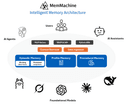
MemMachine is an open-source memory layer that transforms AI agents and applications into intelligent, personalized assistants. Unlike traditional AI apps that start fresh each time, MemMachine enables applications to learn, store, and recall data from past sessions, enriching every interaction with context. Key Features: • Persistent Memory - Maintains memory across sessions, agents, and LLMs, building evolving user profiles • Multi-Platform Integration - Works with OpenAI, AWS Bedrock, Ollama, and more via MCP server capability • Flexible Deployment - Run locally, in the cloud, or install via pip with full data control • Open-Source - Comprehensive documentation, active community support
- 63
 0
Selects is an AI-powered assembly edit tool that helps creators and teams speed up video prep. It auto syncs video and audio, organizes footage into scenes automatically, and builds a ready-to-edit assembly cut timeline in NLEs, including Premiere Pro, DaVinci Resolve, and Final Cut Pro. Perfect for podcasts, interviews, social content, and more, Selects turns long footage into ready-to-edit timelines. Whether you're batch filming or trying to hit weekly uploads, Selects helps you get into the creative part of editing fast.
- 64
 0
GETebook.ai is an AI‑powered eBook creation platform that transforms your idea into a fully formatted, sellable digital product in under 10 minutes. Simply enter your topic or niche, and GETebook.ai generates compelling titles, chapter outlines, written content and striking covers — all in one seamless workflow. Tailored for digital entrepreneurs, coaches, educators, and solopreneurs, the platform enables rapid eBook production with zero writing, design, or publishing skills required. You retain 100% ownership and can publish across channels like Amazon Kindle, Gumroad, Etsy, Shopify, or your own site. Plus, embed affiliate links directly into your eBook to boost monetization efforts.
- 65
 0
Case Cub is a study platform built for law students. It includes a library of more than 20,000 interactive case briefs covering the 1L canon and beyond, so you can walk into class prepared without spending your night briefing from scratch. AI study tools turn your reading into outlines, flashcards, and practice quizzes, and Cub Chat answers questions about the cases and doctrines you are working through. Free tools include an MPRE practice test, a case brief template, a legal memo template, and a law school admissions calculator. Built for 1Ls through bar prep, and for anyone who wants to spend less time transcribing and more time understanding.
- 66
 0
Nano Banana Flash is an AI image generation platform that uses Gemini 3.1 Flash technology to create high-quality 3D figurines and professional visuals. It solves the problem of inconsistent character design by allowing users to maintain visual identity across multiple scenes for branding and storytelling. Key benefits include natural language photo editing, rapid generation of viral social media content, and precise control over image composition without complex technical skills.
- 67
 0
Premiere Assistant is an AI-powered plugin for Adobe Premiere that helps editors create clean automated rough cuts faster, without leaving Premiere. It automates repetitive early-stage editing tasks like transcription, silence removal, filler word cleanup, automated caption creation, and text-based editing, allowing editors to quickly shape raw footage into a usable rough cut. Instead of manually scrubbing timelines, editors can edit by text and let Premiere Assistant handle the cleanup. Designed for interviews, podcasts, and talking-head content, Premiere Assistant keeps editors focused on structure and pacing while reducing time spent on mechanical edits. It works natively inside Premiere Pro and fits seamlessly into existing workflows, no exports, no external prep tools.
- 68
 0
PerchanceAI is a free, no-login AI creative workspace for generating images and short videos in your browser. Choose an image or video model, enter a prompt, and download the result. It also supports AI photo editing, image-to-image transformations, background removal, image enhancement, product visuals, social media graphics, illustrations, concept art, and short motion experiments. Availability, limits, and usage rights may vary by model.
- 69
 0
RabbitHoles AI is an app to have AI conversations on an Infinite canvas. Each node on the canvas is a conversation. Multiple conversations can be connected to share context, along with adding other data sources like Pdf files, youtube videos, etc Key Features - Multiple Chats On Canvas: Have multiple connected chats with AI on the same canvas. - Unlimited Canvases: Create unlimited canvases - Latest Pro Models: Chat with all the popular LLM models from ChatGPT, Claude, Perplexity, Gemini, and Grok (xAI) - Bring Your Own Keys: Bring your own keys. Everything is stored locally - One-Time Purchase: Pay only once and use the product forever Benefits - No loss of context: As a side effect of branching chats, you control the length of the conversation; this prevents loss of context - Spatial Conversation: Learn/research faster on a whiteboard like canvas - Non-linear chats: Our brains don't think or learn linearly, so why should our chatbots be linear? - Multiple LLMs: Get different perspectives from multiple LLM models - Single Window: For every rabbit hole you go into, you stick to one infinite whiteboard that allows you to go deep into intellectual exploration Use Case Advanced AI Users can get what they want out of AI by having long explorative conversations with different AI models on an infinite canvas. There'll be less repetition, copy/pasting, and loss of context as you can: 1. Create branches of the conversations 2. Keep multiple conversations on a single canvas 3. Mix and match various chats to share context
- 70
 0
Serro AI is an AI-powered coordination platform designed to help modern engineering organizations manage complex technical programs more efficiently. Rather than focusing on software development itself, Serro addresses the growing challenge of coordination that emerges as engineering teams adopt artificial intelligence and dramatically increase their development speed. The platform acts as an AI Technical Program Manager (AI TPM), automatically organizing information, tracking progress, maintaining context, and helping teams coordinate work across multiple departments without requiring constant manual updates or reporting. The platform is built around the idea that software development is no longer the primary bottleneck for engineering organizations. With AI enabling developers to produce more code, faster decisions, and more parallel projects, coordination has become the new limiting factor. Serro is designed to solve this challenge by continuously monitoring work across an organization's existing tools and creating a unified, real-time understanding of every active program. Instead of spending hours collecting updates from meetings, documents, and chat conversations, teams can rely on Serro to maintain an accurate picture of ongoing work automatically. One of Serro's primary advantages is its ability to integrate with the software tools that engineering teams already use every day. The platform connects with communication, project management, documentation, and development systems such as Slack, GitHub, Jira, Linear, Zoom, Notion, email, and internal code repositories. After connecting these services, Serro immediately begins collecting signals from across the organization, allowing it to identify active programs, understand relationships between tasks, monitor ongoing discussions, and organize project knowledge without requiring users to migrate to a completely new workflow. Once connected, Serro automatically discovers the technical programs running within an organization. Users can review these detected initiatives, assign ownership, determine visibility, and allow the platform to continuously maintain program information. Every project receives what Serro describes as a "program brain," a centralized knowledge system that stores decisions, ownership, risks, timelines, historical context, current activity, and execution status. As work progresses across different platforms, this knowledge remains synchronized automatically, eliminating the need for repetitive documentation and manual reporting. The platform enables users to interact naturally with their programs through AI-powered queries and automated reporting. Team members can ask questions about project status, request summaries, generate recurring progress reports, or transform meeting discussions into actionable tasks. Instead of manually following up after meetings, Serro captures outcomes, updates project memory, and keeps execution aligned with decisions that have already been made. This helps reduce communication overhead while ensuring that important decisions remain connected to ongoing implementation. Serro is built around four major systems that work together to coordinate complex engineering programs. The Program Memory system continuously maintains live organizational knowledge across active projects, ensuring that important context remains available over time. Loops on Programs automate repetitive coordination activities that keep large initiatives moving forward. Agent Governance provides controls for managing AI agents alongside human contributors, ensuring that automated systems operate within defined boundaries. Finally, Program Analytics offers leadership a comprehensive, organization-wide view of project health, execution progress, coordination effectiveness, and operational performance. The platform emphasizes measurable operational improvements from the first day of deployment. According to the website, organizations can begin using Serro immediately with their existing historical data, eliminating lengthy implementation periods. The company claims that managers recover significant amounts of coordination and reporting time every week while organizations may also uncover substantial research and development value from previously completed work. By reducing administrative overhead, technical leaders can dedicate more attention to strategic planning, delivery quality, and team performance. Serro is designed specifically for organizations where humans and AI agents increasingly collaborate on software development. Rather than replacing human expertise, the platform serves as a shared operating system that keeps both human contributors and AI systems aligned. It continuously maintains a live operational picture of organizational activity, helping teams avoid the common problem of reconstructing project context after meetings or manually piecing together updates from multiple disconnected systems. This shared coordination layer enables engineering organizations to scale more effectively as AI accelerates software production. Different professional roles benefit from the platform in different ways. Technical Program Managers can reduce coordination overhead while managing more cross-functional initiatives simultaneously. Engineering Managers gain visibility into project execution, delivery risks, team health, and emerging blockers without constantly requesting status updates. Product Managers can align roadmap changes, ownership, priorities, and execution within a single coordinated environment. Engineering executives and organizational leaders receive real-time insights into operational health, momentum, risks, coordination gaps, and strategic execution across the entire organization. Overall, Serro AI positions itself as an intelligent coordination platform built for the next generation of software engineering organizations. By combining deep integrations with existing development tools, continuous organizational memory, automated coordination workflows, AI-assisted reporting, governance for human-agent collaboration, and real-time program analytics, the platform enables technical teams to manage increasingly complex programs with greater efficiency and visibility. Instead of allowing coordination challenges to slow organizational growth, Serro helps engineering teams maintain alignment, improve execution, reduce manual administrative work, and make faster, better-informed decisions as software development continues to accelerate through artificial intelligence.
- 71
 0
AI 3D Camera is a virtual photography studio that lets users upload a single image and instantly create a complete 3D photo room, making it possible to capture products and portraits from unlimited angles without traditional studio costs or space. Powered by Nano Banana Pro technology and Google’s Gemini 3 Pro 3D imaging engine, this AI 3D camera platform brings professional studio-level control directly into the browser with no downloads or setup required. Platform overview The AI 3D camera platform replaces traditional photography studios that require expensive equipment, dedicated space, complex lighting, and hours of preparation. By analyzing one uploaded photograph of a product, portrait, or object, the AI 3D camera generates a fully functional virtual 3D photo room in seconds. This virtual photography studio understands depth, spatial relationships, shadows, and three-dimensional structure from a 2D image, reconstructing a navigable 3D space around the subject. Users gain creative control comparable to professional photography studios, but with the convenience of an online tool accessible instantly through a web browser. 3D photo room and camera control At the core of the platform is the AI 3D photo room, which behaves like a professional studio environment. Users can move a virtual camera 360 degrees around the subject, shoot from ground level or overhead, compress perspective with telephoto settings, or create dramatic wide-angle compositions—all from a single original photo. The AI 3D camera offers professional-level parameters for exact control, including azimuth rotation from 0–359°, elevation angles from 1–179°, distance from the subject, and focal lengths from 14–120mm. Every adjustment updates the 3D photo room in real time, and the platform mimics real studio workflows with smooth orbiting, precise zooming, and natural panning, giving users a responsive virtual camera experience.
- 72
 0
iMeett — Meetings On Autopilot,Data In Your Drive If you're a consultant, freelancer, or business owner, your day runs on meetings — client calls, discovery sessions, project check-ins, vendor negotiations. But the time you spend writing up notes, chasing action items, and trying to remember who said what is time you can't bill for. iMeett is an AI-powered meeting assistant that automatically transcribes, summarizes, and organizes your conversations, then saves everything directly back to your own Google Drive. No third-party servers storing your client discussions. No bots sitting in your calls. Just smart, private meeting intelligence delivered to you within minutes. Your Client Conversations Stay Private When you're handling sensitive client information, NDAs, or confidential business discussions, where your data lives matters. With iMeett, privacy isn't a feature we bolted on — it's how the product was built from the ground up. Your recordings live in your Google Drive. Transcripts and summaries are written back to your Google Drive. Audio is processed securely and never stored on our servers. Whether you're a consultant discussing proprietary strategy, a business owner negotiating a deal, or a freelancer handling client deliverables, iMeett keeps your data exactly where it belongs — with you. You stay compliant, and your clients stay confident. Smart Organization That Saves You Hours Every meeting is automatically tagged by AI with a concise, meaningful label — like "Client Onboarding" or "Q3 Budget Review" — making it effortless to find past conversations weeks or months later. You can customize tags, filter by client or project, and generate monthly recaps to track how engagements evolve over time. Need to prepare for a follow-up call? Pull up every meeting tagged under that client in seconds. With tailored persona modes for Sales, Consulting, Legal, Executive, and more, every summary is structured around what actually matters for your work — action items, deliverables, timelines, and who owns what.
- 73
 0
HypeSuite AI is a specialized SEO automation platform that acts like your in-house strategist. It researches your keywords, clusters them intelligently, builds content calendars, and generates full-length blog posts with optimized structure, visuals, schema, and metadata — all tailored to rank and convert. Instead of AI that just “writes stuff,” HypeSuite thinks in systems — helping founders and lean marketing teams grow organic traffic without hiring a full content team.
- 74
 0
Masset is a modern AI-powered content management platform designed specifically for B2B marketing teams that need a single, reliable home for all their marketing assets. Instead of letting content live scattered across folders, cloud drives, CRMs, and chat tools, Masset centralizes everything into one intelligent system where every asset is always up to date, easily searchable, and instantly accessible across the tools teams already use. At its core, Masset acts as a “content home” where every piece of marketing material—such as case studies, pitch decks, product one-pagers, videos, battlecards, and onboarding guides—can be stored, organized, and distributed without friction. The platform is built around the idea that content should not only be stored, but actively used, tracked, and continuously improved based on real performance data. Every asset becomes part of a living system rather than a static file sitting in a folder. One of Masset’s key differentiators is its deep integration with AI systems and modern workflows. It connects with MCP-compatible AI tools such as Claude, ChatGPT, Cursor, and GitHub Copilot, allowing these systems to search, retrieve, and use approved company content in real time. This ensures that AI-generated responses and workflows are grounded in accurate, company-approved information instead of outdated or hallucinated data. With dozens of tools available, AI can not only fetch assets but also analyze engagement, generate reports, create content boards, and even submit requests when needed content does not yet exist. Masset also extends into major business platforms like Slack, Microsoft Teams, HubSpot, and Salesforce, embedding content directly into the places where teams already work. Sales reps can quickly share assets in conversations, marketers can track engagement inside CRM records, and leadership teams can measure how content influences pipeline and revenue. Every interaction is logged and tied back to performance metrics, enabling organizations to understand which materials actually drive deals and which ones need improvement or retirement. Another powerful capability of Masset is its analytics and revenue attribution system. Instead of only tracking basic metrics like views or downloads, the platform connects content engagement directly to closed-won deals and revenue impact. This allows marketing and revenue operations teams to clearly see how specific assets influence pipeline velocity, deal progression, and total revenue outcomes. It turns content from a branding tool into a measurable revenue driver. The platform also helps teams maintain content quality and governance at scale. Version control ensures that every share, board, and AI tool always uses the latest approved version of a document. Content flagging systems allow teams to identify outdated materials, while structured workflows ensure that new asset requests are routed to the right owners without confusion or manual coordination. For enablement and training, Masset introduces AI-driven learning experiences directly inside Slack and Teams. Instead of traditional courses, teams receive short, daily knowledge checks based on approved content, helping improve retention and ensuring that sales and marketing teams consistently understand the messaging and materials they are using in the field. Overall, Masset positions itself as more than a traditional digital asset management system. It is an AI-native content infrastructure layer for modern B2B organizations. By unifying storage, distribution, analytics, AI integration, and training into one platform, it helps companies ensure that every piece of content is accurate, discoverable, and actively contributing to revenue growth—no matter where teams work or which tools they use.
- 75
 0
Ego presents itself as a new generation of personal AI agent designed to deeply understand the user and transform simple thoughts into fully completed work. Unlike traditional tools that require constant input and supervision, ego operates more like a proactive partner that learns continuously from your behavior. It observes your conversations, browsing habits, and daily workflows to build a personalized understanding of how you think and work. This allows it to anticipate your needs and execute tasks with increasing accuracy over time. The core idea is simple but powerful: you share a thought, and ego delivers the result—finished, polished, and ready to use. One of the most compelling aspects of ego is its ability to function seamlessly across multiple environments. Whether you are working on your browser, desktop, or phone, the agent remains consistently available. It acts as a unified layer that carries your tasks, context, and memory everywhere you go. You can interact with it naturally by speaking, typing, or even referencing what is currently on your screen. With just a simple command or idea, ego immediately begins working, combining real-time context with what it already knows about you. This creates a fluid experience where ideas are captured and executed instantly, without breaking your workflow. Ego also stands out for its ability to handle multiple complex tasks simultaneously. Instead of completing tasks one by one, it can run them in parallel, significantly increasing productivity. For example, you can ask it to research competitors, prepare a presentation, and analyze sales data all at once. While you focus on other things—or even step away completely—ego continues working in the background, delivering completed files such as documents, spreadsheets, and slide decks directly to your computer. This always-on capability ensures that work progresses 24/7, even when you are not actively engaged. Another defining feature is how ego evolves over time. It does not just process commands; it learns from your past actions, corrections, and preferences. This means that recurring tasks become faster and more accurate. Eventually, simple instructions like “do the usual” are enough for ego to understand and execute complex workflows. Every interaction strengthens its understanding, turning your personal knowledge and habits into reusable skills that improve efficiency and consistency. In terms of capabilities, ego covers a wide range of professional and personal tasks. It can conduct deep research by gathering and verifying information from multiple sources, delivering structured reports with citations. It can build applications from simple descriptions, handling coding, testing, and deployment automatically. It integrates with your existing tools and platforms, pulling data from different sources and combining it into clear, actionable insights. Additionally, it can monitor changes across the web, track competitors, automate administrative tasks, and even assist with purchasing decisions by comparing options and making recommendations. Privacy and data control are also central to ego’s design. All user data is synchronized securely across devices using encrypted channels, ensuring that sensitive information remains protected. The data is used exclusively to complete your tasks and is not shared, sold, or used for external purposes such as training AI models. This emphasis on ownership and security reinforces trust, making ego not just a powerful assistant, but also a reliable one. Overall, ego represents a shift from reactive AI tools to proactive, autonomous agents. It bridges the gap between ideas and execution, allowing users to focus on creativity and decision-making while the system handles the heavy lifting. By combining deep personalization, continuous learning, and autonomous task execution, ego redefines what it means to work with artificial intelligence in a modern, connected environment.
Frequently asked questions
GitHub Copilot is an AI-powered code autocompletion tool that generates code suggestions as you type. It can often complete entire functions based on the initial input, making coding faster and more efficient. Many developers find it indispensable, as it significantly enhances productivity and reduces the time spent on coding tasks.
ChatGPT is recognized as one of the most advanced conversational AI tools available in 2024. It excels in various tasks, including coding and generating creative content. Users appreciate its capabilities, although it can occasionally produce inaccurate information and experience outages. The subscription fee of $20/month is considered worthwhile by many for its extensive features.
Vectorize.io is a platform designed to optimize unstructured data into vector search indexes, which are essential for retrieval-augmented generation. It efficiently structures data, making it easier for users to implement vector search indexes, thus enhancing data retrieval processes.
ZenCall is an AI phone agent that can make and receive calls on your behalf. It is known for its efficiency and robust performance, along with excellent customer service, making it a valuable tool for those looking to streamline their communication processes.
Mubboo.com is a free AI-powered life assistant that helps users make informed decisions in shopping, travel, local services, and information. It aggregates data from various sources to provide real-time price tracking, personalized city guides, and comprehensive information on US ZIP codes, making it easier for users to navigate their daily needs.
UGCad AI is an AI tool that generates video ads from product URLs or prompts without requiring any camera or editing skills. Its unique Ad Clone feature allows users to replicate the structure of successful ads, making it particularly useful for advertisers looking to enhance their ad performance without extensive resources.
SAMstream is an end-to-end platform that simplifies the government contracting process. It assists users in discovering opportunities, conducting competitor research, and creating bid-ready documents, allowing teams to focus more on winning proposals rather than dealing with cumbersome systems.
Magic Hour is a browser-based AI video generator and editor that allows users to create videos quickly from text or images. It offers features like text-to-video generation, AI Face Swap, and AI Lip Sync, making it ideal for producing various types of content, including social media posts and training materials, without the need for complex editing.
Writingmate is an AI web platform that provides access to over 200 AI models for writing, coding, and content creation. It features tools for text and image generation, voice input, and real-time web data access, enabling users to automate workflows and achieve better results across various tasks.
Clutch Click is a SaaS analytics platform that helps businesses monitor their brand presence in AI-powered search results. It tracks key metrics such as visibility, ranking, and sentiment across major AI models, providing insights that help marketing teams optimize their SEO and content strategies in an evolving digital landscape.