Home

🎧Best of Audible

Sort by
  1. 3
    Image for Project Hail Mary by Andy Weir

    "Project Hail Mary" is a space adventure story written by Andy Weir, the same guy who wrote "The Martian." It's about a man named Ryland Grace who wakes up on a spaceship with no memory of who he is or why he's there. He figures out he's on a mission to save Earth from disaster. The story follows him as he tries to remember his past and complete his mission, which involves a lot of science and problem-solving. Along the way, he meets an alien, and they form an unlikely friendship. The book is full of cool science stuff, suspense, and humor. It's like a mix of a mystery and a space adventure, with a lot of heart. The narration by Ray Porter is superb, with sound effects and excellent voice work.

  2. 1
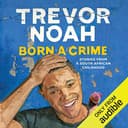
    Image for Born a Crime by Trevor Noah

    Born a Crime: Stories from a South African Childhood is Trevor Noah’s autobiography, published in 2016. It tells the story of his early years growing up in South Africa during and after apartheid. The title comes from the fact that his birth—he had a black Xhosa mother and a white Swiss-German father—was literally considered a crime under apartheid laws that banned interracial relationships at the time. The book is a mix of humor and tough truths. Much of it focuses on Trevor’s relationship with his mother, Patricia, who plays a huge role in his life. She’s portrayed as tough, religious, and fiercely independent—someone who dragged him to multiple church services every week, even during times of violence and unrest. Her strong influence shapes his character, often through strict discipline and sharp lessons about right and wrong. Trevor shares stories from his childhood that range from funny to intense. There’s a scene where his mother throws him out of a moving minibus to save him from a potentially dangerous driver. He also talks about using his talent for languages to navigate different cultural groups in South Africa, and how he hustled by selling bootleg CDs to make money. But not all his stories are light—he describes living with his abusive stepfather, Abel, whose violence culminated in him shooting Trevor’s mother, though she miraculously survived. Despite the heavy topics—racism, poverty, domestic abuse—Noah’s storytelling is funny, honest, and full of warmth. The book gives a personal look at how apartheid shaped everyday life but also highlights the resilience of his family, especially his mother. The memoir was widely praised, becoming a bestseller and earning spots on numerous “best of the year” lists. It struck a chord with readers around the world, and even inspired figures like U.S. Senator Tammy Duckworth and First Lady Jill Biden, who assigned it as reading for her English class. A film adaptation is in the works, with Lupita Nyong’o set to play Trevor’s mother and co-produce the project.

  3. 1
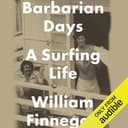
    Image for Barbarian Days by William Finnegan

    Barbarian Days: A Surfing Life is William Finnegan’s story about growing up obsessed with surfing. It’s not just about catching waves—it’s about a whole way of life that’s demanding, addictive, and sometimes dangerous. Finnegan started young, learning to surf in California and Hawaii, and kept chasing waves into adulthood, traveling through places like Fiji, Australia, Indonesia, and Africa. Along the way, he mixes adventure with self-reflection, talking about friendships formed in the water, the culture around surfing, and how it all fit with the times—especially during the social changes of the 1960s and '70s. The book isn’t just about the thrill of surfing; Finnegan dives into the technical side of waves and the patience it takes to master them. He’s honest about his youthful recklessness—like taking LSD before surfing a massive wave in Maui—and the risks that came with his travels, from malaria scares to navigating shady markets. Still, surfing pulls him along, even when he’s juggling a career as a war reporter and later, family life. At its core, Barbarian Days is an old-fashioned adventure tale mixed with a thoughtful look at what it means to be hooked on something so completely. Finnegan’s writing captures both the beauty and the grind of surfing, making you feel like you’re right there with him—whether on a remote beach or paddling out into icy waves off Long Island.

  4. 1
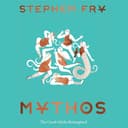
    Image for Mythos by Stephen Fry

    Greek myths retold by Stephen Fry. He is both the author and the narrator of this book. His wit and sense of humor come across in both the text and in the delivery. Plus, you actually get to learn Greek myths.

  5. 1
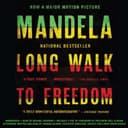
    Image for Long Walk to Freedom by Nelson Mandela

    Long Walk to Freedom is an autobiography by South Africa's first democratically elected President Nelson Mandela, and it was first published in 1994 by Little Brown & Co. The book profiles his early life, coming of age, education and 27 years spent in prison If you're new to South African history, as I was, this is a great starting point. Why not hear from the man who played a key part in it?

Frequently Asked Questions

Related Lists

  1. 0
    Image for Elon Musk

    This is the only audiobook I've ever listened to lol. But it is a very interesting story about Elon, arguably the most interesting person alive.

  2. 0
    Image for Born a Crime by Trevor Noah

    Born a Crime: Stories from a South African Childhood is Trevor Noah’s autobiography, published in 2016. It tells the story of his early years growing up in South Africa during and after apartheid. The title comes from the fact that his birth—he had a black Xhosa mother and a white Swiss-German father—was literally considered a crime under apartheid laws that banned interracial relationships at the time. The book is a mix of humor and tough truths. Much of it focuses on Trevor’s relationship with his mother, Patricia, who plays a huge role in his life. She’s portrayed as tough, religious, and fiercely independent—someone who dragged him to multiple church services every week, even during times of violence and unrest. Her strong influence shapes his character, often through strict discipline and sharp lessons about right and wrong. Trevor shares stories from his childhood that range from funny to intense. There’s a scene where his mother throws him out of a moving minibus to save him from a potentially dangerous driver. He also talks about using his talent for languages to navigate different cultural groups in South Africa, and how he hustled by selling bootleg CDs to make money. But not all his stories are light—he describes living with his abusive stepfather, Abel, whose violence culminated in him shooting Trevor’s mother, though she miraculously survived. Despite the heavy topics—racism, poverty, domestic abuse—Noah’s storytelling is funny, honest, and full of warmth. The book gives a personal look at how apartheid shaped everyday life but also highlights the resilience of his family, especially his mother. The memoir was widely praised, becoming a bestseller and earning spots on numerous “best of the year” lists. It struck a chord with readers around the world, and even inspired figures like U.S. Senator Tammy Duckworth and First Lady Jill Biden, who assigned it as reading for her English class. A film adaptation is in the works, with Lupita Nyong’o set to play Trevor’s mother and co-produce the project.

  3. 0
    Image for Barbarian Days by William Finnegan

    Barbarian Days: A Surfing Life is William Finnegan’s story about growing up obsessed with surfing. It’s not just about catching waves—it’s about a whole way of life that’s demanding, addictive, and sometimes dangerous. Finnegan started young, learning to surf in California and Hawaii, and kept chasing waves into adulthood, traveling through places like Fiji, Australia, Indonesia, and Africa. Along the way, he mixes adventure with self-reflection, talking about friendships formed in the water, the culture around surfing, and how it all fit with the times—especially during the social changes of the 1960s and '70s. The book isn’t just about the thrill of surfing; Finnegan dives into the technical side of waves and the patience it takes to master them. He’s honest about his youthful recklessness—like taking LSD before surfing a massive wave in Maui—and the risks that came with his travels, from malaria scares to navigating shady markets. Still, surfing pulls him along, even when he’s juggling a career as a war reporter and later, family life. At its core, Barbarian Days is an old-fashioned adventure tale mixed with a thoughtful look at what it means to be hooked on something so completely. Finnegan’s writing captures both the beauty and the grind of surfing, making you feel like you’re right there with him—whether on a remote beach or paddling out into icy waves off Long Island.

  4. 0
    Image for storimi

    📚 What Makes Storimi Different TL;DR: We're not just another AI story generator. Storimi creates truly personalized, full-length stories where YOU are the hero — in almost any language, any genre, any tone. Available as audiobooks, beautifully printed books, or digital editions. 🎯 What Sets Us Apart 1. Real Books, Not Just Text - 📖 Physical hardcover books printed and shipped to your door - 🎧 Professional audio narration for immersive listening - 📱 Digital editions for reading anywhere - Mix and match formats based on how you experience stories 2. Actually Long Stories That Matter Most AI tools generate 500-word snippets. We create full-length, chapter-based narratives (3,000-10,000+ words) designed for deep reading experiences, not just quick entertainment.

  1. 2
    Image for Elon Musk

    This is the only audiobook I've ever listened to lol. But it is a very interesting story about Elon, arguably the most interesting person alive.

  1. 0
    Image for Project Hail Mary

    Ryland Grace is the sole survivor on a desperate, last-chance mission—and if he fails, humanity and the earth itself will perish. Except that right now, he doesn’t know that. He can’t even remember his own name, let alone the nature of his assignment or how to complete it. All he knows is that he’s been asleep for a very, very long time. And he’s just been awakened to find himself millions of miles from home, with nothing but two corpses for company. His crewmates dead, his memories fuzzily returning, Ryland realizes that an impossible task now confronts him. Hurtling through space on this tiny ship, it’s up to him to puzzle out an impossible scientific mystery—and conquer an extinction-level threat to our species. And with the clock ticking down and the nearest human being light-years away, he’s got to do it all alone. Or does he? An irresistible interstellar adventure as only Andy Weir could deliver, Project Hail Mary is a tale of discovery, speculation, and survival to rival The Martian—while taking us to places it never dreamed of going.

  2. 0
    Image for Project Hail Mary by Andy Weir

    "Project Hail Mary" is a space adventure story written by Andy Weir, the same guy who wrote "The Martian." It's about a man named Ryland Grace who wakes up on a spaceship with no memory of who he is or why he's there. He figures out he's on a mission to save Earth from disaster. The story follows him as he tries to remember his past and complete his mission, which involves a lot of science and problem-solving. Along the way, he meets an alien, and they form an unlikely friendship. The book is full of cool science stuff, suspense, and humor. It's like a mix of a mystery and a space adventure, with a lot of heart. The narration by Ray Porter is superb, with sound effects and excellent voice work.

  3. 0
    Image for East of Eden

    In his journal, Nobel Prize winner John Steinbeck called East of Eden “the first book,” and indeed it has the primordial power and simplicity of myth. Set in the rich farmland of California’s Salinas Valley, this sprawling and often brutal novel follows the intertwined destinies of two families—the Trasks and the Hamiltons—whose generations helplessly reenact the fall of Adam and Eve and the poisonous rivalry of Cain and Abel.

  4. 0
    Image for Norwegian Wood

    Toru, a serious young college student in Tokyo, is devoted to Naoko, a beautiful and introspective young woman, but their mutual passion is marked by the tragic death of their best friend years before. As Naoko retreats further into her own world, Toru finds himself drawn to a fiercely independent and sexually liberated young woman. Stunning and elegiac, Norwegian Wood first propelled Haruki Murakami into the forefront of the literary scene.

  5. 0
    Image for A Gentleman in Moscow by Amor Towles

    A Gentleman in Moscow is a historical fiction novel by Amor Towles. It follows Count Alexander Rostov, a Russian aristocrat who, after the Bolshevik Revolution, is sentenced to house arrest in the grand Hotel Metropol in Moscow. Instead of being imprisoned in a cell, he’s confined to the hotel, which becomes both his cage and his world. The story spans several decades, starting in the 1920s and running through key moments of Soviet history. Most of it unfolds inside the hotel, which is no ordinary place—it's a bustling, self-contained universe. Rostov, who begins the story living in a lavish suite, is forced to move into a tiny attic room. Despite this fall from grace, he navigates his new life with wit and charm, forming friendships with the hotel staff, guests, and unexpected visitors. The book isn’t just about the Count’s personal journey—it’s also about how time changes people and places, how history creeps in even when you’re standing still, and how small acts of kindness and loyalty can shape a lifetime. The setting, the Metropol, is richly described, from fine dining rooms to back corridors. There’s a good bit about food, music, and Russian culture, and plenty of philosophical musings, but it never gets too heavy. At its core, the novel is about making the best of what life throws at you. The Count is an old-world gentleman stuck in a new world that wants to forget people like him. How he handles that—sometimes with grace, sometimes with stubbornness—is what makes the book compelling. It's quietly dramatic, occasionally funny, and surprisingly heartwarming, all without needing big action scenes.

  1. 0
    Image for Elon Musk

    This is the only audiobook I've ever listened to lol. But it is a very interesting story about Elon, arguably the most interesting person alive.

  1. 2
    Image for East of Eden

    In his journal, Nobel Prize winner John Steinbeck called East of Eden “the first book,” and indeed it has the primordial power and simplicity of myth. Set in the rich farmland of California’s Salinas Valley, this sprawling and often brutal novel follows the intertwined destinies of two families—the Trasks and the Hamiltons—whose generations helplessly reenact the fall of Adam and Eve and the poisonous rivalry of Cain and Abel.

  2. 1
    Image for A Gentleman in Moscow by Amor Towles

    A Gentleman in Moscow is a historical fiction novel by Amor Towles. It follows Count Alexander Rostov, a Russian aristocrat who, after the Bolshevik Revolution, is sentenced to house arrest in the grand Hotel Metropol in Moscow. Instead of being imprisoned in a cell, he’s confined to the hotel, which becomes both his cage and his world. The story spans several decades, starting in the 1920s and running through key moments of Soviet history. Most of it unfolds inside the hotel, which is no ordinary place—it's a bustling, self-contained universe. Rostov, who begins the story living in a lavish suite, is forced to move into a tiny attic room. Despite this fall from grace, he navigates his new life with wit and charm, forming friendships with the hotel staff, guests, and unexpected visitors. The book isn’t just about the Count’s personal journey—it’s also about how time changes people and places, how history creeps in even when you’re standing still, and how small acts of kindness and loyalty can shape a lifetime. The setting, the Metropol, is richly described, from fine dining rooms to back corridors. There’s a good bit about food, music, and Russian culture, and plenty of philosophical musings, but it never gets too heavy. At its core, the novel is about making the best of what life throws at you. The Count is an old-world gentleman stuck in a new world that wants to forget people like him. How he handles that—sometimes with grace, sometimes with stubbornness—is what makes the book compelling. It's quietly dramatic, occasionally funny, and surprisingly heartwarming, all without needing big action scenes.

  3. 1
    Image for The Wind-Up Bird Chronicle

    In a Tokyo suburb, a young man named Toru Okada searches for his wife’s missing cat—and then for his wife as well—in a netherworld beneath the city’s placid surface. As these searches intersect, he encounters a bizarre group of allies and antagonists. Gripping, prophetic, and suffused with comedy and menace, this is one of Haruki Murakami’s most acclaimed and beloved novels.

  4. 0
    Image for Norwegian Wood

    Toru, a serious young college student in Tokyo, is devoted to Naoko, a beautiful and introspective young woman, but their mutual passion is marked by the tragic death of their best friend years before. As Naoko retreats further into her own world, Toru finds himself drawn to a fiercely independent and sexually liberated young woman. Stunning and elegiac, Norwegian Wood first propelled Haruki Murakami into the forefront of the literary scene.

  5. 0
    Image for South of the Border, West of the Sun

    Hajime has arrived at middle age with a loving family and an enviable career, yet he feels incomplete. When a childhood friend, now a beautiful woman, shows up with a secret from which she is unable to escape, the fault lines of doubt in Hajime’s quotidian existence begin to give way. Rich, mysterious, and quietly dazzling, in South of the Border, West of the Sun the simple arc of one man’s life becomes the exquisite literary terrain of Murakami’s remarkable genius.

  1. 3
    Image for Matcha Tea

    Matcha tea is a smooth, vibrant green beverage made by whisking finely ground green tea leaves into hot water. Unlike regular green tea, where the leaves are steeped and removed, matcha is fully consumed, which gives it a fuller body and a richer, more complex flavor. The taste is a blend of grassy freshness, gentle bitterness, and a deep, savory umami that lingers pleasantly. High-quality matcha can be surprisingly sweet and creamy, while lower grades tend to be more astringent. Preparing matcha is as much about the process as it is about the drink itself. The powder is first sifted into a bowl to break up any clumps, then a small amount of hot water—usually around 80°C—is added. Using a bamboo whisk, called a chasen, the tea is briskly whisked in a zigzag motion until a layer of fine, soft foam forms on top. This foam not only looks appealing but also softens the tea’s natural bitterness, creating a silky texture and smooth mouthfeel. There are two primary styles of matcha tea: usucha and koicha. Usucha, or thin tea, is lighter and frothy, offering a refreshing and balanced flavor—this is the kind you’ll often find at cafés or casual settings. Koicha, or thick tea, uses more powder and less water, resulting in a dense, velvety texture with a bold, concentrated taste. Koicha is typically reserved for formal tea ceremonies, where the ritual of preparing and drinking it becomes a slow, meditative experience. The tea’s striking green color comes from how the tea plants are grown. For several weeks before harvest, the plants are shaded from sunlight, which boosts their chlorophyll content and preserves amino acids like theanine. This process enhances the tea’s umami flavor while reducing bitterness. It’s also what gives matcha its calming effect despite containing caffeine—the theanine promotes a sense of focused relaxation, making it popular with those seeking gentle alertness rather than the jittery kick of coffee. Though matcha has deep roots in Japanese tea culture, where it’s long been associated with mindfulness and simplicity, it’s found new life in modern drinks like lattes, iced teas, and smoothies. Whether enjoyed during a traditional tea gathering or as part of a morning ritual at home, drinking matcha is about more than just taste—it’s a small, calming moment of pause in a busy day.

  2. 2
    Image for Mint Tea

    Mint tea is a warm drink made by soaking fresh or dried mint leaves in hot water. It’s simple—just mint and water—but the taste is fresh and cool, with a hint of sweetness depending on the type of mint you use. Peppermint tea has a stronger, sharper flavor, while spearmint tea is milder and a bit sweeter. People often drink it to relax or help with digestion. It’s popular in many places around the world—like in Morocco, where it’s made with green tea and lots of sugar, or in India, where mint is sometimes added to chai. In Korea, they have a version called bakha-cha. Making it is easy: boil some water, pour it over the mint leaves, let it sit for a few minutes, and you’re good to go. Some folks like adding honey or lemon, but it’s just as nice plain. The smell alone is pretty calming—fresh, like a garden after rain.

  3. 2
    Image for Green Tea

    Green tea is a type of tea made from the leaves of the Camellia sinensis plant. Unlike black or oolong teas, green tea is made by heating the leaves soon after picking to prevent oxidation. This keeps the leaves green and gives the tea its fresh, grassy taste. It originally came from China but is now popular across East Asia, especially in Japan, Korea, and Vietnam. There are many kinds of green tea, depending on where it's grown, how it's processed, and when it's harvested. For example, Japan’s sencha is steamed, giving it a bright green color and a sweet flavor, while China’s longjing is pan-fired, making it more toasty and mellow. Making a cup is simple: just steep the leaves in hot water, but not boiling—usually around 70–80°C (160–175°F)—for a couple of minutes. If the water is too hot or you steep it too long, the tea can taste bitter. Green tea has been linked to many health claims, but the evidence is mixed. It does have some caffeine, though less than coffee, and contains antioxidants called catechins. People drink it for various reasons—some like the taste, some believe it helps with focus, and others just enjoy the ritual of making it. In the end, green tea is just a straightforward drink that’s been around for ages. Some people love it, some don’t—it’s really about what suits your taste.

  4. 2
    Image for Black Tea

    Black tea is the kind of drink that’s been around for ages, traded across continents, sipped at fancy afternoon teas, and downed in travel mugs on rushed mornings. It comes from the Camellia sinensis plant, just like green and white tea, but what sets it apart is the full oxidation of the leaves. That process turns them dark and gives black tea its deep reddish-brown color when brewed, along with that strong, punchy flavor that can be malty, smoky, fruity, or floral—depends on where it’s from and how it’s made. There are loads of varieties. Assam from India is bold and malty—perfect with a splash of milk. Darjeeling, often called the "champagne of teas," is lighter, floral, and sometimes a bit fruity. If you’re in the mood for something smoky, Lapsang Souchong from China tastes like someone brewed tea in a campfire—but in a good way. Ceylon from Sri Lanka strikes a nice balance—brisk and refreshing. The cool thing is, black tea keeps its flavor for years, unlike green tea that goes dull after a while, which made it ideal for long trade journeys back in the day. Brewing a cup is simple. Boil water (none of that lukewarm stuff), pour it over the tea leaves—or a tea bag if you’re in a hurry—and let it steep for 3 to 5 minutes. Go shorter if you like it mellow, longer if you’re after that strong kick. Milk and sugar? Sure, if that’s your thing. Lemon works too. Or just drink it plain and let the flavors do their thing. There’s something calming about it—the steam curling up from the cup, the earthy smell filling the room, the first warm sip hitting just right, like a hug in a mug. Whether you’re having a slow morning, taking a break in the afternoon, or catching up with a friend over a pot of it, black tea’s got that comforting, no-fuss charm. It’s simple, really—just leaves and water—but somehow, it always feels like a little ritual.

  5. 1
    Image for Thai Tea

    Thai tea is a sweet, creamy drink made from strong black tea, usually Ceylon or a local version of Assam. It’s brewed with sugar and often flavored with condensed milk, giving it that rich, smooth taste and signature orange color. When served cold, it’s poured over ice, sometimes with a splash of evaporated milk on top for that creamy swirl. In Thailand, you’ll find it in tall glasses at restaurants or in plastic cups or bags from street vendors. Some places even turn it into a blended drink, like a frappé. There are variations too—like a version without milk called “dark Thai iced tea,” or one with lime for a citrusy kick. People drink it hot in the mornings as well, often with fried dough sticks.

  1. 0
    Image for What I Talk About When I Talk About Running

    What I Talk About When I Talk About Running is a memoir by Haruki Murakami where he talks about two things that define a big part of his life: running and writing. Murakami didn’t always plan on being a novelist. He was running a jazz bar in his twenties when, while watching a baseball game, he suddenly thought, “I could write a novel.” He gave it a shot, it worked out, and he eventually sold his bar to focus on writing full-time. But sitting at a desk all day, smoking and not moving much, wasn’t doing his health any good. That’s when he picked up running. For Murakami, running is more than just exercise—it’s part of his routine and, in a way, a metaphor for writing. Both take endurance. Both are long hauls where you push yourself day after day, even when you don’t feel like it. The book follows him as he trains for marathons, competes in triathlons, and grapples with the slow decline of his physical abilities as he ages. He talks a lot about acceptance—accepting getting older, accepting bad race times, and accepting that sometimes you just don’t do as well as you hoped. His attitude is basically: That’s life. You move on. The writing style is straightforward, like he’s just talking to you over a coffee. He doesn’t dress things up. Sometimes he rambles, mentioning things like cycling habits or going off on tangents about global warming. At one point, he describes running the original marathon route in Greece—sun blazing, salt stinging his eyes, everything uncomfortable. But through it all, there’s this calm acceptance. He’s not trying to convince anyone to run; he just shares what it means to him. By the end, what sticks isn’t just the running or the writing, but the way he embraces both the highs and the lows—the post-race blues, the joy of finishing, and the satisfaction of something as simple as a cold beer after a long run. It’s a book about effort, routine, and learning to keep going, no matter what.

  2. 0
    Image for Born a Crime by Trevor Noah

    Born a Crime: Stories from a South African Childhood is Trevor Noah’s autobiography, published in 2016. It tells the story of his early years growing up in South Africa during and after apartheid. The title comes from the fact that his birth—he had a black Xhosa mother and a white Swiss-German father—was literally considered a crime under apartheid laws that banned interracial relationships at the time. The book is a mix of humor and tough truths. Much of it focuses on Trevor’s relationship with his mother, Patricia, who plays a huge role in his life. She’s portrayed as tough, religious, and fiercely independent—someone who dragged him to multiple church services every week, even during times of violence and unrest. Her strong influence shapes his character, often through strict discipline and sharp lessons about right and wrong. Trevor shares stories from his childhood that range from funny to intense. There’s a scene where his mother throws him out of a moving minibus to save him from a potentially dangerous driver. He also talks about using his talent for languages to navigate different cultural groups in South Africa, and how he hustled by selling bootleg CDs to make money. But not all his stories are light—he describes living with his abusive stepfather, Abel, whose violence culminated in him shooting Trevor’s mother, though she miraculously survived. Despite the heavy topics—racism, poverty, domestic abuse—Noah’s storytelling is funny, honest, and full of warmth. The book gives a personal look at how apartheid shaped everyday life but also highlights the resilience of his family, especially his mother. The memoir was widely praised, becoming a bestseller and earning spots on numerous “best of the year” lists. It struck a chord with readers around the world, and even inspired figures like U.S. Senator Tammy Duckworth and First Lady Jill Biden, who assigned it as reading for her English class. A film adaptation is in the works, with Lupita Nyong’o set to play Trevor’s mother and co-produce the project.

  3. 0
    Image for Down and Out in Paris and London

    by George Orwell an expedition into who people are and what life is

  4. 0
    Image for Barbarian Days by William Finnegan

    Barbarian Days: A Surfing Life is William Finnegan’s story about growing up obsessed with surfing. It’s not just about catching waves—it’s about a whole way of life that’s demanding, addictive, and sometimes dangerous. Finnegan started young, learning to surf in California and Hawaii, and kept chasing waves into adulthood, traveling through places like Fiji, Australia, Indonesia, and Africa. Along the way, he mixes adventure with self-reflection, talking about friendships formed in the water, the culture around surfing, and how it all fit with the times—especially during the social changes of the 1960s and '70s. The book isn’t just about the thrill of surfing; Finnegan dives into the technical side of waves and the patience it takes to master them. He’s honest about his youthful recklessness—like taking LSD before surfing a massive wave in Maui—and the risks that came with his travels, from malaria scares to navigating shady markets. Still, surfing pulls him along, even when he’s juggling a career as a war reporter and later, family life. At its core, Barbarian Days is an old-fashioned adventure tale mixed with a thoughtful look at what it means to be hooked on something so completely. Finnegan’s writing captures both the beauty and the grind of surfing, making you feel like you’re right there with him—whether on a remote beach or paddling out into icy waves off Long Island.

  1. 0
    Image for What I Talk About When I Talk About Running

    What I Talk About When I Talk About Running is a memoir by Haruki Murakami where he talks about two things that define a big part of his life: running and writing. Murakami didn’t always plan on being a novelist. He was running a jazz bar in his twenties when, while watching a baseball game, he suddenly thought, “I could write a novel.” He gave it a shot, it worked out, and he eventually sold his bar to focus on writing full-time. But sitting at a desk all day, smoking and not moving much, wasn’t doing his health any good. That’s when he picked up running. For Murakami, running is more than just exercise—it’s part of his routine and, in a way, a metaphor for writing. Both take endurance. Both are long hauls where you push yourself day after day, even when you don’t feel like it. The book follows him as he trains for marathons, competes in triathlons, and grapples with the slow decline of his physical abilities as he ages. He talks a lot about acceptance—accepting getting older, accepting bad race times, and accepting that sometimes you just don’t do as well as you hoped. His attitude is basically: That’s life. You move on. The writing style is straightforward, like he’s just talking to you over a coffee. He doesn’t dress things up. Sometimes he rambles, mentioning things like cycling habits or going off on tangents about global warming. At one point, he describes running the original marathon route in Greece—sun blazing, salt stinging his eyes, everything uncomfortable. But through it all, there’s this calm acceptance. He’s not trying to convince anyone to run; he just shares what it means to him. By the end, what sticks isn’t just the running or the writing, but the way he embraces both the highs and the lows—the post-race blues, the joy of finishing, and the satisfaction of something as simple as a cold beer after a long run. It’s a book about effort, routine, and learning to keep going, no matter what.

  1. 1
    Image for Dave Chappelle

    From Chappelle show to his stand up, funny af 😂

  2. 1
    Image for George Carlin

    The legendary George Carlin. Enough said.

  3. 1
    Image for Trevor Noah

    Trevor Noah is a South African comedian, writer, producer, and television host, born on February 20, 1984, in Johannesburg. His upbringing was complicated by apartheid-era laws that made his parents’ interracial relationship illegal. His mother is Xhosa, and his father is Swiss-German. Growing up in Soweto, he experienced firsthand the complexities of race and identity in South Africa, something that would later shape much of his comedy. He started his entertainment career in South Africa, first appearing on television in 2002. By his early twenties, he was hosting shows on national TV and performing stand-up comedy. His routines often focused on race, culture, and politics, blending sharp observations with personal stories. In 2011, Noah moved to the United States. By 2014, he was a contributor on The Daily Show and took over as host from Jon Stewart in 2015. His style was more laid-back than Stewart’s, mixing global perspectives with humor rooted in his South African background. While some viewers appreciated his international take, others felt the show lost some of its bite. Still, he connected with younger audiences, especially on digital platforms. Noah is also known for Born a Crime, his 2016 memoir about growing up in South Africa, which became a bestseller. Beyond The Daily Show, he’s hosted major events like the Grammy Awards several times and the White House Correspondents’ Dinner in 2022. After leaving The Daily Show in late 2022, he shifted focus to stand-up tours, podcasts, and other projects. Offstage, Noah speaks several languages, supports Liverpool FC, and runs a foundation aimed at improving youth education in South Africa. Despite the humor in his work, much of his life—like surviving domestic violence in his family—has been marked by serious challenges, which he addresses with honesty and wit.

feedback