Best Misconception Detection Tools
This list includes tools designed for misconception detection, focusing on identifying and addressing misunderstandings in various subjects. These tools leverage advanced algorithms and educational methodologies to enhance learning outcomes by pinpointing areas where learners may struggle.
Frequently asked questions
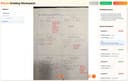
Frizzle is an innovative educational technology platform designed for K-12 mathematics classrooms. It acts as an intelligent operating system for math education, allowing teachers to transform handwritten student work into actionable learning insights. Frizzle's advanced AI analyzes each step of a student's problem-solving process, identifying common misconceptions in mathematics. With training on approximately 1.4 million pages of real student work, it can pinpoint specific areas where students struggle, such as distributive property or algebraic reasoning. This enables teachers to provide targeted instruction and intervene earlier, ultimately enhancing learning outcomes.
Frizzle dramatically reduces the time teachers spend grading assignments by automating the analysis of student work. Teachers can upload stacks of papers, and within minutes, receive detailed dashboards that highlight which students are struggling and which concepts need reteaching. This allows educators to focus more on instruction rather than administrative tasks, providing them with step-level feedback that enhances their teaching strategies.
Frizzle prioritizes privacy and security by ensuring that student work is never used to train its AI models. The platform complies with FERPA and COPPA regulations, employs end-to-end encryption for data protection, and guarantees that schools retain ownership of their educational data. This commitment to security allows educators to access meaningful instructional insights while keeping student information safe.
Frizzle supports multiple educational standards frameworks, including the Common Core State Standards (CCSS), TEKS, and various state-specific standards. This flexibility allows educators to align their teaching practices with the standards relevant to their curriculum, ensuring that students receive a comprehensive and effective mathematics education.