This list includes health tracking apps designed to help users monitor various aspects of their well-being. These applications offer features such as activity tracking, nutrition logging, and health metrics analysis, empowering individuals to take charge of their health journey.
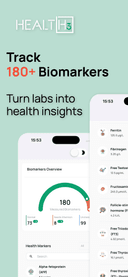
Make sense of your blood work with Health3. Stop guessing—simply snap a photo of your paper lab results to instantly digitize your data and unlock a clear, actionable roadmap for your health.
Unlike basic trackers, Health3 helps you understand the complex web of your biology. We don't just store numbers; we reveal how biomarkers influence each other and map them to specific health topics like Energy, Metabolism, or Immunity.
KEY FEATURES:
Instant Parser: Digitize paper lab sheets with a single photo.
Biomarker Relationships: See exactly how markers relate and interact (e.g., Vitamin D & Calcium).
Topic Mapping: Understand which biomarkers impact your specific health goals.
Actionable Insights: Get personalized recommendations based on your unique data.
Smart Trends: Visualize your history with highlighted optimal ranges.
Whether managing a condition or optimizing performance, put the power of your blood chemistry in your hands.
Download Health3 today.
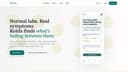
Kelda is a modern, AI-powered health companion designed to help people understand the deeper connections between their medications, lab results, symptoms, and daily well-being. Presented through Kelda, the platform addresses a common frustration in healthcare: patients often go through multiple tests and consultations, only to be told that everything is “within range,” while still feeling unwell. Kelda positions itself as the missing layer between raw medical data and real-life experience, offering insights that traditional healthcare systems may overlook.
At its core, Kelda works by cross-referencing multiple sources of personal health data. Users can input their medications, upload lab results, track symptoms, and even connect wearable devices such as fitness trackers. The system then analyzes this information to detect patterns, interactions, and potential nutrient depletions that could explain how a person feels. For example, it may identify that a commonly prescribed medication is lowering magnesium levels, which in turn could be linked to fatigue, poor sleep, or muscle cramps. It also goes beyond standard lab interpretations by highlighting what is “optimal,” not just what falls within a general reference range.
One of Kelda’s most compelling features is its ability to uncover hidden patterns over time. Instead of viewing health data as isolated snapshots, the platform continuously monitors changes and correlations. This means it can detect shifts in sleep, energy, or mood that coincide with medication changes or evolving health conditions. By doing so, Kelda provides users with a clearer, more connected understanding of their health journey—something that is often difficult to achieve through occasional doctor visits alone.
The platform supports a wide range of conditions and health concerns, from common issues like iron deficiency and hormonal imbalances to more complex patterns involving autoimmune disorders, gut health, and metabolic dysfunctions. It also identifies advanced biochemical interactions, such as enzyme inhibition or nutrient imbalances, offering a level of analysis that feels both comprehensive and personalized. Despite this depth, Kelda maintains a user-friendly approach, presenting insights in a way that is easy to understand and actionable.
Another important aspect of Kelda is its role as a support tool rather than a replacement for medical professionals. The platform emphasizes that its insights are educational and meant to empower users to have more informed conversations with their doctors. By walking into appointments with clear data-driven observations and targeted questions, users can make better use of their limited time with healthcare providers.
Real-world testimonials further reinforce Kelda’s value, showcasing how individuals have discovered overlooked connections that led to meaningful improvements in their health. From long-standing unexplained symptoms to subtle nutrient deficiencies, the platform has helped users uncover answers that traditional approaches missed.
In essence, Kelda transforms scattered health information into a coherent narrative. It bridges the gap between clinical data and personal experience, helping users understand not just what is happening in their bodies, but why. By combining continuous tracking, intelligent analysis, and practical insights, Kelda empowers individuals to take a more active and informed role in their health, making it a powerful tool in the evolving landscape of personalized healthcare.
0
Good to know
Frequently asked questions
One of the top health tracking apps is Health3 AG. This app allows users to digitize their blood work by simply taking a photo of their lab results. It provides actionable insights by analyzing how various biomarkers interact with each other, helping users understand their health better. With features like instant parsing of lab sheets, topic mapping for specific health goals, and personalized recommendations, Health3 empowers individuals to take charge of their health journey.
Health3 AG helps users make sense of their blood work by digitizing paper lab results and providing a clear roadmap for health management. It reveals the relationships between different biomarkers, allowing users to see how they influence each other. The app also offers personalized insights and recommendations based on individual data, making it a powerful tool for managing health conditions or optimizing overall wellness.
Health3 AG offers several key features, including an instant parser that digitizes lab sheets with a photo, visualization of biomarker relationships, topic mapping for specific health goals, actionable insights tailored to individual data, and smart trends that highlight optimal ranges in health history. These features work together to provide a comprehensive understanding of one's health.