Best Competitor Analysis Tools
Know what the competition shipped before their customers do.
The best competitor analysis tools for tracking rival products, ads, pricing, and strategy — competitive intelligence without the manual legwork.
- 1
 0
0AI tool to help companies track their competitors
- 2
 0
0ChampSignal tracks your competitors 24/7 across websites, news, Reddit, ads, and SEO. When something important changes, you know the same day. Most alerts are noise. ChampSignal uses AI to filter them so you only get notified when it actually matters. A price drop. A new feature launch. A shift in messaging. A Reddit thread gaining traction. Set up in under two minutes. Enter your website and we find your competitors for you. You get your first insights right away. What you get: Website changes like pricing, features, and messaging. News and Reddit mentions. Google and Meta ad tracking. SEO rankings and backlinks. Email and Slack alerts on your schedule. Need deeper analysis? Ask Champ, your AI competitive intelligence analyst. It knows everything we've tracked and gives you instant answers, battlecards, trend analysis, and positioning advice. No manual research needed. A competitive intelligence analyst costs $80K+ a year. ChampSignal gives you the same coverage for $39/month. Try it free for 14 days.
- 3
 0
0Competitor Analysis Tool — AI Teardown of Rivals | Probedex
competitor analysis tool·business resourceProbedex is an AI-powered SaaS competitor research tool for founders, indie hackers, marketers, and growth teams. It helps users discover fast-growing SaaS competitors, analyze their traffic, SEO keywords, backlinks, ads, social mentions, revenue signals, and positioning, then turn those insights into actionable growth teardown reports.
- 4
 0
0BrandScout.io is the command center for leaders navigating crowded markets. It combines competitor discovery, market intelligence, and proven strategic doctrines into one platform — helping SMBs, SaaS, and e-commerce leaders move from guesswork to confident execution. With BrandScout, you can: • Discover & Track Competitors – Instantly surface direct rivals with our AI-driven competitor database. • Run Battle-Tested Analyses – PESTEL, SWOT, Porter’s Five Forces, Ansoff, and more — delivered in minutes instead of months. • Match the Right Doctrine – Apply proven offensive and defensive market strategies (based on Jorge A. Vasconcellos e Sá) to your exact situation. • Get Tailored Recommendations – AI-powered guidance shows when to attack, defend, or reposition. • Orchestrate Campaigns – Translate strategy into action with campaign structuring tools that plug into your existing workflow. By compressing months of trial-and-error into minutes of actionable clarity, BrandScout equips leaders to outsmart, outmaneuver, and outgrow competitors — no matter how dense or aggressive the market.
- 5
 0
0Analook is an advanced AI-powered competitive intelligence platform built for founders, startups, marketers, agencies, investors, and growth teams that want to understand exactly how competing companies attract customers, generate traffic, position their products, and scale their businesses. Instead of spending countless hours manually researching competitors across dozens of different websites and tools, Analook centralizes the entire process into a single report that can be generated in about 60 seconds simply by entering a company’s website URL. Traditional competitor research often requires switching between SEO platforms, traffic analysis tools, social media channels, Product Hunt pages, GitHub repositories, pricing pages, review platforms, and web archives. Analook eliminates this fragmented workflow by automatically collecting and analyzing data from more than fifteen different sources simultaneously. The platform gathers information from traffic intelligence providers, SEO databases, Google Trends, social media platforms, Product Hunt, GitHub, the Wayback Machine, and other publicly available sources to create a comprehensive view of a company's online presence and growth strategy. One of the platform’s most distinctive features is its AI-driven analysis engine. Rather than overwhelming users with spreadsheets and disconnected metrics, Analook interprets the data and provides an intelligent assessment of what is actually driving a competitor’s growth. The AI identifies key growth channels, highlights strategic advantages, evaluates marketing effectiveness, and explains why certain companies are outperforming others. This allows users to focus on decision-making rather than spending hours trying to understand raw analytics. The platform provides a complete competitive intelligence report that covers multiple business dimensions. Users can examine traffic estimates, SEO performance, content strategies, social media engagement, community growth, Product Hunt performance, open-source activity, and overall market visibility. By bringing all of this information together, Analook helps users understand not only where competitors are today, but also how they got there and where future opportunities may exist. A major component of Analook is its proprietary Strategy Radar system. This feature evaluates companies across various growth categories and presents the results in a visual format that makes strategic strengths and weaknesses easy to understand. Users can quickly identify whether a company excels in search engine optimization, content marketing, social media growth, community engagement, product-led growth, developer adoption, or brand awareness. This strategic overview helps businesses benchmark themselves against competitors and identify areas where improvements could generate the greatest impact. For SEO professionals and content marketers, Analook provides valuable insights into competitor search strategies. Users can uncover keyword opportunities, analyze organic traffic patterns, study content performance, and identify topics that are driving visibility within a particular market. By understanding what competitors rank for and how they structure their content, businesses can develop more effective SEO campaigns and content marketing strategies. The platform also helps startups and SaaS companies reverse-engineer successful growth models. Users can analyze how competitors acquire customers, what channels contribute most to growth, how they position their products, and which marketing initiatives appear to be producing results. This information can be especially useful for early-stage founders looking to validate business ideas, refine their positioning, or identify gaps in the market. Another valuable capability is competitor comparison. Rather than analyzing a single company in isolation, Analook allows users to compare multiple businesses side by side. These comparisons reveal differences in traffic, audience reach, growth channels, pricing approaches, social influence, and overall market presence. This feature helps organizations understand where they stand relative to competitors and what strategic adjustments might be necessary to improve performance. For growth-focused teams, Analook offers Growth Audits that provide a broader evaluation of a company’s online presence and market performance. These audits identify strengths, weaknesses, opportunities, and potential risks, making them useful for strategic planning, investor research, market analysis, and business development initiatives. Developers and technical teams can integrate Analook directly into their existing workflows through a REST API and MCP server. This allows competitive intelligence reports to be generated programmatically and consumed by AI agents, internal dashboards, automation systems, and custom applications. Compatibility with platforms such as Claude Desktop, Cursor, and other AI-powered environments makes it possible to automate competitor monitoring and research tasks that would otherwise require substantial manual effort. The platform is particularly valuable for SaaS founders, startup teams, product managers, growth marketers, agencies, consultants, venture capital firms, and business analysts who need fast, reliable, and actionable market intelligence. Instead of relying on assumptions or incomplete information, users gain access to a data-driven understanding of their competitive landscape. Beyond the software itself, Analook publishes educational content focused on competitive intelligence, SEO analysis, startup growth, market research, and Product Hunt launch strategies. These resources help users learn best practices for competitor analysis and develop more effective growth strategies based on real-world examples and proven frameworks. What makes Analook especially compelling is its emphasis on actionable insights rather than data collection alone. Many analytics tools provide metrics but leave users responsible for interpreting them. Analook takes a different approach by combining data aggregation, AI-powered analysis, strategic evaluation, and growth recommendations into a unified experience. This significantly reduces the time required to understand competitors and uncover growth opportunities. Overall, Analook serves as a modern competitive intelligence solution that transforms a simple website URL into a comprehensive business analysis. By combining AI-generated insights, SEO intelligence, traffic analysis, social media monitoring, growth audits, strategic benchmarking, competitor comparisons, and developer-friendly integrations, the platform enables businesses to make smarter decisions, discover new opportunities, understand market leaders, and build more effective growth strategies based on real competitive data rather than guesswork.
- 6
 0
0AdPeekr is a smart tool that tracks your competitors’ paid ads in real time. The moment a competitor launches a new ad on platforms like Instagram Ads or Google Ads you get an instant alert. Perfect for anyone running paid ads who wants to stay ahead, react faster, and outsmart the competition.AdPeekr is a smart tool that tracks your competitors’ paid ads in real time. The moment a competitor launches a new ad on platforms like Instagram Ads or Google Ads you get an instant alert. Perfect for anyone running paid ads who wants to stay ahead, react faster, and outsmart the competition.
- 7
 0
0ADSoar is an ad intelligence platform for performance marketers. Analyze competitor creatives, spot winning patterns, and scale campaigns faster with data-backed insights. Key features • Search any brand and view ads in one place • Identify long-running winners & scaling spikes (cadence + exposure trends) • Track market expansion across 50+ countries • Decode high-impact keywords, headlines, and CTAs • Export results for reporting and team collaboration Best for: E-commerce, DTC brands, media buyers, and agencies Website: https://adsoar.ai
- 8
 0
0Ahrefs has a generous free tier that allows you to view your domain ranking, track backlinks, view organic keywords, analyze page and backlink health, check out competitors and many more. Once you sign up and connect your domain, you'll get weekly reports on your SEO progress.
- 9
 0
0MarketScope is an AI market research and product idea validation tool that helps startups and entrepreneurs analyze competitors, discover market gaps, and evaluate business viability before development. Using automated competitor analysis and demand signals from public data, MarketScope generates structured reports and actionable insights in minutes. It’s ideal for founders, indie hackers, product managers, and innovators who want to reduce risk and build products with real market demand.
- 10
 0
0Tracetify is an evidence-backed competitor launch research tool for founders, marketers, and product teams studying how successful software products found their first users. A visitor enters any public competitor URL, and Tracetify searches twelve publicly available data sources to reconstruct a dated timeline of the product’s early launch and distribution activities. The platform organizes public signals such as announcements, directory entries, community posts, search visibility, integrations, marketplace appearances, and founder-led outreach into one research workspace. Instead of presenting a vague summary, Tracetify points each trace to its underlying public evidence and clearly distinguishes corroborated facts from analysis or inference. This makes it easier to assess why a particular tactic may have worked, when it happened, and how confident a team should be in the conclusion. The goal is not to copy another company blindly; it is to help researchers identify relevant, reusable patterns while keeping the original source context visible. Teams can use Tracetify for competitive research, launch planning, growth strategy workshops, market analysis, SEO investigation, and prospecting for integration or community opportunities. A startup founder can explore how comparable products entered a niche. A marketer can map early acquisition channels. A product team can create a shared briefing before making positioning or distribution decisions. Researchers can also compare the order of initiatives, identify likely dependencies between channels, and return to the original public evidence whenever a conclusion needs review. The service is designed around transparent research rather than automated imitation. Its timelines bring fragmented public information together, while the evidence links make it possible to verify the context behind every useful signal. This supports more informed discussions about positioning, launch sequencing, distribution experiments, and which growth practices may fit a team’s own market. It also saves time that would otherwise be spent switching between search results, archived pages, product directories, and community threads. Tracetify offers guest traces for quick exploration and a free plan, with optional one-time credit packs and an unlimited subscription for deeper ongoing research. It is built for people who want practical early-growth intelligence grounded in public, reviewable evidence rather than unsupported claims.
- 11
 0
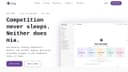
0mia is an AI-powered market intelligence platform built to help growth-focused teams stay ahead in markets that never slow down. Positioned as a purpose-built alternative to generic conversational AI tools, mia continuously tracks competitors, customer signals, and market developments, transforming fragmented data into structured, actionable insights delivered directly to your dashboard, inbox, or Slack. Instead of reacting to change, teams using mia operate with always-on intelligence that keeps them proactive and strategically aligned. Unlike general AI systems designed for broad tasks, mia is engineered specifically for competitor tracking, market research, and growth strategy. It combines automated monitoring with compliance-first data governance, aligning with GDPR, the EU AI Act, and ISO 27001 standards. This enterprise-grade foundation ensures that insights are not only powerful but also secure, transparent, and trustworthy—critical for modern organizations operating in regulated environments. The platform stands out through its integrated intelligence modules, all unified within a single workflow. The Voice of Customer module aggregates sentiment and feedback from multiple sources, enabling teams to prioritize product roadmaps based on real user signals rather than assumptions. Product Match analyzes product–market fit through structured SWOT assessments and positioning gap analysis, helping businesses validate strategy with data. Competitor Watch automates competitor tracking with real-time alerts for launches, pricing changes, and strategic moves. Market Radar continuously scans trends, regulations, and emerging opportunities, surfacing insights before they become obvious to the wider market. Getting started with mia is intentionally simple. Users input information about their business, competitors, and tracking goals. From there, the AI engine continuously scans and analyzes relevant signals, delivering structured reports and automated alerts within minutes. Reports can be generated with a single click and exported as PDF, Word documents, or slide decks—making it easy to share intelligence across teams and leadership. mia emphasizes measurable business outcomes. It claims to accelerate insight discovery by up to 97%, replacing weeks of manual research with structured outputs delivered almost instantly. Teams report faster go-to-market cycles—between 30% and 50% improvements—along with tangible revenue growth and proven ROI. By removing the friction of manual data gathering and scattered analysis, mia enables organizations to focus on strategic execution rather than information hunting. The platform is designed for companies at every stage of growth. Startups can validate markets and understand competitors without enterprise-level costs. SMEs gain advanced intelligence capabilities typically reserved for large corporations. Enterprises can unify intelligence across departments, products, and regions while maintaining compliance and governance standards. Trusted by growth teams at global brands such as AWS, Bayer, Yaskawa, Signify, and Bosch, mia positions itself as the intelligence layer that transforms research from a periodic task into a continuous capability. Its core philosophy is simple: competition never sleeps, and neither should your market intelligence. By turning weeks of manual market research into automated, ongoing insights, mia empowers organizations to move faster, make smarter decisions, and scale with confidence.
- 12
 0
0AdFox is an AI-powered ad intelligence platform designed for marketers, media buyers, and UA teams to monitor and analyze competitor advertising campaigns. It aggregates real ad creatives across 30+ media networks, covering games, apps, and websites, enabling users to track messaging, creative trends, and performance insights in one unified interface for smarter, data-driven campaign decisions.
- 13
 0
0Adligator is more than just an ad aggregator; it’s a sophisticated AI tool designed to give businesses, marketers and affiliate marketologists a strategic advantage in the highly competitive world of online advertising. By aggregating ads from major platforms like Facebook, Instagram, Facebook Messenger, and the Audience Network, Adligator enables users to dissect and understand their competitors' marketing strategies. This service provides a granular view into ad placements, formats, audience targeting, and performance metrics, empowering businesses to craft data-driven advertising strategies that drive results.
- 14
 0
0WebComparis is an AI-driven platform that transforms how businesses analyze competitor websites. Instead of spending hours manually reviewing pages, comparing screenshots, and building spreadsheets, WebComparis delivers structured, data-driven insights in minutes. Understanding why competitors website or landing page outperforms yours is not simple. Messaging differences can be subtle. User experience gaps can be invisible from the inside. Technical weaknesses often go unnoticed. At the same time, existing tools either focus purely on technical SEO metrics or require advanced expertise to interpret results. WebComparis bridges this gap by combining technical analysis with strategic and positioning insights — in a format anyone can understand. Using the platform is simple. Enter up to five website URLs, and the AI engine crawls, scans, and evaluates each site across multiple dimensions. Within minutes, you receive a comprehensive comparison covering content clarity, business positioning, technical performance, user experience quality, trust signals. The results highlight not only what competitors are doing differently, but why those differences matter. One of WebComparis’ most powerful features is its Gap Analysis. The platform maps competitors across a positioning matrix, revealing strategic whitespace in your market. This allows businesses to identify untapped opportunities, differentiate more clearly, and move faster than competitors. Instead of reacting, you can proactively shape your positioning. For agencies and consultants, WebComparis provides exportable PDF reports that present insights in a professional and structured format. These reports are ideal for client presentations, pitches, board meetings, and strategic workshops. The data is clear, visual, and ready to share. WebComparis is designed to fit modern workflows. There are no subscriptions or long-term commitments. The platform operates on a credit-based model, so users only pay for what they use — and credits never expire. Technical analysis is free, allowing users to explore the platform risk-free before investing. The platform is used by web agencies benchmarking client sites, marketing teams preparing product launches, businesses and solopreneurs selling from website, freelancers building data-backed proposals, startups validating positioning before entering the market, and investors assessing digital competitiveness.
- 15
 0
0MarketScope is an AI-powered startup idea validation and market research platform built for founders, indie hackers, and early-stage startups. The platform helps entrepreneurs analyze startup ideas by mapping competitors, identifying market gaps, evaluating execution complexity, and uncovering strategic opportunities before building a product. Instead of relying only on generic AI responses or basic Google searches, MarketScope generates structured market intelligence reports that include: - competitor analysis - market viability insights - opportunity detection - customer pain points - strategic recommendations - pricing and positioning observations - execution risk analysis MarketScope is designed to help founders understand not only whether demand exists, but also how competitive, fragmented, or operationally difficult a market may be. The platform supports research across SaaS, AI products, marketplaces, local businesses, micro SaaS ideas, and niche startup concepts. By combining AI-driven analysis with structured market workflows, MarketScope helps reduce blind building and encourages smarter product decisions before investing significant time or money into development. Whether you are exploring a new startup idea, validating a side project, or researching a market opportunity, MarketScope helps turn raw ideas into actionable market insights. Validate faster. Build smarter.
- 16
 0
0Orbbit helps product marketing and sales teams track competitor moves, find high-intent leads, and generate personalized outreach. It monitors pricing, positioning, product changes, funding, hiring, and new entrants, then turns that into clear insights, battlecards, alerts, and tailored messages your team can act on fast.
- 17
 0
0ABWatcher is a competitive intelligence and conversion optimization platform designed to help marketers, growth teams, product managers, founders, and conversion rate optimization professionals discover what successful companies are testing on their websites. Instead of relying on assumptions, outdated case studies, or random experimentation, ABWatcher gives users direct visibility into live A/B tests being conducted by hundreds of established brands. By continuously monitoring public-facing web pages, the platform provides actionable insights into the optimization strategies that companies are actively using to improve conversions, engagement, and business performance. At its core, ABWatcher is built around the idea that some of the most valuable marketing knowledge is hidden inside ongoing experiments. Companies spend significant amounts of money testing headlines, call-to-action buttons, pricing pages, signup forms, landing page layouts, and countless other conversion-focused elements. However, the results and reasoning behind these experiments are rarely shared publicly. ABWatcher bridges this gap by automatically detecting and analyzing live tests, allowing users to learn from the optimization efforts of companies that invest heavily in experimentation. The platform continuously monitors a curated database of more than one thousand brands across various industries. Each day, ABWatcher revisits and snapshots high-priority pages that are likely to contain active experiments. By using isolated browsing environments, multiple visits, and advanced detection methods, the system identifies differences between page variations that may indicate a legitimate A/B test. This process enables users to stay informed about new experiments as they appear rather than relying on historical data or manually checking competitor websites. One of ABWatcher’s most valuable capabilities is its ability to distinguish genuine A/B tests from ordinary website changes. The platform uses a combination of experiment vendor detection, variation analysis, and comparison techniques to identify real testing activity. This reduces false positives and helps users focus on meaningful experiments rather than routine design updates or content revisions. Once a test is detected, artificial intelligence performs a visual analysis of the competing variants. Instead of simply highlighting that a change exists, the platform explains the likely hypothesis behind the experiment. Users receive plain-English summaries describing what is being tested, where the change appears on the page, and what business objective the experiment may be trying to improve. This makes complex optimization research accessible even to users who are not experts in conversion rate optimization. ABWatcher provides several powerful research tools. Users can browse a feed of the most significant experiments discovered across the monitored brand database. These experiments are ranked according to factors such as recency, confidence level, popularity, and potential business impact. The platform also highlights unusual conversion patterns and uncommon optimization tactics that may otherwise go unnoticed, helping users uncover innovative ideas before they become widespread industry practices. In addition to competitor research, ABWatcher offers functionality for analyzing a user’s own websites. Businesses can add their pages to the platform and receive AI-generated recommendations for potential A/B tests. These suggestions are informed by real experiments observed across high-performing companies, providing a practical starting point for optimization efforts. Rather than generating generic advice, the platform connects recommendations to actual market behavior and proven testing trends. The service is available through multiple subscription tiers, allowing individuals and teams to choose the level of access that matches their needs. Higher-tier plans provide access to the full monitored company database, expanded site tracking capabilities, multiple user seats, and a larger number of AI-generated testing ideas. This scalability makes the platform suitable for freelancers, startups, agencies, growth teams, and larger organizations. Overall, ABWatcher serves as a specialized research assistant for website optimization. By combining large-scale web monitoring, experiment detection technology, artificial intelligence analysis, and actionable recommendations, the platform helps users discover what successful companies are testing, understand the reasoning behind those experiments, and apply similar insights to improve their own websites. The result is a more informed, data-driven approach to conversion optimization that reduces guesswork and accelerates learning.
- 18
 0
0🏅 ChromeWinner is "ahrefs for extensions". Analyze the competition, learn from the best and promote your extension. Receive daily updates on how your extensions perform and what competitors do. Grow your user base organically in Chrome Web Store by learning from already successful extensions. Subscribe to daily email digest and receive detailed updates: 📈 SERP for Chrome Store: monitor search results in the Chrome Web Store 👤 daily user growth: know which extensions acquire users faster ⚠️ get alerts when there are new players in the market (new competitors) ✍️ new reviews and rating changes - use competitors' feedback for your own profit ✨ get notified when competitors release new versions
- 19
 0
0Open-core social listening and keyword tracking for Reddit, Hacker News, LinkedIn, and more. Real-time brand and competitor mention alerts. ChatterSift is an open-core social listening and keyword tracking SaaS that helps founders, marketers, and customer support teams monitor online conversations in real time. Track mentions of your brand, products, competitors, and industry keywords across Reddit, Hacker News, LinkedIn, and other communities — all from a single dashboard. Set up custom keyword filters and ChatterSift will surface relevant posts and comments as they happen, so you can engage with prospects, catch product feedback, spot competitor mentions, and join conversations before they go stale. Common use cases include brand monitoring, lead generation, competitor tracking, customer research, PR crisis detection, share-of-voice measurement, and finding buying-intent discussions in the communities where your customers actually hang out. Unlike closed enterprise platforms, ChatterSift is built on an open-core model — giving developers and growing teams the flexibility to self-host, extend, and integrate without getting locked into rigid plans or paying enterprise prices for basic mention tracking. It's a modern, transparent alternative to Sprout Social, Syften, ParseStream, Brand24, Mention, Awario, and similar social media monitoring tools. Whether you're an indie hacker tracking your first ten users, a B2B SaaS marketer measuring share of voice, or a support team racing to answer questions on Reddit and Hacker News, ChatterSift turns scattered online chatter into timely, actionable signals. Start tracking keywords at chattersift.com.
- 20
 0
0Brand Tracker by Conjointly is an automated, enterprise-grade brand tracking solution that delivers sophisticated brand health and competitive metrics without the legacy overhead. Brand Tracker by Conjointly changes this model with automated, enterprise-grade tracking at a fraction of traditional costs. No bloat, no hidden costs, no multi-month delays.
- 21
 0
0Whop Trends is a powerful market intelligence platform designed to help entrepreneurs, affiliates, investors, and digital product creators discover high-performing products inside the Whop ecosystem. By tracking over 194,000 products daily, Whop Trends provides real-time insights into revenue, growth, competition, affiliate commissions, and niche opportunities—giving users a clear data-driven edge in fast-moving online markets. Instead of guessing which digital communities, memberships, trading groups, e-commerce courses, or software tools are gaining traction, Whop Trends surfaces products already generating $10K+ per month and beyond. The platform allows users to filter by revenue, affiliate percentage, age, rating, user count, and category to identify proven winners or underserved niches. Whether someone is launching their own product, searching for affiliate opportunities with 30%+ commissions, or researching market demand before building, Whop Trends delivers actionable intelligence in minutes. At the core of the platform are deep product pages packed with historical analytics. Each listing includes up to four charts showing member growth, revenue trends, reviews, and ratings over time. Timelines highlight key changes, while competition scoring and category benchmarks help users evaluate saturation levels. This transforms raw marketplace listings into structured, decision-ready data. Instead of manually browsing hundreds of pages, users can instantly see which products are accelerating, plateauing, or declining. Revenue and affiliate intelligence are among Whop Trends’ standout features. The system estimates monthly earnings for thousands of products, helping users understand pricing power and conversion dynamics within specific niches. For affiliates, filtering by commission rate reveals lucrative partnership opportunities backed by performance data. For founders, benchmarking tools clarify whether a niche is crowded or ripe for disruption. Beyond product tracking, Whop Trends includes a directory of over 320 apps within the Whop ecosystem, enabling users to discover trending tools and verified developers. The Product Checker tool provides instant grading and revenue estimates for any Whop product, even without an account. Meanwhile, the Revenue Calculator projects potential earnings by category and pricing structure, using benchmarks derived from active marketplace data. The platform is built for speed and clarity. Users can sort columns, apply advanced filters, export CSV files, and monitor daily updates. Live market data ensures that decisions are based on current performance rather than outdated screenshots or anecdotal claims. With 600+ sellers, researchers, and investors already using the platform, Whop Trends positions itself as a competitive research engine rather than just a directory. Unlike subscription-based analytics tools, Whop Trends offers a one-time lifetime access model priced at $99, with no recurring fees. Users gain access to the full database, complete chart histories, advanced search capabilities, revenue estimates, affiliate data, and continuous updates. A free preview tier allows browsing of public product pages and limited chart data before upgrading. Ultimately, Whop Trends transforms marketplace exploration into strategic advantage. By combining large-scale product tracking, revenue estimation, affiliate insights, and competitive analysis into one streamlined interface, it empowers builders and marketers to stop guessing and start validating ideas with real numbers. For anyone looking to launch, invest, or promote within the Whop ecosystem, it delivers the clarity needed to identify winners early—and act before the crowd.
- 22
 0
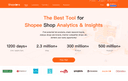
0Shopdora is a market intelligence tool built for Shopee sellers who need visibility beyond their own store data. While Shopee Seller Center focuses on internal performance, Shopdora shows how products, categories, keywords, and competitors perform across the marketplace. With Product Research, sellers discover products with real demand using sales, revenue, growth, pricing, and lifecycle data. Category Research helps evaluate market size, competition, and new product opportunities before entering a category. Market Analysis reveals trends, price distribution, and competitive intensity to support positioning decisions. Shopdora also provides Traffic & Keyword Analysis, uncovering traffic-driving keywords, unused keyword opportunities, and organic versus paid traffic signals. Keywords Mining exposes platform-level keyword data such as search volume, trends, and competition that are not available in Seller Center. For deeper insights, sellers can analyze products at the SKU level, track performance changes over time, and use AI Review Analysis to extract customer feedback at scale. Together, these features help sellers reduce guesswork and make decisions based on real market behavior.
- 23
 0
0DiffHook is an API-first website monitoring platform designed for developers, SaaS teams, automation builders, and businesses that rely on real-time web change detection. Unlike traditional monitoring tools focused on dashboards and email notifications, DiffHook delivers structured webhook alerts the moment a website changes. Businesses can monitor competitor pricing, product updates, compliance pages, status pages, APIs, RSS feeds, and public web content without building complex scraping infrastructure. The platform integrates seamlessly with automation tools like n8n, Zapier, Make, Slack, Discord, Airtable, and custom workflows through powerful webhook delivery. Teams can create monitors in minutes by simply adding a URL, choosing a webhook endpoint, and defining monitoring intervals. DiffHook automatically detects meaningful changes while filtering unnecessary layout noise, helping teams focus only on actionable updates. SaaS founders use DiffHook to track competitors and market movements. Marketing teams monitor landing page changes and campaign updates. Compliance teams receive instant alerts when regulations or policies change online. Developers benefit from reliable API access, structured JSON payloads, retry mechanisms, and scalable monitoring infrastructure. DiffHook removes the complexity of self-hosted monitoring systems while delivering enterprise-grade reliability at affordable pricing. Its lightweight developer-first approach makes it ideal for startups, agencies, automation engineers, and technical operators looking for real-time monitoring without expensive enterprise contracts. With transparent pricing, flexible integrations, and fast webhook delivery, DiffHook transforms website changes into actionable automation events. Start monitoring the web smarter and automate your workflows with DiffHook today.
- 24
 0
0GetMentions AI is an AI search visibility and brand mention execution platform for brands and agencies that want to influence AI answers, not just monitor them. It tracks how brands appear across ChatGPT, Gemini, Google AI Mode, and Perplexity, shows the citations and source pages shaping those answers, and helps teams uncover where competitors are being recommended while their own brand is missing. The platform combines AI visibility tracking, citation intelligence, competitor benchmarking, sentiment analysis, and mention gap analysis into one workflow built around how LLMs actually form answers. What makes GetMentions AI different is its core moat: brand mention execution. Most AI visibility tools stop at analytics and leave teams to figure out the next step themselves. GetMentions AI is positioned around solving that gap by turning AI citation insights into actionable brand mention opportunities, then helping users move from discovery to placement. Its workflow is designed to take teams from tracking, to analyzing cited sources, to finding competitor gaps, to shortlisting the highest-impact opportunities, and finally to managed execution. That execution layer is what sets the product apart. GetMentions AI supports managed placement across a 192,000+ partner site inventory and is built to connect analytics directly to outcomes. Instead of simply showing which sources influence AI answers, it helps brands get placed on those sources and improve the odds of being mentioned in future responses. In a market crowded with tracking tools, GetMentions AI’s moat is clear: it does not just tell you where you are missing. It gives you a path to get mentioned.
- 25
 0
0AIOverview is a modern AI visibility and brand intelligence platform designed to help businesses understand how artificial intelligence systems perceive and recommend their brands online. The platform focuses on tracking brand presence across leading AI-powered search and conversational systems such as OpenAI ChatGPT, Google Gemini, Claude, Perplexity, and Google AI Overviews. As AI-driven search experiences become increasingly important in digital marketing, AIOverview positions itself as a specialized solution for businesses that want to monitor, analyze, and improve their visibility within these emerging AI ecosystems. The core purpose of AIOverview is to help companies discover exactly how AI models describe, rank, and recommend their brands when users ask questions related to their industry. Instead of focusing only on traditional SEO rankings, the platform expands into the growing field of AI search optimization. Businesses can enter their website URL into the system, and the platform automatically analyzes the brand across multiple AI models and search environments. This allows companies to see whether AI systems mention them positively, negatively, or not at all when responding to user prompts. One of the platform’s most important features is its multi-LLM analysis system. AIOverview simultaneously queries multiple AI platforms, including ChatGPT, Gemini, Claude, Perplexity, and Google AI Overviews, providing businesses with a broader understanding of their digital visibility. This multi-model approach is valuable because different AI systems may produce different recommendations, rankings, or brand mentions based on their training data and algorithms. By analyzing several AI ecosystems at once, companies can identify strengths, weaknesses, and inconsistencies in their AI presence. The platform also includes AI prompt tracking tools that allow users to monitor how AI assistants respond to industry-related searches and prompts. Businesses can track mentions for specific keywords, services, or custom prompts relevant to their niche. This helps brands understand which prompts generate visibility and which areas require improvement. Additionally, AIOverview offers AI Overview monitoring specifically for Google’s AI-generated search summaries, helping companies analyze whether they appear in these highly visible answer boxes above traditional search results. Competitor intelligence is another major component of the platform. AIOverview enables users to compare their AI visibility directly against competitors, offering side-by-side benchmarking and analysis. This allows businesses to identify which competitors dominate AI-generated recommendations and understand what strategies may be contributing to their success. The platform also tracks keyword rankings and SERP positions across multiple devices and locations, combining traditional SEO metrics with AI visibility insights. To support long-term optimization efforts, AIOverview provides score history and trend monitoring. Businesses can track changes in their visibility scores over time through automated snapshots and reports. These analytics help users measure whether their optimization strategies are improving their presence within AI-driven search systems. The platform also generates downloadable PDF reports containing detailed insights, rankings, competitor data, and recommendations, making it useful for agencies, consultants, and internal marketing teams presenting data to stakeholders or clients. AIOverview heavily promotes automation and AI-powered recommendations. The platform claims to provide personalized suggestions for improving brand visibility by analyzing weak spots and identifying opportunities for better AI search performance. Users can also schedule recurring monitoring and reporting sessions on a weekly or monthly basis to maintain continuous oversight of their AI search presence. The website presents itself as a forward-thinking solution built for the future of digital discovery, where AI assistants and AI-generated search answers are becoming increasingly influential in consumer decision-making. By combining AI prompt tracking, competitor benchmarking, real-time SERP data, and visibility analytics into a single platform, AIOverview aims to help businesses adapt to the changing landscape of AI-powered search and reputation management.
Frequently asked questions
The best competitor analysis tools include Competitor Research, which helps companies track their competitors using AI. ChampSignal offers 24/7 tracking of competitors across various platforms and provides alerts for significant changes. Probedex is an AI-powered tool that analyzes traffic, SEO keywords, and more for SaaS competitors. BrandScout combines competitor discovery and market intelligence, while Analook centralizes competitor research into a single report. Other notable tools are AdPeekr for tracking paid ads, ADSoar for ad intelligence, Ahrefs for SEO analysis, MarketScope for market research, and Tracetify for launch research.
ChampSignal tracks competitors continuously across websites, news, Reddit, ads, and SEO. It filters alerts using AI to notify users only about significant changes, such as price drops or new feature launches. Users can set up the tool quickly and receive insights on website changes, news mentions, ad tracking, and SEO rankings, making it a comprehensive solution for competitive intelligence.
Probedex is an AI-powered SaaS competitor research tool that helps users discover fast-growing competitors and analyze their traffic, SEO keywords, backlinks, ads, and social mentions. It provides actionable growth teardown reports and includes features like watchlist monitoring for competitor domains, making it particularly useful for SaaS idea validation and market research.
Analook stands out due to its advanced AI-powered analysis engine that centralizes competitor research into a single report. It gathers data from over fifteen sources, providing insights into traffic, SEO performance, and marketing effectiveness. The platform also features a Strategy Radar system that visually evaluates companies across various growth categories, helping users identify strategic strengths and weaknesses.
AdPeekr is designed to track competitors' paid ads in real time, providing instant alerts when new ads are launched on platforms like Instagram and Google Ads. This tool is ideal for marketers who want to stay ahead of the competition and react quickly to changes in the advertising landscape.
MarketScope helps startups analyze competitors and discover market gaps using automated competitor analysis and demand signals from public data. It generates structured reports and actionable insights quickly, making it an excellent tool for founders and product managers looking to validate business ideas and assess market viability.
Tracetify is a research tool that helps teams study how successful software products found their first users. It reconstructs a timeline of a product's early launch and distribution activities by gathering data from various public sources. This allows teams to identify effective tactics and strategies while providing transparency through links to the original evidence.