Home
Auto list · updated automatically

Best AI Visibility Tools

See how ChatGPT, Gemini, and Perplexity talk about your brand.

AI visibility and GEO tools that track how your brand appears in ChatGPT, Gemini, Perplexity, and other AI answers — monitoring mentions, sentiment, and share of voice.

33Items
0Contributors
0Votes
  1. 26AIRankPilot

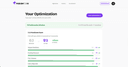
    AirRankPilot is an AI visibility platform built for local businesses and agencies that want to be found in both traditional search engines and modern AI assistants. Instead of overwhelming users with SEO complexity, AirRankPilot analyzes how AI and search engines perceive a business, highlights what’s missing, and tells users exactly what to do next. It identifies the questions customers and AI are asking, recommends the right articles and Google Business Profile posts, and helps generate SEO-ready, AI-friendly content automatically. With features like AI Brand Audits, AI Discovery insights, FAQ Schema generation, content planning, and performance tracking, AirRankPilot turns AI visibility into a clear, repeatable process—so businesses can focus on growth, not guesswork.

    0
  2. 27LLMClicks.ai

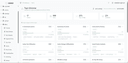
    LLMClicks.ai is the AI visibility tracker for agencies. Monitor brand mentions in ChatGPT, Perplexity, and Google AI. Run 120-point audits, map queries to content, benchmark competitors, and optimize for AI search results that drive real traffic. Contact Us LLMClicks.ai T-16, Software Technology Park of India, Opposite Garware Stadium, Chikalthana MIDC, Chhatrapati Sambhajinagar, Maharashtra, 431008, India +91 82372 37300 https://llmclicks.ai/ Find Us Online Facebook : https://www.facebook.com/llmclicksai Instagram : https://www.instagram.com/llmclicksai/ LinkedIn : linkedin.com/company/llmclicks-ai/ X : https://x.com/llmclicksai

    0
  3. 28FlipAEO

    FlipAEO is the first Strategic Content Engine designed for Generative Engine Optimization (GEO). As users shift from Google links to AI answers (like ChatGPT and Perplexity), FlipAEO helps brands transition from chasing ranking slots to owning the "Share of Answer." It is an end-to-end system that plans, researches, and publishes authority-grade content. Key Features Category Intelligence: Analyzes your specific niche to identify "content gaps" where competitors are silent, creating a data-backed 30-day authority roadmap. Answer-First Architecture: Content is structured for machine readability (NLP-optimized) while using an "Anti-AI Filter" to ensure a human, professional tone. How It Works The engine scans your industry to find high-value questions your competitors are missing. It generates comprehensive, factual articles designed to resolve user intent immediately. Content is auto-published to your site, building a compounding library of answers that capture AI traffic.

    0
  4. 29Publish for AI

    Publish for AI is a content optimization tool for bloggers and publishers losing traffic to AI Overviews. It doesn't write new content. It restructures what you already have so AI search engines can find, extract, and cite it. Paste your article, enter your keyword, and get 17 actionable outputs: optimized title and meta, AI ready intro paragraph, extractable answer blocks, People Also Ask sections, structured data suggestions, internal linking opportunities, and a full competitor analysis based on live Google SERP data. The tool researches your top 5 competitors in real time, identifies content gaps, and tells you exactly what to change, from heading structure to snippet ready formatting. Built for independent publishers, niche site owners, and content marketers at small teams. Not an AI writer. A strategic restructuring engine. Free plan available. Paid plans start at $9/month.

    0
  5. 30Oleno

    Oleno is the autonomous content engine built for programmatic SEO and LLM citation visibility. Traditional content tools generate articles. Oleno runs a complete system: discovering topics from your sitemap, grounding every piece in your knowledge base, and structuring content so it ranks in search engines and gets cited by AI models like ChatGPT, Perplexity, and Claude. The engine applies your brand voice and sales narrative to every article, runs 80+ QA checks to ensure accuracy and compliance, then publishes directly to your CMS. No prompts. No templates. No batch management. For B2B teams serious about organic growth, Oleno replaces the content ops stack with one autonomous system that compounds visibility across both discovery surfaces.

    0
  6. 31ShadowLock

    ShadowLock is a comprehensive AI risk detection and governance platform designed specifically for Managed Service Providers (MSPs), IT administrators, and security teams that need visibility and control over the growing use of artificial intelligence tools within organizations. As AI adoption accelerates across workplaces, many employees are using applications such as ChatGPT, Claude, Gemini, Copilot, and other AI-powered services without formal approval or oversight. This phenomenon, often referred to as “Shadow AI,” creates significant security, compliance, privacy, and legal risks for organizations. ShadowLock was created to help businesses identify, manage, and control these risks before they lead to data breaches, compliance violations, or costly incidents. The platform provides organizations with a centralized solution for detecting unauthorized AI usage across multiple environments, including web browsers, desktop applications, browser extensions, cloud services, and Microsoft 365 tenants. By combining endpoint monitoring, browser-level enforcement, and cloud application detection, ShadowLock offers broad coverage of the modern AI landscape. Its primary objective is to give organizations complete visibility into how AI tools are being used and what sensitive information may be exposed through them. One of the platform’s key strengths is its ability to detect a wide range of AI-related activities. ShadowLock can identify visits to AI websites, monitor the use of AI browser extensions, discover desktop AI applications running on company devices, and detect AI-powered features embedded within approved software platforms. It also distinguishes between personal and corporate AI accounts, helping organizations prevent employees from using unauthorized personal accounts to process business information. To reduce the risk of sensitive information leakage, ShadowLock includes advanced data protection capabilities. The platform can intercept file uploads, detect sensitive information being pasted into AI prompts, and even identify confidential data while users are typing. Rather than simply monitoring activity, it can actively enforce policies that block, warn, or allow specific actions based on organizational requirements. This enables businesses to prevent customer records, credentials, personally identifiable information (PII), protected health information (PHI), source code, contracts, and other confidential data from being submitted to unauthorized AI services. ShadowLock also addresses the compliance challenges associated with modern AI usage. Organizations operating under frameworks such as HIPAA, GDPR, CCPA, SOC 2, and other regulatory requirements can use the platform to strengthen governance controls and maintain detailed audit trails. Every enforcement action, policy decision, and detected event can be logged and exported, providing valuable evidence during audits, security reviews, compliance assessments, and cyber insurance evaluations. The platform is designed with scalability and ease of deployment in mind. A lightweight endpoint agent can be deployed silently through existing Remote Monitoring and Management (RMM) systems, minimizing disruption for users and administrators. Once installed, the agent works alongside a browser enforcement layer that automatically applies organizational policies across supported browsers. In addition, ShadowLock integrates with Microsoft 365 environments through Microsoft Graph to detect AI applications that have received OAuth permissions, providing visibility into AI-related risks that may exist outside traditional endpoint monitoring. For MSPs, ShadowLock offers a multi-organization dashboard that allows service providers to manage AI risk across multiple customer environments from a single interface. IT teams can monitor risk levels, review alerts, manage policies, track device inventories, and generate customer-facing reports. This centralized approach simplifies AI governance while helping providers demonstrate value to their clients. Privacy is another core principle of the platform. ShadowLock focuses on collecting risk signals rather than monitoring content. Sensitive information is classified locally on the device, and the platform is designed to avoid transmitting actual content, recording keystrokes, or storing uploaded files. Instead, it logs metadata and event information necessary for governance and compliance purposes while maintaining user privacy. Overall, ShadowLock serves as a proactive AI governance and security solution that helps organizations gain visibility into their AI surface, enforce data protection policies, reduce compliance exposure, and maintain control over rapidly expanding AI usage across their environments. By combining detection, enforcement, reporting, and compliance support within a single platform, it enables businesses to safely embrace AI while minimizing operational and regulatory risks.

    0
  7. 32Fallom

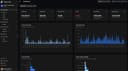
    Fallom is an AI-native observability platform for LLM and agent workloads that lets you see every LLM call in production with end-to-end tracing, including prompts, outputs, tool calls, tokens, latency, and per-call cost. We provide session/user/customer-level context, timing waterfalls for multi-step agents, and enterprise-ready audit trails with logging, model versioning, and consent tracking to support compliance needs. With a single OpenTelemetry-native SDK, teams can instrument apps in minutes and monitor usage live, debug issues faster, and attribute spend across models, users, and teams.

    0
  8. 33anewera

    anewera is an infrastructure platform built for the next evolution of the internet, where AI agents—rather than humans alone—become the primary systems that search, interpret, and interact with businesses. Its core mission is to make companies visible, understandable, and contactable by AI systems such as ChatGPT, Claude, and Perplexity through structured, machine-readable data instead of traditional human-only web pages. At its foundation, anewera transforms every participating company into an “agent-ready” entity. Each business receives a structured profile that is designed specifically for machine interpretation. This profile is composed of standardized files such as llms.txt, agent.json, and agent.md, which together define what the company does, how it should be described, and how it can be safely contacted. These files are not just metadata—they form a controlled interface between AI systems and real-world organizations, ensuring that every interaction is consistent, interpretable, and governed by explicit rules. A key component of the platform is its use of MCP and webMCP endpoints, which act as the communication layer between AI agents and businesses. Through these endpoints, AI systems can perform structured and permissioned actions. Instead of simply reading static information, an AI agent can actively interact with a company by requesting a quote, asking for pricing, scheduling a meeting, or initiating a callback. However, these actions are never open-ended or uncontrolled. Every possible interaction is pre-defined by the business itself and published as part of its agent profile, ensuring that AI-driven communication always follows approved pathways. Privacy and control are central principles of anewera. The platform is designed so that sensitive recipient details—such as personal emails, phone numbers, or internal contact points—are never exposed directly to AI agents. Instead, communication flows through structured, permission-based systems where every request is validated and processed according to predefined rules. This ensures that businesses maintain full control over how, when, and under what conditions they are contacted, even in an automated AI-driven environment. The onboarding system for companies is deliberately curated rather than open and unrestricted. Each business that wants to join anewera must go through a controlled intake process. During this process, its information is reviewed to ensure that it is properly structured, machine-readable, and compliant with the platform’s standards for agent interaction. Because quality and consistency are critical for AI systems to function correctly, the number of new companies added each day is limited. If capacity is reached, companies are placed on a waitlist until they can be reviewed and onboarded. Beyond structured profiles, anewera is also building an ecosystem aligned with modern AI infrastructure standards. It integrates with protocols like MCP and OpenAPI, and supports AI-readable formats such as llms.txt, allowing businesses to be discovered and understood not just through search engines, but directly within AI workflows and autonomous systems. This positions anewera as part of a broader shift toward an “agentic web,” where software agents operate as first-class users of the internet. In practical terms, anewera enables a future where a business does not need to be manually searched or contacted by humans alone. Instead, an AI agent can discover a company, understand its services, evaluate its rules of interaction, and initiate communication automatically within defined boundaries. This changes the nature of business discovery from passive web browsing to active machine-to-machine interaction. Overall, anewera represents a transition from traditional directories and websites into a new layer of AI-native infrastructure. It acts as a bridge between companies and autonomous agents, converting business information into structured, actionable intelligence while preserving privacy, governance, and control. In this model, companies are no longer just pages on the internet—they become structured digital entities that can safely participate in automated, intelligent workflows across the emerging AI ecosystem.

    0
Good to know

Frequently asked questions