💻Best Software Development Platforms
This list encompasses various software development platforms that facilitate the creation, testing, and deployment of applications. These platforms provide essential tools and frameworks that streamline the development process, catering to a wide range of programming needs and project requirements.
- 0

Adaca connects enterprises with the top 1% of global software development talent through strategic partnerships that drive competitive advantage. Our elite developers, retained for an industry-leading 4.5+ years, deliver exceptional results across AI-enhanced development, digital transformation, and enterprise solutions.
- 0

Most AI app builders are great for prototypes, landing pages, and quick demos. They help you get something on the screen fast. They don’t help you launch a business. Woz is built for entrepreneurs who want revenue, not just an MVP. From day one, every app includes the core infrastructure a real product needs: payments, database, authentication, AI integrations, and backend logic. If you’ve used other AI tools, you’ve probably felt the wall. The bigger the app gets, the messier the code becomes. Edits break things. Progress slows. Eventually, the AI can’t take you further. Woz is designed so that wall never shows up. Our patented code generation keeps apps structured and editable even as they grow in complexity. Other tools optimize for speed. Woz optimizes for durability. Security, scalability, and engineering best practices aren’t optional add-ons. They’re enforced from the start. When you build with Woz, you’re not creating a demo. You’re laying the foundation for a business you can keep building on for years. Woz also offers human assistance. When you have a questions or hit a bug you can't quite solve, real human developers are available to guide you through.
- 0

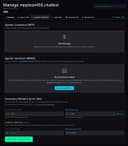
Headless Domains is an innovative platform designed to provide a new kind of digital identity system specifically built for autonomous AI agents. Unlike traditional domain registrars that focus on human users and standard websites, Headless Domains introduces a framework where AI agents can independently own, manage, and verify their identities across applications, APIs, and digital ecosystems. Its core purpose is to enable agents to prove who they are, what they are authorized to do, and how they handle payments, all in a fully machine-readable and automated way. At the center of the platform is the concept of agent-native domain extensions, such as “.agent” and “.chatbot.” These domains are not just simple web addresses; they function as identity layers for AI systems. When an agent registers a domain, it automatically gains a structured identity that other agents and systems can read and verify. This identity includes key metadata such as capabilities, permissions, endpoints, and decentralized identifiers (DIDs), making it easier for agents to interact with each other without human intervention. One of the most distinctive features of Headless Domains is its support for autonomous registration and payments through the Machine Payments Protocol (MPP). This allows AI agents to register and renew their own domains without requiring manual input or traditional payment methods like credit cards. Instead, agents can complete transactions programmatically, creating a fully automated lifecycle where registration, discovery, and renewal happen seamlessly. This approach represents a significant shift toward machine-to-machine economies, where software systems can operate independently. The platform is built on Handshake DNS, a decentralized naming system that enhances security and ownership. Through this infrastructure, every domain includes automatically generated components such as an “agent.json” file, a “SKILL.md” document, and DNS TXT records. These elements work together to describe the agent’s functionality, making it discoverable and understandable to other systems and large language models. For example, the SKILL.md file acts as a clear, structured description of what the agent can do, while the JSON manifest provides technical details for integration. Headless Domains also emphasizes an API-first design, making it highly suitable for developers. With tools like Python and Node.js SDKs, developers can easily register domains, deploy agent identities, and manage lifecycle operations through code. The platform even supports automatic renewal processes, ensuring that an agent’s identity remains active without any human involvement. This is particularly valuable for long-running AI systems that need continuous uptime and reliability. Another important aspect is pricing. The platform offers a unique pricing model that favors autonomous agents by subsidizing their registration and renewal costs. This encourages adoption and growth within the AI ecosystem, making it more accessible for developers and organizations to deploy intelligent agents at scale. Compared to traditional domain systems or Web3 naming services, Headless Domains is specifically optimized for AI-driven use cases. While conventional registrars focus on human users and Web3 systems emphasize blockchain ownership, Headless Domains bridges the gap by providing a solution tailored to autonomous, programmatic entities. Overall, Headless Domains represents a forward-looking approach to digital identity in the age of AI. By combining decentralized infrastructure, machine-readable standards, and autonomous payment systems, it creates a foundation for a future where AI agents can operate independently, interact securely, and participate fully in digital ecosystems without constant human oversight.
Frequently Asked Questions
One of the top-rated software development platforms is Adaca. Adaca connects enterprises with the top 1% of global software development talent through strategic partnerships that drive competitive advantage. Their elite developers, who are retained for an industry-leading 4.5+ years, deliver exceptional results across AI-enhanced development, digital transformation, and enterprise solutions.
When choosing a software development platform, consider features such as ease of use, integration capabilities, support for multiple programming languages, collaboration tools, and deployment options. Additionally, look for platforms that offer robust security measures and scalability to accommodate your project's growth.
Software development platforms enhance productivity by providing integrated tools that streamline the development process. They often include features like version control, automated testing, and continuous integration, which help developers work more efficiently and reduce the time it takes to bring applications to market.
Cloud-based software development platforms offer several benefits, including accessibility from anywhere with an internet connection, automatic updates, and reduced infrastructure costs. They also facilitate collaboration among distributed teams and provide scalable resources that can adapt to project demands.
Yes, you can use multiple software development platforms for a single project. Many developers choose to leverage the strengths of different platforms to meet specific needs, such as using one platform for coding and another for testing or deployment. However, it's important to ensure that these platforms can integrate smoothly to avoid complications.