Best Content Localization Platforms
This list showcases content localization platforms that facilitate the adaptation of digital content for diverse linguistic and cultural audiences. These platforms provide essential tools for businesses and creators to ensure their messages resonate effectively across different markets.
Frequently asked questions
Content localization is the process of adapting digital content to meet the linguistic, cultural, and technical requirements of a specific target market. It is important because it helps businesses effectively communicate with diverse audiences, ensuring that their messages resonate and are culturally relevant. This can lead to increased engagement, customer satisfaction, and ultimately, higher conversion rates.
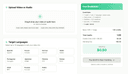
DubVid offers a range of features designed to simplify content localization. Users can dub audio and video content into multiple languages quickly using AI-powered voices, including the option to clone their own voice for consistency. The platform supports various file formats and includes a global reach calculator to visualize audience expansion. Additionally, DubVid provides premium lip-sync technology to align dubbed audio with video, enhancing realism, and a pay-as-you-go credit system that allows users to only pay for what they localize.
DubVid ensures quality by allowing users to test the platform with a free option that lets them dub up to 60 seconds of content without payment details. This enables creators to evaluate voice quality, translation accuracy, and synchronization before committing to larger projects. The platform also uses advanced AI technology to generate natural-sounding voices and offers features like voice cloning for a personalized touch.
DubVid is beneficial for a wide range of users, including content creators looking to expand their reach on social media platforms, educators who want to localize lessons and tutorials for global audiences, companies aiming to improve customer support through localized help center videos, and podcasters who wish to release episodes in multiple languages. Its ease of use and fast turnaround make it ideal for anyone needing to localize content efficiently.
DubVid can be used to localize various types of content, including audio and video files such as YouTube Shorts, Instagram Reels, TikTok videos, educational courses, webinars, product demos, and podcasts. The platform supports multiple file formats, making it versatile for different content types and industries.