Best Calorie Calculators
This list includes various calorie calculators designed to help users estimate their daily caloric needs based on factors such as age, weight, height, and activity level. These tools are essential for individuals looking to manage their weight, whether for weight loss, maintenance, or gain, by providing personalized caloric intake recommendations.

Frequently asked questions
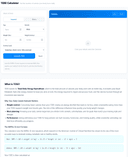
The TDEE Calculator is a user-friendly tool that estimates how many calories your body burns in a day. By entering personal details such as age, gender, weight, height, and activity level, users receive a personalized estimate of their Total Daily Energy Expenditure (TDEE). This number helps individuals understand their energy needs for weight management, whether for weight loss, maintenance, or gain. The calculator uses the Mifflin–St Jeor equation to accurately estimate Basal Metabolic Rate (BMR) and adjusts it based on activity levels, providing a reliable reference for setting dietary goals.
The TDEE Calculator helps users manage their weight by providing a clear estimate of daily caloric needs. When you consume fewer calories than your TDEE, your body enters a calorie deficit, which can lead to fat loss. Conversely, consuming more calories than your TDEE creates a surplus that supports weight gain or muscle growth. Understanding your TDEE allows you to set realistic dietary goals and adjust your caloric intake based on your weight management objectives.
The TDEE Calculator considers several personal factors, including age, gender, weight, height, and activity level. These inputs are used to calculate your Basal Metabolic Rate (BMR) using the Mifflin–St Jeor equation, which is then adjusted based on your daily activity level to provide an accurate estimate of your Total Daily Energy Expenditure (TDEE). This personalized approach ensures that the caloric recommendations are tailored to your unique lifestyle and metabolic needs.
No, the TDEE value provided by the calculator is an estimate rather than an exact number. Individual differences in metabolism, genetics, and daily habits can influence actual calorie needs. It is recommended to use the calculated TDEE as a starting point and monitor your progress over time. Adjustments to your calorie intake may be necessary based on changes in body weight and personal goals.
Once you know your TDEE, you can distribute your daily caloric intake across macronutrients such as protein, carbohydrates, and fats based on your lifestyle and training goals. For example, if your goal is to build muscle, you may prioritize higher protein intake, while endurance athletes might focus on consuming more carbohydrates for sustained energy. This structured approach to meal planning helps ensure that you meet your nutritional needs while working towards your health and fitness objectives.