Best Audio Dubbing Platforms
This list showcases audio dubbing platforms that facilitate the process of translating and adapting audio content for different languages and audiences. These platforms provide tools and services that enhance the accessibility and reach of multimedia projects through professional dubbing solutions.
Frequently asked questions
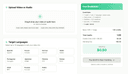
DubVid is an AI-powered audio dubbing platform that allows users to quickly dub audio and video content into multiple languages. It simplifies the localization process by enabling users to upload their files, select target languages and voices, and download the fully localized content in just minutes. The platform supports various file formats and offers features like voice cloning and premium lip-sync technology to enhance the dubbing experience.
DubVid provides several benefits, including a user-friendly interface that requires no technical expertise, a transparent pay-as-you-go credit system, and the ability to quickly localize content for global audiences. Its built-in global reach calculator helps users visualize potential audience sizes, and features like voice cloning and lip-sync technology enhance the quality and realism of the dubbed content.
Yes, DubVid offers a free test option that allows users to dub up to 60 seconds of content without entering payment details. This feature enables creators to evaluate the quality of the voice, translation accuracy, and synchronization before committing to larger projects.
DubVid is versatile and can be used to dub various types of content, including YouTube Shorts, Instagram Reels, TikTok videos, online courses, webinars, help center videos, onboarding walkthroughs, product demos, and podcasts. This flexibility makes it suitable for content creators, educators, businesses, and marketers looking to reach international audiences.
DubVid operates on a usage-based credit system where one credit equals one minute of content localized into one language using a stock voice. Optional features like voice cloning, subtitles, and advanced lip-sync require additional credits. This model allows users to pay only for what they actually localize, making it accessible for individual creators and scalable for teams managing larger volumes of content.