One of the top-rated advertising books is 'Confessions of an Advertising Man' by David Ogilvy. Often referred to as the 'father of advertising', Ogilvy's book offers timeless insights into the principles of effective advertising, people management, and corporate ethics. First published in 1963, it has become a foundational text for marketers and remains relevant today.
'Unraveling the Myths of Effective Online Advertising' offers a personal narrative combined with technical explanations about the complexities of online ad networks. The author shares experiences regarding deceptive practices, such as bot schemes that generate false clicks on ads, and discusses the financial and psychological impacts these can have on marketers. This book is essential for anyone looking to navigate the challenges of digital marketing.
This list features essential advertising books that explore the principles and strategies behind successful marketing campaigns. These works provide insights into the evolving landscape of advertising, offering valuable perspectives from industry experts.
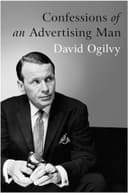

David Ogilvy was considered the "father of advertising" and a creative genius by many of the biggest global brands. First published in 1963, this seminal book revolutionized the world of advertising and became a bible for the 1960s ad generation. It also became an international bestseller, translated into 14 languages. Fizzing with Ogilvy's pioneering ideas and inspirational philosophy, it covers not only advertising, but also people management, corporate ethics, and office politics, and forms an essential blueprint for good practice in business.

Through a narrative of personal experience and technical explanation, I unravel the complexities behind the scenes of ad networks like Bing. I share insights into how unsuspecting marketers can fall prey to sophisticated bot schemes that click on ads without any intent to purchase, explaining the financial and psychological toll such deceptive practices can take on individuals striving to make it in digital marketing. Deciphering the Code: How Ad Networks Manipulate Traffic: https://www.youtube.com/watch?v=u-FNb7nEZew

David Ogilvy was considered the "father of advertising" and a creative genius by many of the biggest global brands. First published in 1963, this seminal book revolutionized the world of advertising and became a bible for the 1960s ad generation. It also became an international bestseller, translated into 14 languages. Fizzing with Ogilvy's pioneering ideas and inspirational philosophy, it covers not only advertising, but also people management, corporate ethics, and office politics, and forms an essential blueprint for good practice in business.

The Brand Gap is the first book to present a unified theory of brand-building. Whereas most books on branding are weighted toward either a strategic or creative approach, this book shows how both ways of thinking can unite to produce a “charismatic brand”―a brand that customers feel is essential to their lives. In an entertaining two-hour read you’ll learn: • the new definition of brand • the five essential disciplines of brand-building • how branding is changing the dynamics of competition • the three most powerful questions to ask about any brand • why collaboration is the key to brand-building • how design determines a customer’s experience • how to test brand concepts quickly and cheaply • the importance of managing brands from the inside • 220-word brand glossary

David Ogilvy was considered the "father of advertising" and a creative genius by many of the biggest global brands. First published in 1963, this seminal book revolutionized the world of advertising and became a bible for the 1960s ad generation. It also became an international bestseller, translated into 14 languages. Fizzing with Ogilvy's pioneering ideas and inspirational philosophy, it covers not only advertising, but also people management, corporate ethics, and office politics, and forms an essential blueprint for good practice in business.

Even the smartest among us can feel inept as we fail to figure out which light switch or oven burner to turn on, or whether to push, pull, or slide a door. The fault, argues this ingenious -- even liberating -- book, lies not in ourselves, but in product design that ignores the needs of users and the principles of cognitive psychology. The problems range from ambiguous and hidden controls to arbitrary relationships between controls and functions, coupled with a lack of feedback or other assistance and unreasonable demands on memorization. The Design of Everyday Things shows that good, usable design is possible. The rules are simple: make things visible, exploit natural relationships that couple function and control, and make intelligent use of constraints. The goal: guide the user effortlessly to the right action on the right control at the right time. The Design of Everyday Things is a powerful primer on how -- and why -- some products satisfy customers while others only frustrate them.

The Brand Gap is the first book to present a unified theory of brand-building. Whereas most books on branding are weighted toward either a strategic or creative approach, this book shows how both ways of thinking can unite to produce a “charismatic brand”―a brand that customers feel is essential to their lives. In an entertaining two-hour read you’ll learn: • the new definition of brand • the five essential disciplines of brand-building • how branding is changing the dynamics of competition • the three most powerful questions to ask about any brand • why collaboration is the key to brand-building • how design determines a customer’s experience • how to test brand concepts quickly and cheaply • the importance of managing brands from the inside • 220-word brand glossary

The Brand Gap is the first book to present a unified theory of brand-building. Whereas most books on branding are weighted toward either a strategic or creative approach, this book shows how both ways of thinking can unite to produce a “charismatic brand”―a brand that customers feel is essential to their lives. In an entertaining two-hour read you’ll learn: • the new definition of brand • the five essential disciplines of brand-building • how branding is changing the dynamics of competition • the three most powerful questions to ask about any brand • why collaboration is the key to brand-building • how design determines a customer’s experience • how to test brand concepts quickly and cheaply • the importance of managing brands from the inside • 220-word brand glossary

AppMole is an all-in-one platform featuring a wide range of AI-driven tools and resources tailored for creators, influencers, and developers. It offers various web apps, marketing tools, and design apps, all aimed at streamlining workflows and enhancing productivity. Users can stay updated with the latest AI applications, reviews, and trending software.

Product Wing is your launchpad to discover powerful AI and software tools that redefine how you work, create, and grow. With a wide variety of carefully curated apps across categories like productivity, design, marketing, development, and more, Product Wing helps you find the right solutions to boost efficiency, automate tasks, and unlock new creative potential. From background removers and music generators to business tools and customer support AIs, every tool is chosen to make a real difference. Whether you're a solo founder, creative, developer, or marketer, you’ll find tools that streamline your workflow, save time, and drive results. Get featured, explore what’s trending, and stay ahead with the latest in tech — all in one place. Elevate your digital toolkit with Product Wing.

10words will publish your startup on their website, Twitter / X, and their newsletter. The catch? You have to explain it in 10 words or less. It's free to submit your startup.

Affiliate Manager is a multi-platform affiliate tracking and management tool built for creators, entrepreneurs, and businesses. Supporting more than 59 platforms—including Stripe, Shopify, TikTok Shop, Gumroad, PayPal, WooCommerce, and more—it allows you to run your entire affiliate program from one simple dashboard. No coding or technical setup required. Designed for fast onboarding, Affiliate Manager lets you create unique tracking links, monitor real-time clicks and sales, and automate commission payouts with custom rules for different affiliates or products. Its powerful analytics suite provides in-depth insights into revenue, conversions, top performers, and long-term trends, helping you make data-driven decisions to grow your program. With secure infrastructure, instant notifications, and seamless integrations across payment processors, e-commerce platforms, creator tools, and social commerce apps, Affiliate Manager offers enterprise-grade capability at startup-friendly pricing. Whether you're managing a small group of affiliates or scaling to hundreds, you can track performance, automate your workflow, and optimize your earnings—all from one intuitive interface.

Beam Tools is a curated directory of powerful tools and SaaS platforms built for creators, developers, and professionals. Whether you're building, designing, coding, or managing, Beam Tools connects you with cutting-edge solutions to supercharge your productivity and streamline your work. Browse a wide range of categories—from AI assistants and image tools to content creation, marketing, and health. Each tool is handpicked to ensure quality, relevance, and performance. Discover featured tools, explore the latest innovations, or submit your own product to reach thousands of professionals worldwide. With Beam Tools, finding the right software for your needs has never been easier. Elevate your workflow with smarter tools, real results, and a constantly growing library of tech solutions for every use case.

"Antifragile: Things That Gain from Disorder" by Nassim Nicholas Taleb is a groundbreaking exploration of systems and entities that thrive and grow stronger in the face of stress, volatility, and chaos. Taleb introduces the concept of "antifragility," which goes beyond resilience or robustness. Through a mix of philosophy, practical wisdom, and real-world examples, Taleb illustrates how embracing uncertainty and leveraging disorder can lead to success and innovation. This book is essential for anyone interested in risk management, personal development, and understanding how to benefit from uncertainty and change.

What I Talk About When I Talk About Running is a memoir by Haruki Murakami where he talks about two things that define a big part of his life: running and writing. Murakami didn’t always plan on being a novelist. He was running a jazz bar in his twenties when, while watching a baseball game, he suddenly thought, “I could write a novel.” He gave it a shot, it worked out, and he eventually sold his bar to focus on writing full-time. But sitting at a desk all day, smoking and not moving much, wasn’t doing his health any good. That’s when he picked up running. For Murakami, running is more than just exercise—it’s part of his routine and, in a way, a metaphor for writing. Both take endurance. Both are long hauls where you push yourself day after day, even when you don’t feel like it. The book follows him as he trains for marathons, competes in triathlons, and grapples with the slow decline of his physical abilities as he ages. He talks a lot about acceptance—accepting getting older, accepting bad race times, and accepting that sometimes you just don’t do as well as you hoped. His attitude is basically: That’s life. You move on. The writing style is straightforward, like he’s just talking to you over a coffee. He doesn’t dress things up. Sometimes he rambles, mentioning things like cycling habits or going off on tangents about global warming. At one point, he describes running the original marathon route in Greece—sun blazing, salt stinging his eyes, everything uncomfortable. But through it all, there’s this calm acceptance. He’s not trying to convince anyone to run; he just shares what it means to him. By the end, what sticks isn’t just the running or the writing, but the way he embraces both the highs and the lows—the post-race blues, the joy of finishing, and the satisfaction of something as simple as a cold beer after a long run. It’s a book about effort, routine, and learning to keep going, no matter what.

Skin in the Game may be nice but The Black Swan is the OG Nicholas Taleb. Read this book to learn how to think and avoid biases and reread at least once very couple of years.

By Mathew Walker - We sleep 1/3 of our life yet understand so little about it...

"Project Hail Mary" is a space adventure story written by Andy Weir, the same guy who wrote "The Martian." It's about a man named Ryland Grace who wakes up on a spaceship with no memory of who he is or why he's there. He figures out he's on a mission to save Earth from disaster. The story follows him as he tries to remember his past and complete his mission, which involves a lot of science and problem-solving. Along the way, he meets an alien, and they form an unlikely friendship. The book is full of cool science stuff, suspense, and humor. It's like a mix of a mystery and a space adventure, with a lot of heart. The narration by Ray Porter is superb, with sound effects and excellent voice work.

Even the smartest among us can feel inept as we fail to figure out which light switch or oven burner to turn on, or whether to push, pull, or slide a door. The fault, argues this ingenious -- even liberating -- book, lies not in ourselves, but in product design that ignores the needs of users and the principles of cognitive psychology. The problems range from ambiguous and hidden controls to arbitrary relationships between controls and functions, coupled with a lack of feedback or other assistance and unreasonable demands on memorization. The Design of Everyday Things shows that good, usable design is possible. The rules are simple: make things visible, exploit natural relationships that couple function and control, and make intelligent use of constraints. The goal: guide the user effortlessly to the right action on the right control at the right time. The Design of Everyday Things is a powerful primer on how -- and why -- some products satisfy customers while others only frustrate them.

Even the smartest among us can feel inept as we fail to figure out which light switch or oven burner to turn on, or whether to push, pull, or slide a door. The fault, argues this ingenious -- even liberating -- book, lies not in ourselves, but in product design that ignores the needs of users and the principles of cognitive psychology. The problems range from ambiguous and hidden controls to arbitrary relationships between controls and functions, coupled with a lack of feedback or other assistance and unreasonable demands on memorization. The Design of Everyday Things shows that good, usable design is possible. The rules are simple: make things visible, exploit natural relationships that couple function and control, and make intelligent use of constraints. The goal: guide the user effortlessly to the right action on the right control at the right time. The Design of Everyday Things is a powerful primer on how -- and why -- some products satisfy customers while others only frustrate them.