volume shader
Pros
No pros yet, would you like to add one?
Cons
No cons yet, would you like to add one?
Test the GPU Performance of Your Computer and Mobile Device Using Advanced Rendering Techniques to Evaluate Graphics Power and Optimize Device Efficiency
Frequently asked questions
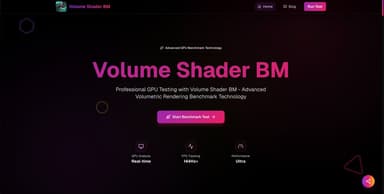
Volume Shader is a cutting-edge platform designed to test GPU performance across computers and mobile devices. It utilizes advanced volumetric shaders and real-time rendering techniques to simulate real-world graphical workloads, allowing users to assess how well their devices handle demanding tasks such as gaming and 3D rendering.
Volume Shader offers precise and detailed insights into your device's graphics processing power. Its main features include advanced volumetric shaders, real-time rendering techniques, and the ability to identify bottlenecks and optimize performance for a better graphical experience.
Currently, there are no user-generated pros and cons listed for Volume Shader. However, it is known for providing detailed insights into GPU performance, which can be a significant advantage for users looking to optimize their devices. Users may want to consider their specific needs and whether the platform meets those requirements.
Volume Shader helps optimize device performance by identifying bottlenecks in the graphics processing capabilities of your computer or mobile device. By simulating real-world graphical workloads, it provides insights that can guide users in making adjustments to improve efficiency and overall performance.
Volume Shader is beneficial for gamers, 3D artists, and anyone involved in GPU-intensive applications. It provides valuable performance testing that can help users ensure their devices are capable of handling demanding graphical tasks effectively.